
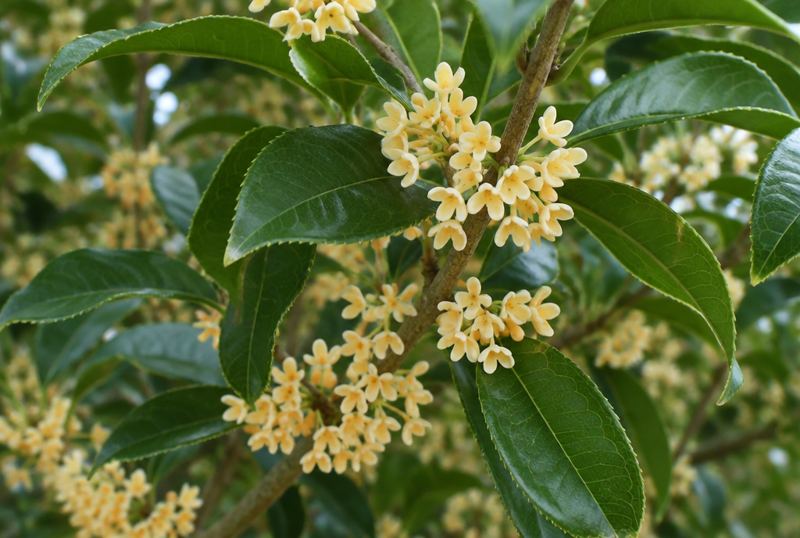
Osmanthus, also called tea olive, is an evergreen shrub grown for tiny flowers with an intense fragrance, and it does best in full sun to partial shade with afternoon shade in the south, in moist, well-drained soil. NC State says the flowers are small but extremely fragrant and appear in early spring and again in the fall. UF/IFAS says plants range from 4 to 30 feet tall depending on the cultivar, so the label matters. Most of the advice below describes fragrant tea olive (Osmanthus fragrans); where a source covers another species, the text says so.
- Origin
- Asia
- Container friendly
- Yes
- Sun
- Full sun to partial shade; afternoon shade in the south
- Soil
- Moist, well drained; heavy clay tolerated
- Water
- Drought tolerant once established
- Size
- 4–30 ft tall, up to 8 ft wide, by cultivar (UF/IFAS)
- Bloom time
- Fall (fragrant tea olive); April (O. delavayi)
- Prune
- Minimally; after flowering for spring bloomers
Sun and shade
NC State says osmanthus grows in full sun to partial shade, and adds that in southern climates afternoon shade is a must. UF/IFAS warns that plants growing in deeper shade may become spindly. That sets the range: bright light with a break from hot afternoon sun where summers are long.
Soil and water
NC State says it prefers moist but well-drained soil and tolerates heavy clay. UF/IFAS says the plants prefer a well-drained soil and are fairly drought tolerant once established. NC State says to give supplemental water in hot, dry months. UF/IFAS also says tea olive does best in North and Central Florida, a regional note rather than a hardiness zone, as the sources do not give a USDA range.
Feeding
UF/IFAS says to use a complete fertilizer in early spring, with slow-release nitrogen preferred.
Pruning
Pruning is where the species matter, so know which one you have.
Fragrant tea olive
Spring bloomers
When osmanthus blooms
Clemson says fragrant tea olive blooms in fall, from late September to November, with scattered flowers through winter. It describes Delavay tea olive (Osmanthus delavayi) as one of the few spring-flowering tea olives, blooming in April. NC State says the flowers appear in early spring and again in fall. Because the sources describe the timing a little differently, expect it to shift with species, cultivar and weather. Our bloom calendar shows where fall and winter bloomers fit in the year.
Flower color and varieties
NC State says flower color depends on the cultivar: cream, yellow or orange, with several white and orange-flowered types. UF/IFAS says the species type has creamy white flowers while improved cultivars offer yellow or orange. UF/IFAS’s factsheet on Fortune’s osmanthus (‘Variegatus’) says that plant is propagated by cuttings.
| Variety | Best for | Size | Flower | Notes |
|---|---|---|---|---|
| Fragrant tea olive (O. fragrans) | Fragrance | 4–30 ft by cultivar (UF/IFAS) | Cream, yellow or orange by cultivar | Fall bloom, scattered through winter (Clemson) |
| Delavay tea olive (O. delavayi) | Spring flowers | — | — | Blooms in April; prune right after flowering (Clemson) |
| O. americanus | Spring flowers | — | — | Prune right after flowering (Clemson) |
| Fortune's osmanthus 'Variegatus' | Foliage | — | — | Propagated by cuttings (UF/IFAS EDIS) |
Osmanthus in a pot
NC State says that in cooler climates you can grow osmanthus in a pot and overwinter it indoors.
Common osmanthus problems
Where it fits
Osmanthus is on our list of plants for a Japanese-style bed, along with camellia and azalea, in the Japanese garden plants collection. It also pairs with camellia, since both are evergreen shrubs that flower in the cooler months. For another fragrant shrub with very different needs, full sun and sharp drainage, read the lavender guide.
Frequently asked questions
How much sun does osmanthus need?
NC State says full sun to partial shade, and says that in southern climates afternoon shade is a must. UF/IFAS says plants growing in deeper shade may become spindly.
When does osmanthus bloom?
NC State says the small, extremely fragrant flowers appear in early spring and again in the fall. Clemson says fragrant tea olive blooms in fall, from late September to November, with scattered flowers through winter, and that Delavay tea olive (O. delavayi) is one of the few spring-flowering types, blooming in April.
Should you prune osmanthus?
Minimally. NC State says fragrant tea olive blooms on old growth, so pruning can cut next year's flowers. Clemson says the two spring-blooming species, O. delavayi and O. americanus, should be pruned immediately after flowering.
How big does osmanthus get?
UF/IFAS says plants may grow up to 8 feet wide and reach 4 to 30 feet in height depending on the cultivar.
Can osmanthus grow in a pot?
NC State says that in cooler climates you can grow it in a pot and overwinter it indoors.
Sources
- Osmanthus fragrans (Fragrant Tea Olive), NC State Extension Plant Toolbox
- Tea Olive, UF/IFAS Gardening Solutions
- Tea Olive, Clemson Cooperative Extension, Home and Garden Information Center
- Osmanthus heterophyllus 'Variegatus' (ST427), UF/IFAS Extension (EDIS)
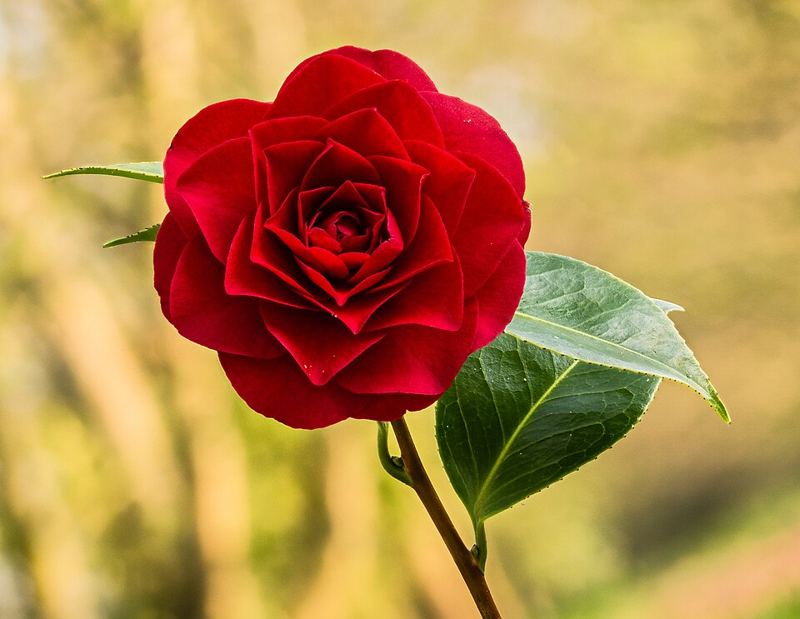 Camellia
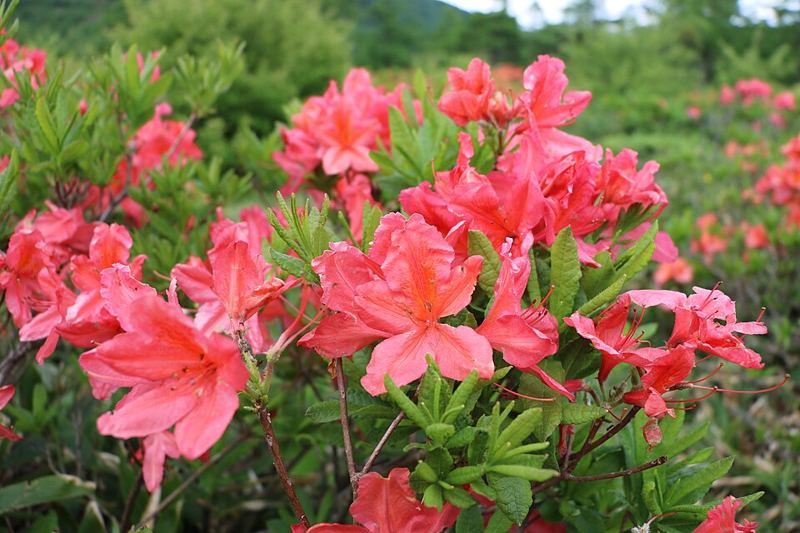 Azalea
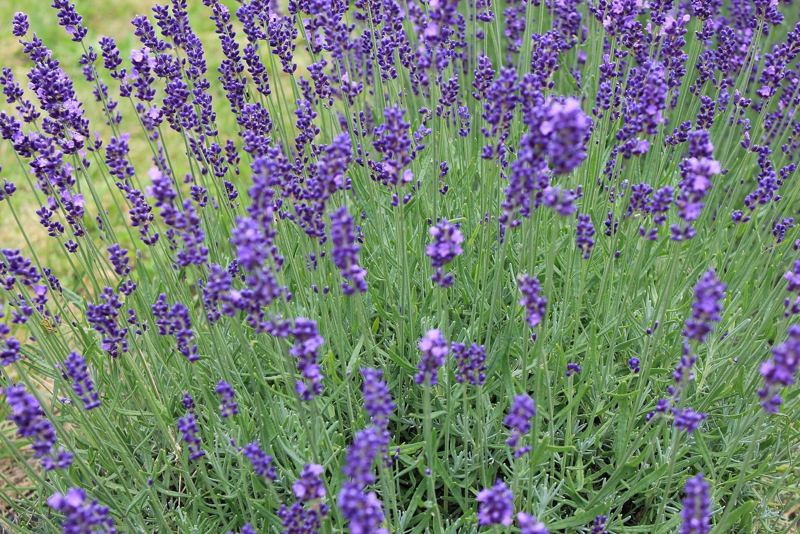 Lavender