

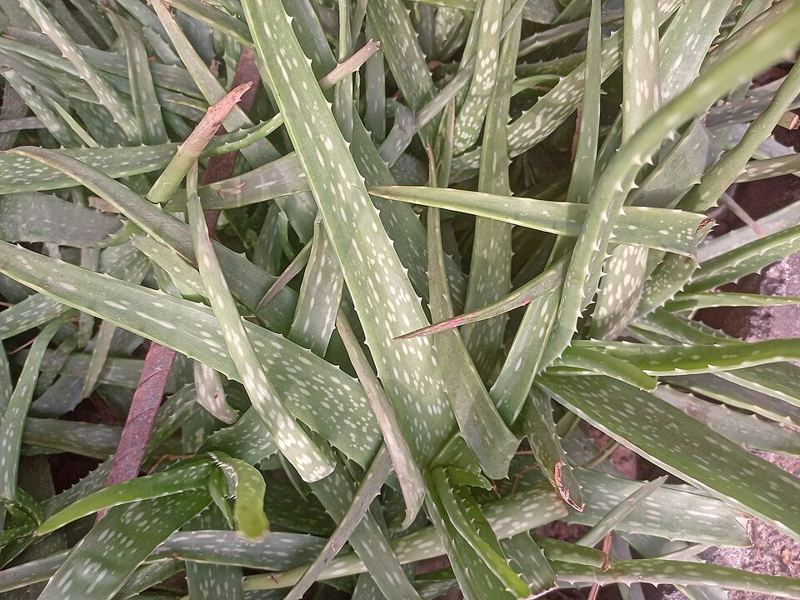
Aloe vera can live in the garden year-round only in the warmest parts of the US: zones 8 to 11 by UF/IFAS, or zone 10 and up by NC State. Everywhere else it is a pot plant that spends summer outside. Penn State says it is not frost tolerant and should be brought in before frost. Outdoors it wants full sun to partial shade and a coarse, fast-draining soil. This page covers aloe in the landscape and its flowers; for indoor care, see How To Grow Houseplants.
- Sun
- Full sun to partial shade
- Water
- Soak when dry; less in winter
- Lifecycle
- Perennial
- Origin
- Africa
- Container friendly
- Yes
- USDA zones (outdoors)
- 8–11 (UF/IFAS) or 10+ (NC State)
- Soil
- Very well drained, coarse mix
- Size
- About 2–3 ft tall (sources differ)
- Flowers
- Red or yellow-orange, mature plants only
Zones: can it stay outside?
Our two sources give different limits. NC State describes aloe as an outdoor perennial in zones 10 and up. UF/IFAS says plants can be grown outside year-round in zones 8 to 11. If you are in zone 8 or 9, our cautious reading is to plant it in the ground only in a sheltered spot, or keep it in a pot. Penn State’s advice for everyone else is to move aloe outdoors in summer and bring it in before frost.
Sun and the summer move
NC State says to grow aloe in full sun to partial shade in very well-drained soils suitable for succulents. A plant that has lived on a windowsill is not ready for that. UF/IFAS says to make the move gradual, because the plant can sunburn when moved from low to bright light too quickly. Increase the light in stages rather than all at once.
Soil and planting
Penn State says aloe prefers a coarse, well-draining mix, and gives a recipe of one part potting soil, one part sand and one part perlite or lava rock. UF/IFAS says aloe can be grown in any well-drained quality potting media. In a garden bed the same principle applies: add coarse grit or plant on a slope or raised bed rather than in heavy, wet ground.
Watering
All three sources agree on the principle (never let the plant sit in water) and differ on the trigger.
UF/IFAS
NC State
Penn State
Penn State says aloes are extremely drought tolerant and susceptible to root rot, and UF/IFAS says it is best to err on the side of underwatering. Outdoors, rain does some of the work for you, so check the soil before you add water.
Size and offsets
NC State gives 2 to 3 feet tall, spreading by offsets; UF/IFAS and Penn State give about 2 feet or a little over. Offsets, also called pups, are how aloe multiplies. NC State and Penn State say they can be removed from the mother plant and transplanted into another pot.
Flowers
Aloe flowers only when it is mature. NC State says the flowers are red or yellow-orange, and Penn State says a plant blooms multiple times in its lifetime. UF/IFAS says aloe rarely blooms indoors, so a plant that spends its summers in bright light outside has a better chance.
Aloe in pots
Many gardeners keep aloe in a container that moves in and out. Penn State says to use a pot with large drainage holes and to repot every two years into a pot one size larger. UF/IFAS says not to increase the pot by more than two sizes, because a container that is too large holds too much moisture and can lead to root rot, and that clay is best.
Common aloe problems
Pets
The ASPCA lists aloe as toxic to dogs, cats and horses, and gives vomiting (not in horses), lethargy and diarrhea as the clinical signs. Keep pots where pets cannot chew the leaves.
Pair it with other desert plants
Aloe grows well beside other sun-loving, fast-draining plants. Our succulent care guide lists aloe among the general succulents, and the desert rose shares its pot-in-summer, indoors-in-winter routine. Browse the full desert plants collection.
Frequently asked questions
Can aloe vera live outside year-round?
Only in warm zones, and our sources differ. UF/IFAS says plants can be grown outside year-round in zones 8 to 11, while NC State says outdoor perennial in zones 10 and up. Penn State says aloe is not frost tolerant and should be brought indoors before frost.
How much sun does aloe vera need outdoors?
NC State says full sun to partial shade in very well-drained soils suitable for succulents. UF/IFAS warns that the plant can sunburn when moved from low to bright light too quickly, so make the move gradual.
How often should I water outdoor aloe?
Our sources differ. UF/IFAS says water when the top inch of soil is dry; NC State says let the soil dry completely between waterings. Penn State says water thoroughly in the growing season when the soil surface is dry, and reduce water in winter.
Does aloe vera flower?
Yes, on mature plants. NC State says the flowers are red or yellow-orange and appear only on mature plants, and Penn State says a plant will bloom multiple times in its lifetime. UF/IFAS says plants rarely bloom indoors.
Is aloe vera toxic to pets?
The ASPCA lists aloe as toxic to dogs, cats and horses. It gives vomiting (not in horses), lethargy and diarrhea as the clinical signs.
Sources
- Aloe vera, NC State Extension Plant Toolbox
- Aloe: A Hardy Houseplant, Penn State Extension
- Aloe Vera, UF/IFAS Gardening Solutions
- Aloe, ASPCA Animal Poison Control
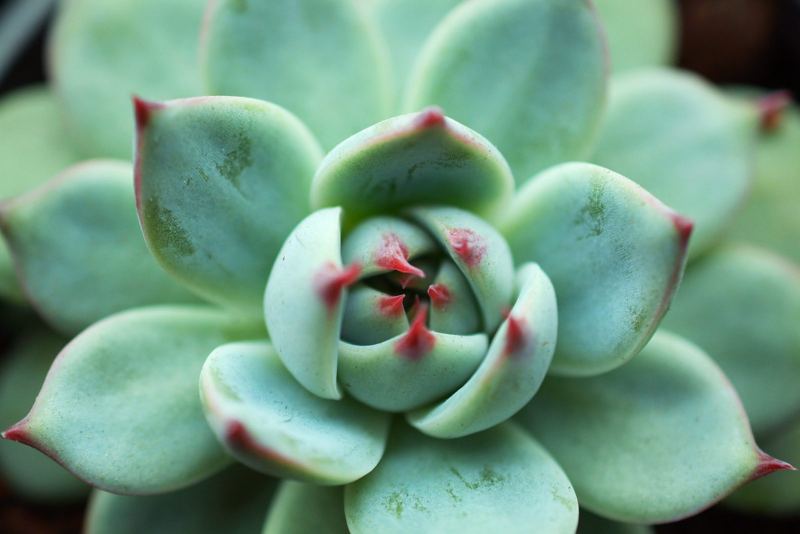 Succulents
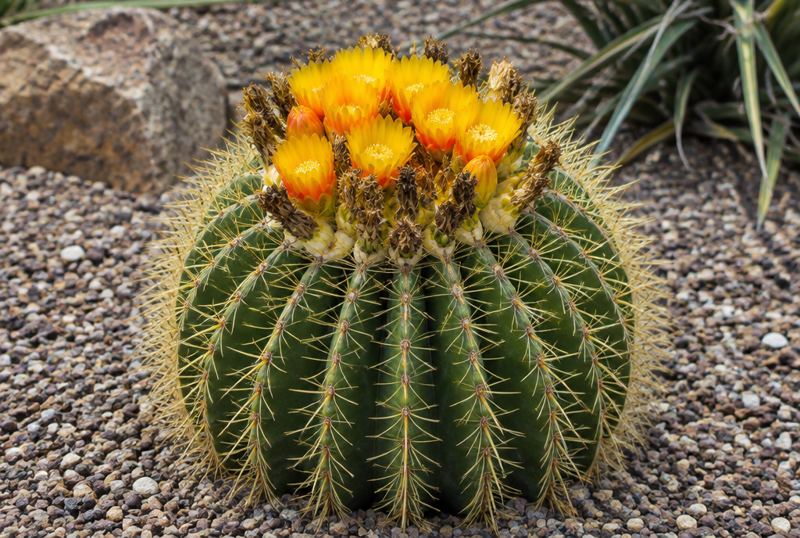 Cactus
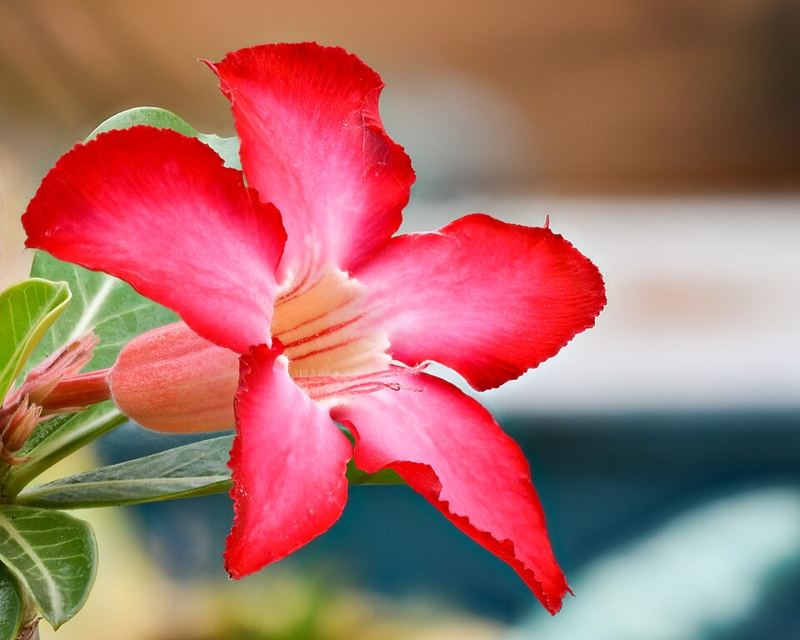 Desert Rose