

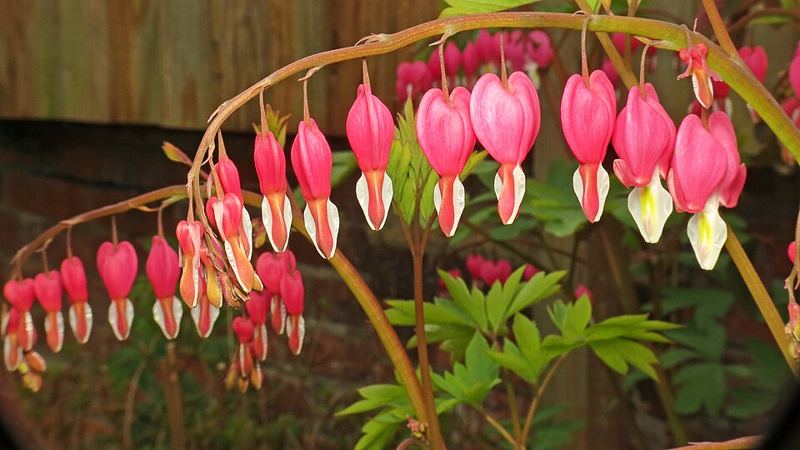
Bleeding heart grows best in morning sun and afternoon shade, in rich soil that stays moist, with the crown planted about 2 inches deep. NC State describes an erect herbaceous perennial that blooms from spring to early summer, with arching stems of heart-shaped pink to white flowers, growing in loose clumps or mounds. Penn State says it is hardy in zones 3a through 9b.
- USDA zones
- 3a–9b (Penn State)
- Sun
- Part shade
- Lifecycle
- Perennial
- Origin
- Asia
- Light
- Partial to full shade; morning sun best
- Soil
- Rich in organic matter, moist, well drained
- Planting depth
- Crown about 2 in below soil
- Size
- 2–3 ft tall and wide
- Bloom time
- April to June by climate
| Zones | January | February | March | April | May | June | July | August | September | October | November | December |
|---|---|---|---|---|---|---|---|---|---|---|---|---|
| Zone Early spring or fall: plant Mar–Apr, Sep–Oct | March: plant | April: plant | September: plant | October: plant | ||||||||
| Zone Bloom: bloom Apr–Jun | April: bloom | May: bloom | June: bloom |
- Plant
- Bloom
Light
NC State says bleeding heart grows best in morning sun with afternoon shade and tolerates heavy and partial shade. It will also tolerate full sun provided it is in a cool, moist climate. Penn State also recommends partial to full shade. In warmer places, afternoon shade is the part that matters.
Soil and water
Penn State says to give it soil rich in organic matter that is well drained but moisture retentive, and to provide consistent moisture during spring growth. It suggests a 2- to 3-inch layer of shredded leaves or compost as mulch to hold moisture. NC State says the plant is intolerant of wet soils in the winter and dry soils in the summer.
On soil pH, the sources differ: NC State says neutral to alkaline, and Penn State says slightly acidic to neutral, about 6.0 to 7.0. A neutral soil near pH 7 fits both.
Planting
- Choose a shaded spot. Morning sun and afternoon shade is best (NC State, Penn State).
- Plant in early spring or fall. Penn State recommends both seasons.
- Set the crown about 2 inches deep. Penn State says this depth encourages better flowering.
- Mulch and keep moist. Spread 2 to 3 inches of shredded leaves or compost, and water consistently during spring growth (Penn State).
Size and bloom
Penn State gives a loose mound 2 to 3 feet tall and wide. It blooms April to June depending on the climate (Penn State, NC State). NC State also lists the fringed bleeding heart (Dicentra eximia), a native eastern species with a longer bloom period. Our bloom calendar shows where it falls in the season.
Common bleeding heart problems
Grow these next
Bleeding heart peaks as spring bulbs fade, so tulips are a natural neighbor for April. For a summer flower that likes similar moisture, see calla lily.
Frequently asked questions
Does bleeding heart need shade?
Partial to full shade is best. NC State says it grows best in morning sun with afternoon shade and tolerates heavy and partial shade. It says full sun is tolerated only in a cool, moist climate.
What zones does bleeding heart grow in?
Penn State says it is hardy in USDA Plant Hardiness Zones 3a through 9b.
When does bleeding heart bloom?
April to June, depending on the climate (Penn State, NC State). NC State describes the plant as spring to early summer blooming.
How deep should I plant bleeding heart?
Penn State says to plant in early spring or fall and set the crown about 2 inches below the soil surface, because that depth encourages better flowering.
What soil pH does bleeding heart like?
Our sources differ. NC State says neutral to alkaline, moist, well-drained, humus-rich soil. Penn State says slightly acidic to neutral, about 6.0 to 7.0.
Sources
- Lamprocapnos spectabilis (bleeding heart), NC State Extension Plant Toolbox
- The Timeless Beauty of Bleeding Hearts in the Garden, Penn State Extension
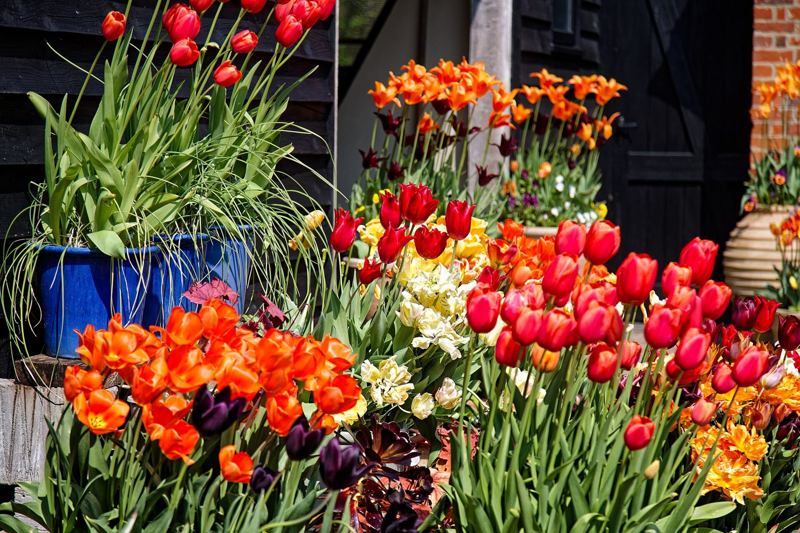 Tulip
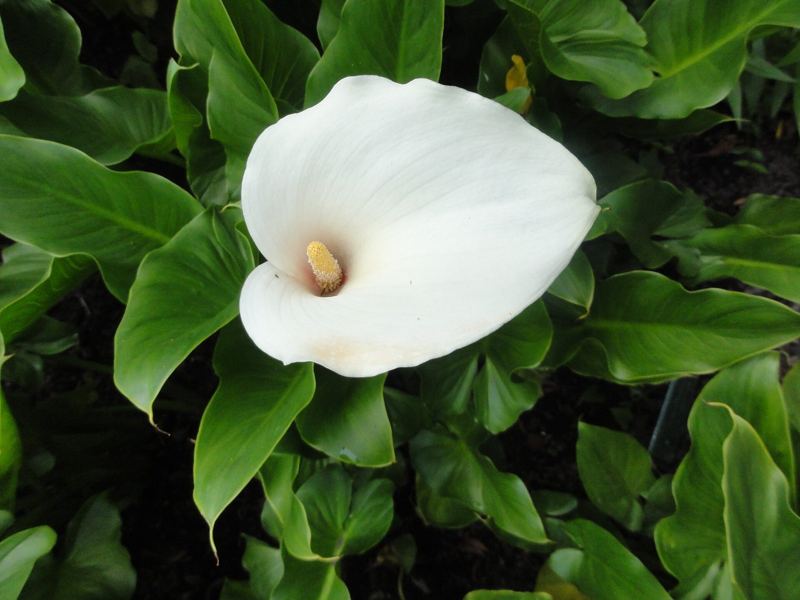 Calla Lily