

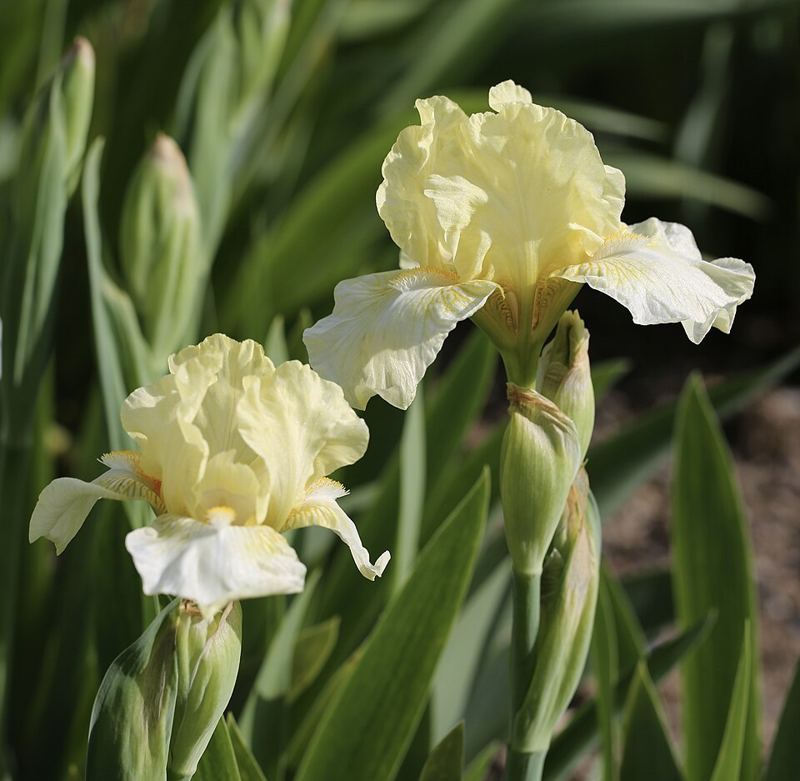
Plant bearded iris rhizomes in late summer to early fall, in full sun and well-drained soil, with the top of the rhizome at or just under the soil surface, and divide the clump every three to five years. Clemson says irises need at least six hours of sun, are extremely drought tolerant, and should not be overwatered. Penn State says the plant thrives in USDA zones 3 to 10 and flowers in spring. The sources disagree on the best month to divide, and that range is covered below.
- USDA zones
- 3–10 (Penn State)
- Sun
- Full sun, at least 6 hours (Clemson)
- Origin
- Middle East
- Soil
- Well drained
- Planting depth
- Rhizome at or just under the surface
- Spacing
- 12–18 in apart
- Divide
- Every 3–5 years, from about 6 weeks after bloom to September
What bearded iris are
Penn State calls the tall bearded iris one of the oldest garden flowers, named for the Greek goddess of the rainbow. Bearded irises flower in spring (Penn State). The American Iris Society classes irises as bearded, aril and beardless, and Penn State says there are thousands of cultivars. This guide is about the bearded type, which grows from a rhizome, a thick horizontal stem at the soil surface.
Sun, soil and water
Sun. Clemson says at least six hours of sunlight a day.
Soil. Clemson says well-drained soil. Clemson also says irises are extremely drought tolerant and that care should be taken not to overwater them.
Fertilizer. Clemson recommends a low-nitrogen fertilizer such as 5-10-10 in early spring and again at the end of the season. It says a high-nitrogen fertilizer may make the plants grow too rapidly and lead to soft rot.
How deep to plant the rhizome
Iris rhizomes are planted shallow. Clemson says the rhizome rests just above ground level on clay soils, and for lighter, sandy soils the top of the rhizome can be placed 1/2 inch or less below ground level. Illinois Extension says not to plant the rhizome too deep because this can lead to root rot. Clemson says to space divisions about 12 to 18 inches apart in groups of three to form a natural-looking clump. Illinois Extension also gives 12 to 18 inches, with the fan of leaves facing the same direction.
When to plant and divide
Clemson says irises should be planted in late summer to early fall in well-drained soil. Penn State says rhizomes can be bought bare root from many online sources and some garden centers for late summer planting. Clemson says to divide bearded iris every three to five years, and to plant the younger rhizomes that grow off the older center rhizome.
The best month to divide is where the sources differ.
Illinois Extension
Clemson
Put together, the window runs from about six weeks after the spring bloom through September, with July and August named by both sources. If you divide in July or August you are inside both windows.
| Zones | January | February | March | April | May | June | July | August | September | October | November | December |
|---|---|---|---|---|---|---|---|---|---|---|---|---|
| Zone All zones, by source: divide and plant Jul–Sep | July: divide and plant | August: divide and plant | September: divide and plant | |||||||||
| Zone Bloom: bloom Apr–May | April: bloom | May: bloom |
- Divide and plant
- Bloom
Planting and dividing steps
- Dig the clump. Divide when the plant is crowded or every three to five years (Clemson).
- Choose the younger rhizomes. Clemson says to replant the younger rhizomes produced off the older, center rhizome.
- Plant at the surface. The rhizome rests just above ground on clay, or 1/2 inch or less below on sandy soil (Clemson).
- Space them out. 12 to 18 inches apart, in groups of three, fans facing the same direction (Clemson, Illinois Extension).
After bloom
Clemson says to remove the flowering stalk after bloom, to prevent seed from forming and stealing energy from the plant. Our iris pruning guide covers the fall cutback.
Common iris problems
Grow these next
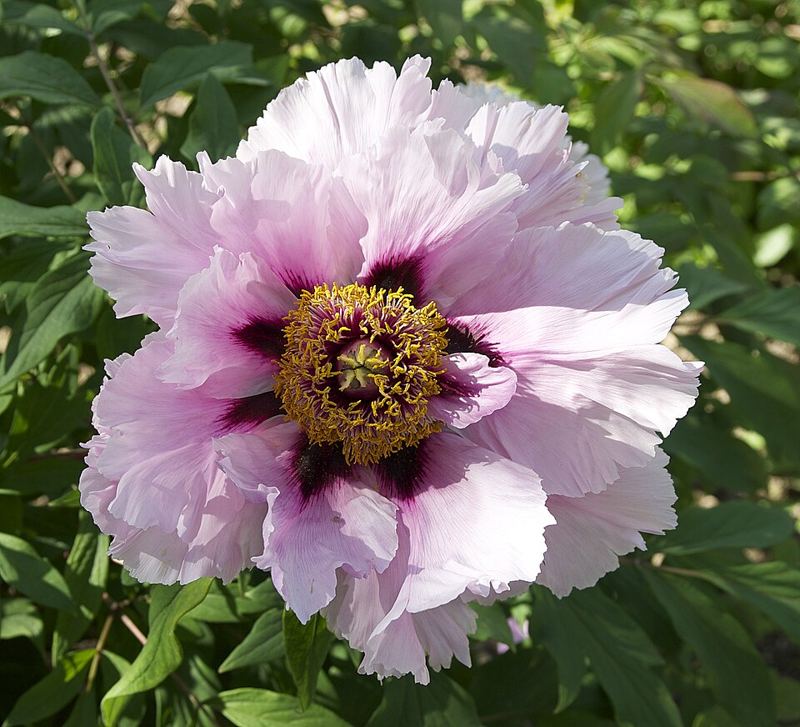
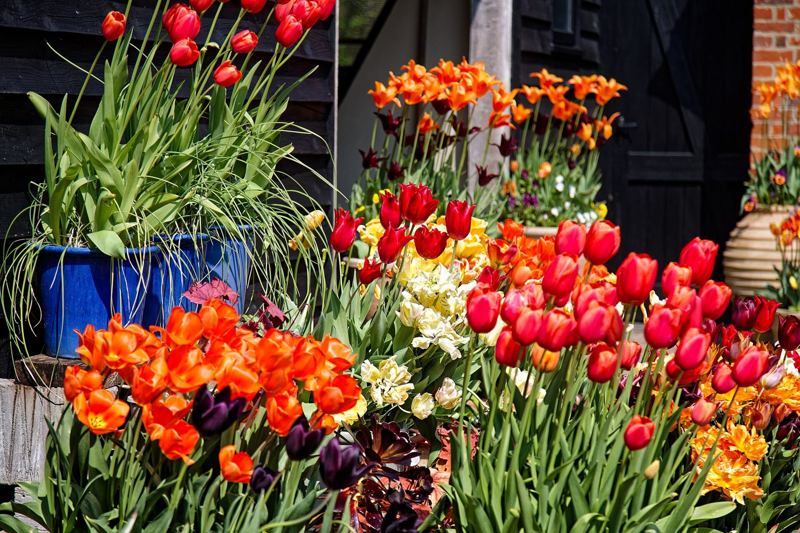
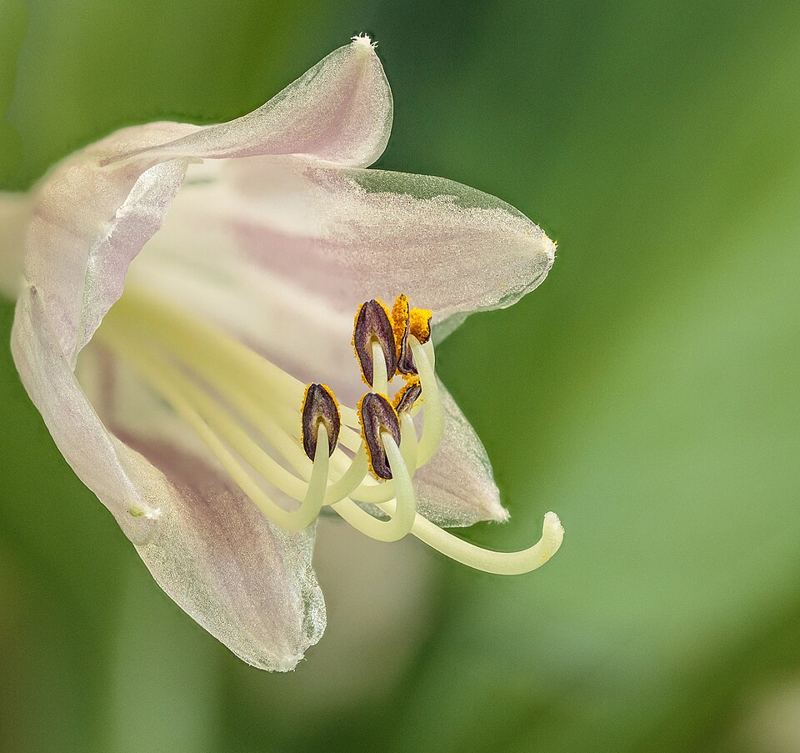
If you are building a spring border, the peony guide covers another long-lived perennial that likes full sun, and the tulip guide covers the fall-planted spring bulb. For a shadier corner, see hosta.
Frequently asked questions
When should you divide bearded iris?
Sources give different windows. Illinois Extension says July and August are the best time. Clemson says six to eight weeks after bloom, or from July through September, and calls late summer the best time. Divide every three to five years.
How deep do you plant iris rhizomes?
Clemson says the rhizome rests just above ground level on clay soils, and on lighter sandy soils the top can sit 1/2 inch or less below ground level. Illinois Extension warns that planting too deep can lead to root rot.
How much sun do irises need?
Clemson says at least six hours of sunlight a day, in well-drained soil.
What zones do irises grow in?
Penn State says the German bearded iris thrives in USDA zones 3 to 10.
How far apart do you plant irises?
Clemson says to space divisions about 12 to 18 inches apart, in groups of three. Illinois Extension also says 12 to 18 inches, with the fan of leaves facing the same direction.
Sources
- How to Divide and Plant Bearded Iris, University of Illinois Extension
- Transplanting and Dividing Iris, Iowa State University Extension, Yard and Garden
- Dividing Irises, Penn State Extension
- Give Your Bearded Irises Some Space: Divide Them, Clemson Cooperative Extension, Home and Garden Information Center
- Bearded Iris, Clemson Cooperative Extension, Home and Garden Information Center
- German Bearded Iris, Penn State Extension
 Peony
 Tulip
 Hosta