

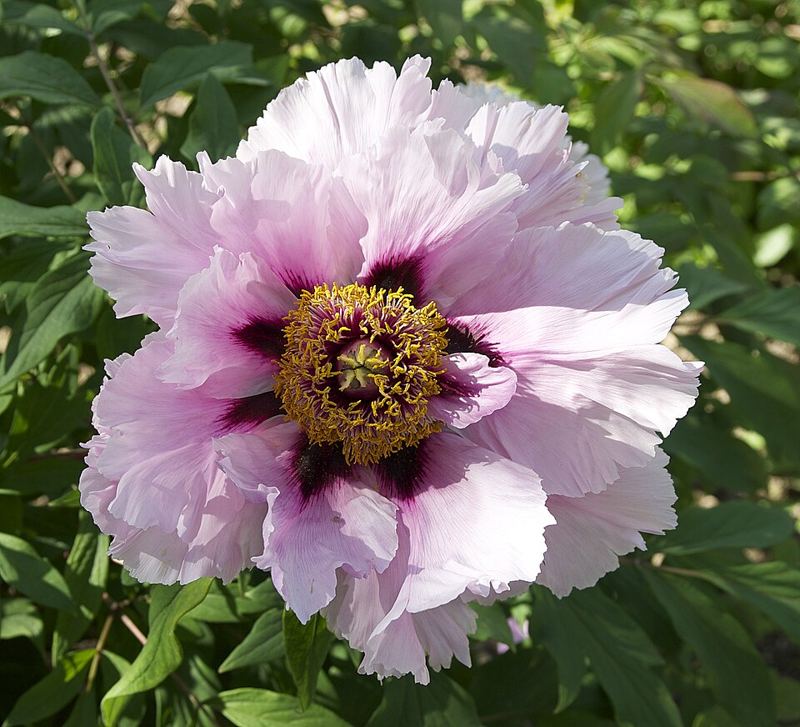
Plant peonies in full sun with at least six hours of direct light, set the buds no deeper than 2 inches below the soil surface, and then leave them alone. Illinois Extension calls the peony a popular, easy-to-grow, long-lived perennial that flowers easily and offers attractive foliage long after it blooms. The habits that cause trouble are planting too deep, planting in too much shade, over-fertilizing, and moving the plant, which can cost you two to three years of bloom.
- Sun
- Full sun, at least 6 hours of direct sun
- Lifecycle
- Perennial
- Origin
- Asia
- Soil
- Moist, well drained; mulch to hold moisture
- Planting depth
- Buds 1–2 in below the surface; no deeper than 2 in
- Best time to move or divide
- September
- Establishment
- May take 2–3 years to establish and bloom
- Fertilizer
- Very light
Why peonies are easy
Illinois Extension describes the peony as easy to grow and long lived. Its plant page asks for moist, well-drained soil in a full-sun location, with very light fertilization. Iowa State’s guide to why peonies fail to bloom covers shade, planting depth and recent transplanting, which are about the site and the planting more than day-to-day care.
Sun and soil
Sun. Iowa State says at least six hours of direct sunlight a day, and that peonies in partial shade need to be moved to a sunny location to improve flowering.
Soil and water. Illinois Extension says moist, well-drained soil. It also benefits the plant to mulch around the base to hold in moisture and keep weeds to a minimum (Illinois Extension).
Fertilizer. Illinois Extension says to fertilize very lightly and not to over-fertilize, because that results in reduced flowering.
How deep to plant
Iowa State says to position the peony’s buds (also called eyes) 1 to 2 inches below the soil’s surface. Illinois Extension says to plant no deeper than 2 inches. The two sources agree on a ceiling of 2 inches.
Planting, moving and dividing
Iowa State says September is the best time to transplant or divide peonies in Iowa, and Illinois Extension says September is typically a better time to divide them. Iowa State also says plants moved or divided in late summer rarely bloom well, if at all, the following spring, so a moved peony should be expected to skip a season or more.
- Cut the stems. Begin by cutting off the peony stems near ground level before moving the plant (Iowa State).
- Lift and divide. Each division should have at least 3 to 5 buds (eyes) and a good root system (Iowa State).
- Replant in full sun. Choose a site with at least six hours of direct sun (Iowa State), with the buds 1 to 2 inches below the surface.
- Mulch and be patient. Mulch holds in moisture (Illinois Extension). It may take 2 to 3 years for plants to re-establish enough in their new location to bloom again (Iowa State).
Peony care
Sun
Water
Fertilizer
Depth
Clemson says to cut herbaceous peonies down to the soil surface in the fall, after frost, and never to cut back tree peonies. Our peony pruning guide has the steps and the disposal advice.
Why peonies do not bloom
Iowa State lists the reasons in its guide to why peonies fail to bloom, and the sources we used point to the same few causes.
Over-fertilizing also reduces flowering (Illinois Extension). Illinois Extension names powdery mildew fungus together with a lack of blooms, and says it is worse with crowding, competition from lawn and low sun.
Grow these next
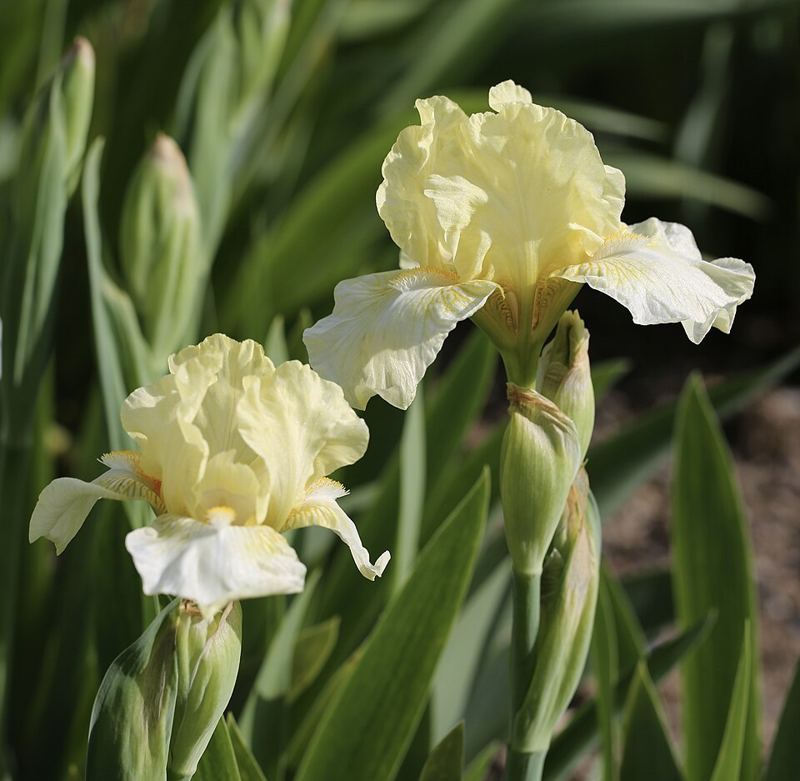
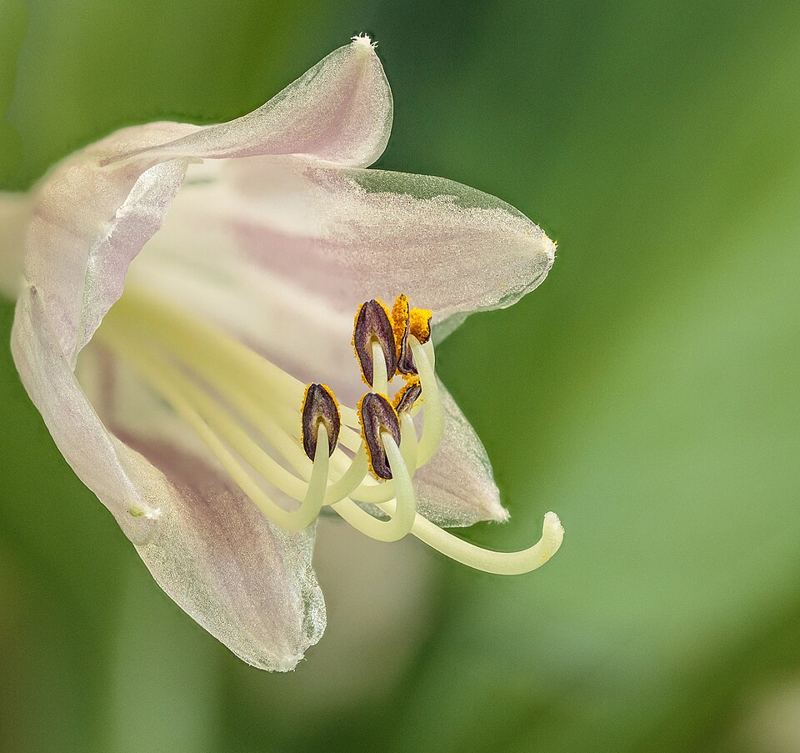
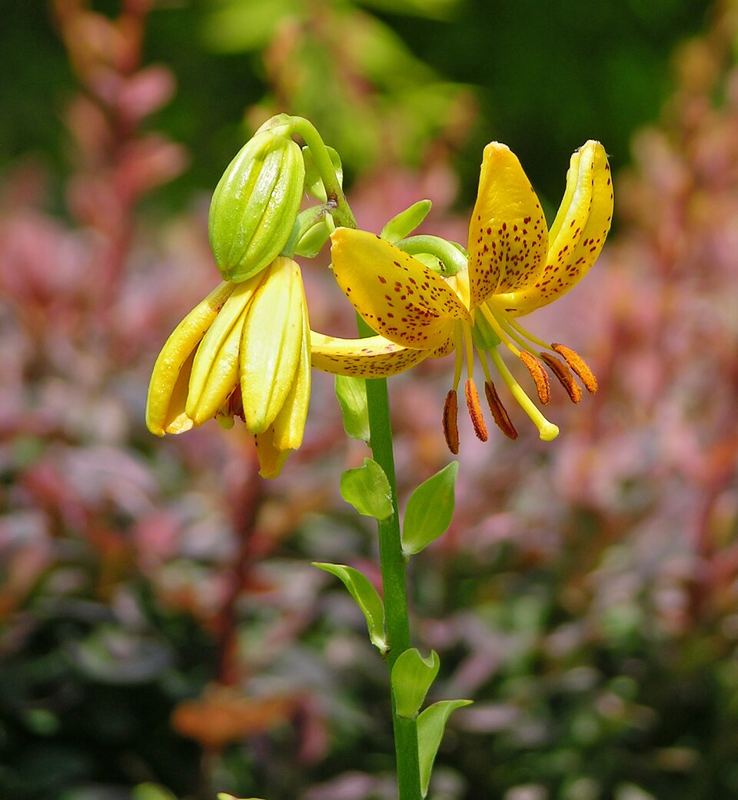
Peonies and irises are both long-lived sun perennials that are divided rather than replaced. For a plant for the shady side of the border, see hostas, and for summer color from bulbs, the lily guide.
Frequently asked questions
How much sun do peonies need?
Iowa State says at least six hours of direct sunlight a day, and that peonies in partial shade need to be moved to a sunny location to improve flowering.
How deep do you plant peonies?
Iowa State says to position the buds (eyes) 1 to 2 inches below the soil surface. Illinois Extension says to plant no deeper than 2 inches.
When should you divide or transplant peonies?
Iowa State says September is the best time in Iowa, and Illinois Extension says September is typically a better time to divide peonies. Iowa State says peonies moved or divided in late summer rarely bloom well, if at all, the following spring.
Why did my peony stop blooming after I moved it?
Both Iowa State and Illinois Extension say it can take 2 to 3 years for a moved or divided plant to re-establish and bloom again.
How much fertilizer do peonies need?
Very little. Illinois Extension says very light fertilization, and warns that over-fertilizing reduces flowering.
Sources
- Transplanting and Dividing Peonies, Iowa State University Extension, Yard and Garden
- Reasons Why Peonies Fail to Bloom, Iowa State University Extension, Yard and Garden
- Dividing Peonies, University of Illinois Extension
- Peony, University of Illinois Extension, Hort Answers
 Iris
 Hosta
 Lily