

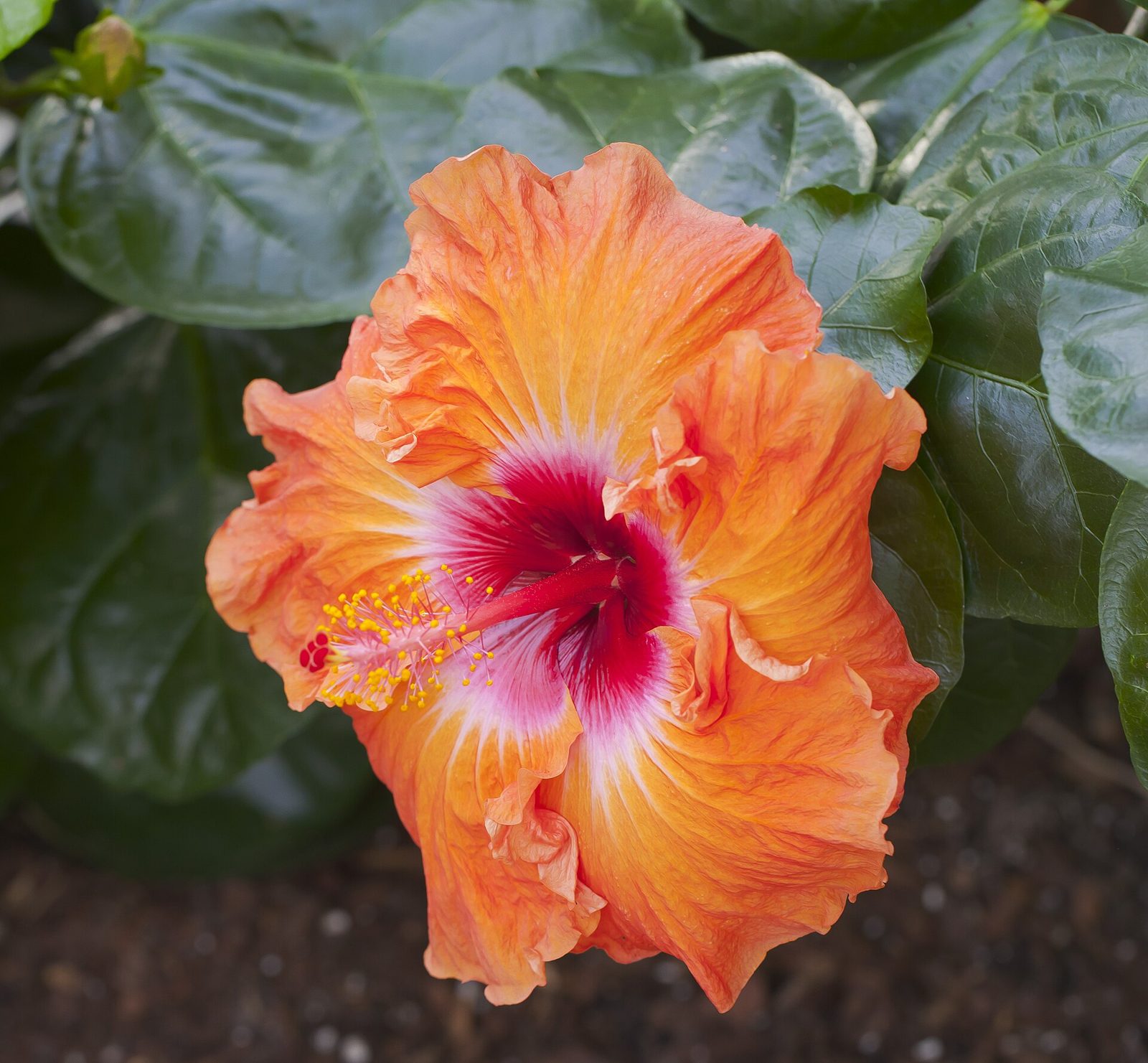
Two very different plants share the name hibiscus: tropical hibiscus (Hibiscus rosa-sinensis), an evergreen shrub that needs frost protection, and hardy hibiscus (Hibiscus moscheutos), a perennial that dies back each winter and returns. This guide covers both and keeps them apart. Our sources give full sun to partial shade for both, with full sun producing more bloom. The ASPCA hibiscus page says the plant is non-toxic to dogs, cats and horses.
- Origin
- Asia
- Tropical
- H. rosa-sinensis: evergreen, flowers to 6 in
- Hardy
- H. moscheutos: perennial, flowers 6–8 in
- Sun
- Full sun to partial shade; full sun blooms best
- Tropical size
- 4–10 ft tall, 5–8 ft wide
- Hardy size
- 2–6 ft tall, 2–5 ft wide
- Pet safe
- Yes: ASPCA lists non-toxic
Which hibiscus do you have?
Tropical hibiscus
Hardy hibiscus
Light
For tropical hibiscus, NC State says full sun to partial shade, and that in full sun the plant has better bloom production and is more disease resistant. For hardy hibiscus, NC State says full to partial sun and recommends a location with full sun to partial shade, with full sun giving better bloom.
Soil and water
For tropical hibiscus, NC State says the roots should be kept moist. For hardy hibiscus, NC State says wet to constantly moist loam with organic matter and slightly acidic soil.
Pruning
The cuts differ by type. Our hibiscus pruning guide sets tropical and hardy side by side.
- Tropical: prune in early spring. NC State says to cut it back by about half in early spring, and that it blooms on new growth.
- Hardy: pinch and deadhead. NC State says to pinch tips and deadhead during the season.
- Hardy: cut back in fall. NC State says to cut the stems nearly to ground level in the fall.
Bloom time
Tropical hibiscus has a long season, nearly year-round in South Florida (UF/IFAS). Hardy hibiscus blooms from midsummer to early fall, with each plant’s bloom lasting about a month.
Growing in a container
For tropical hibiscus, NC State says it can be grown in a container with bright light indoors. NC State also says it needs protection from frost and wind. Hardy hibiscus grows as a perennial.
Cultivars
Clemson names ‘Luna White’ as a hardy cultivar, about 3 feet tall and wide.
Pets
The ASPCA hibiscus page, which lists Rose of Sharon and Rose of China, says non-toxic to dogs, cats and horses. This is the genus page rather than a species-by-species statement.
Grow these next
Gardenia is another flowering shrub for containers. Bougainvillea and mandevilla are sun-loving climbers for pots, and the tropical flowers collection compares them all.
Frequently asked questions
What is the difference between tropical and hardy hibiscus?
Tropical hibiscus (Hibiscus rosa-sinensis) is an evergreen with flowers up to 6 inches across that needs frost protection (NC State). Hardy hibiscus (Hibiscus moscheutos) is a mid-summer blooming perennial with 6 to 8 inch flowers that is cut to the ground in fall (NC State, Clemson).
How much sun does hibiscus need?
NC State says tropical hibiscus grows in full sun to partial shade, and that in full sun it has better bloom production and is more disease resistant. For hardy hibiscus, NC State and Clemson say full to partial sun, with full sun giving better bloom.
How do I prune hibiscus?
NC State says to cut tropical hibiscus back by about half in early spring, as it blooms on new growth. For hardy hibiscus, pinch tips, deadhead, and cut the stems nearly to ground level in the fall.
Is hibiscus toxic to pets?
The ASPCA hibiscus page, which lists Rose of Sharon and Rose of China, says it is non-toxic to dogs, cats and horses. The ASPCA statement is for the genus page rather than a single species.
When does hibiscus bloom?
Tropical hibiscus has a long season, nearly year-round in South Florida (UF/IFAS). Hardy hibiscus blooms from midsummer to early fall, with each plant in bloom for about a month (NC State, Clemson).
Sources
- Hibiscus rosa-sinensis, NC State Extension Plant Toolbox
- Hibiscus, UF/IFAS Gardening Solutions
- Hibiscus moscheutos, NC State Extension Plant Toolbox
- Hardy Hibiscus (Hibiscus moscheutos): How to Grow and Care for Hardy Hibiscus, Clemson Cooperative Extension, Home and Garden Information Center
- Hibiscus, ASPCA Animal Poison Control
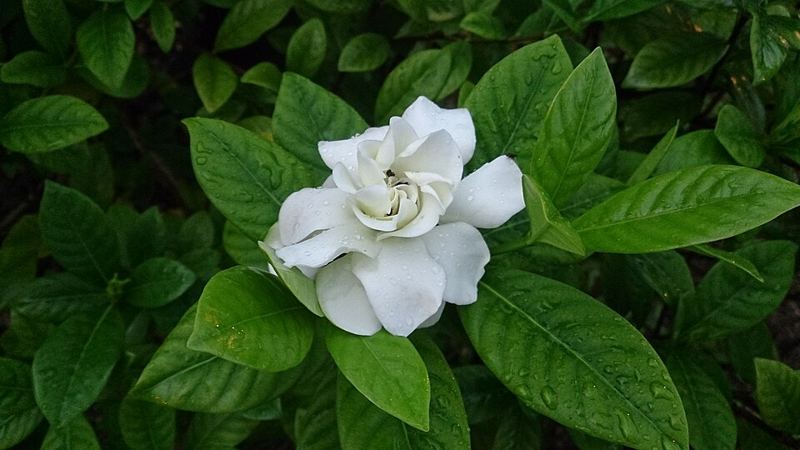 Gardenia
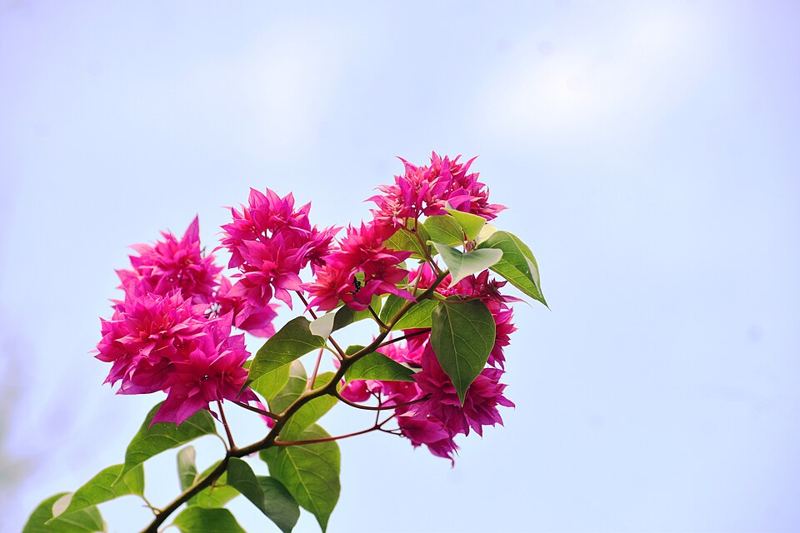 Bougainvillea
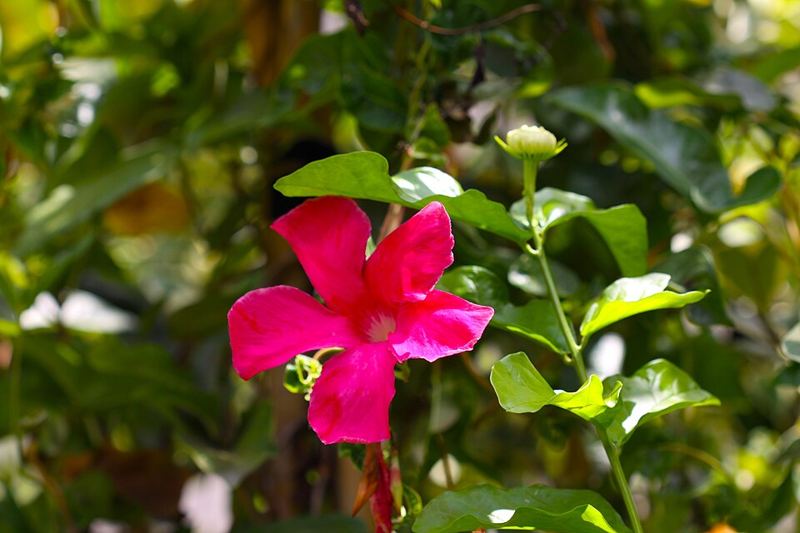 Mandevilla