

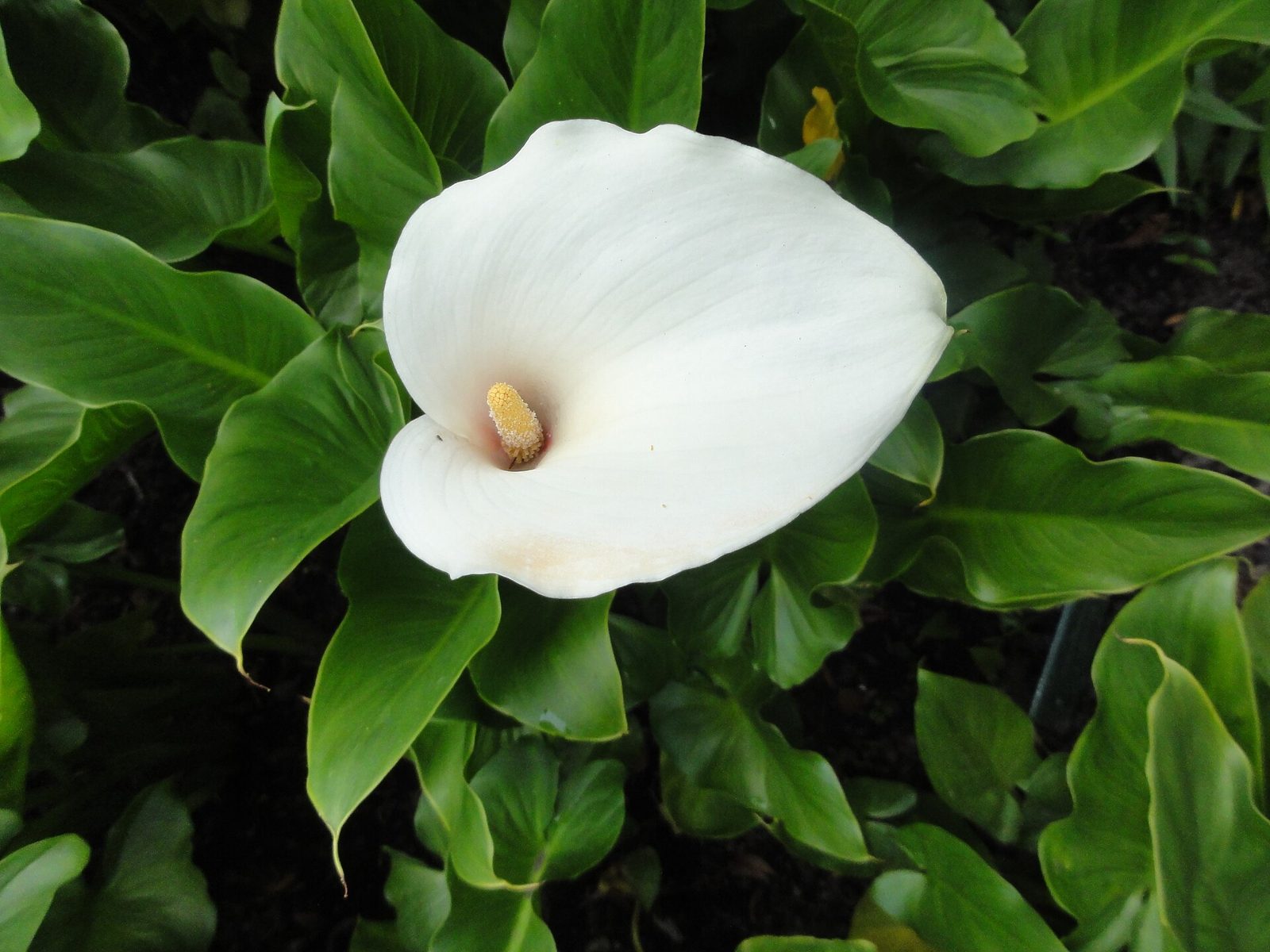
Calla lily care is simple once you know it is a warm-season plant: plant the rhizomes in spring after frost, give them moist, well-drained soil and sun that is not scorching, and expect flowers 60 to 90 days later. Calla lilies (Zantedeschia) bloom in late spring to early summer, according to Clemson, and they come back reliably only where winters are mild. Clemson puts the zones at 8 to 10, NC State puts the white calla at zone 8, or 7 with protection. Anywhere colder, you dig the rhizomes in fall and replant them in spring. Calla lily is poisonous if eaten.
- USDA zones
- 8–10 (Clemson); 8, or 7 protected (NC State, white calla)
- Water
- Moist but well drained; rot if too wet
- Origin
- Africa
- Container friendly
- Yes
- Sun
- Morning sun, afternoon shade in hot climates
- Planting depth
- 3–4 in (8–10 cm) (Clemson, Penn State)
- Spacing
- 12–18 in (30–45 cm)
- Bloom time
- Late spring–early summer, 60–90 days after planting
White calla or colored hybrid?
NC State and Clemson describe two slightly different groups. The white calla, Zantedeschia aethiopica, blooms from June to July with large white spadix flowers (NC State). Colored hybrids are named by Clemson as Zantedeschia hybrida: ‘Fantasia’ (pink), ‘Captain Solo’ (yellow) and ‘Havana’ (orange).
| Variety | Best for | Size | Flower | Notes |
|---|---|---|---|---|
| White calla (Z. aethiopica) | The classic white form | Not stated | White spathe, June to July (NC State) | Hardy to zone 8, zone 7 if protected (NC State) |
| 'Crowborough' | Cooler climates | Not stated | White (a Z. aethiopica cultivar) | Cold tolerant, suited to cooler climates (NC State) |
| 'Green Goddess' | Longer-lasting flowers | Not stated | Green-striped spathes | Longer-lasting flowers (NC State) |
| 'Giant Spotted Beauty' | Foliage | Not stated | White-spotted green leaves | Z. aethiopica cultivar (NC State) |
| 'Fantasia' | Pink flowers | Not stated | Pink | Pink cultivar (Clemson) |
| 'Captain Solo' | Yellow flowers | Not stated | Yellow | Z. hybrida (Clemson) |
| 'Havana' | Orange flowers | Not stated | Shades of orange | Z. hybrida (Clemson) |
Where do calla lilies grow best?
Two extension sources disagree about hardiness, and the disagreement matters if you live near the edge.
| Source | Zones | Applies to |
|---|---|---|
| Clemson HGIC | 8 to 10 | “Winter hardy” calla lilies on its page, which names the hybrids above |
| NC State | Hardy to 8; can survive in 7 if protected | Zantedeschia aethiopica, the white calla |
These are not the same claim: Clemson gives a range for calla lilies in general, while NC State’s is specific to the white species and adds the zone 7 caveat. Our sources give no separate zone limit for the colored hybrids. In zone 7 and below, NC State says calla lilies may not perennialize during cold winters, so give them a thick organic mulch and be prepared to dig the corms to store, or treat them as annuals. That is covered in our calla lily overwintering guide.
Planting calla lily rhizomes
- Wait for warm weather. Clemson says to plant the rhizomes in spring after the danger of frost has passed, when daytime temperatures stay above 70°F (21°C).
- Pick the right amount of sun. Clemson says full morning sun with filtered shade in the afternoon, written for South Carolina’s hot summers. NC State says full sun to 25 percent shade, but partial shade in hot climates to avoid leaf and flower scorch.
- Prepare moist, well-drained soil. Clemson says calla lilies prefer moist, well-drained, organically rich soil. NC State suggests plenty of leaf mold, rotted manure and humus. Our sources give no soil pH.
- Plant 3 to 4 inches deep, eyes up. Clemson and Penn State both say 3 to 4 inches (8–10 cm) deep and 12 to 18 inches (30–45 cm) apart, with the eyes or growing tips facing upward. Clemson says to plant no deeper than 3 to 4 inches.
- Water, but do not drown them. Clemson warns that rhizomes kept too wet will develop root rot.
On depth, the NC State genus page says to cover rhizomes to 2 inches, and its white calla page says to dig a hole 4 inches deep. All four numbers sit between 2 and 4 inches, so 3 to 4 inches (the Clemson and Penn State figure, and what two sources agree on) is the figure two sources agree on.
The calla lily year at a glance
| Stage | What happens | Source |
|---|---|---|
| Spring | Plant rhizomes after frost, once daytime temperatures stay above 70°F (21°C) | Clemson |
| About 60 to 90 days later | Late spring to early summer bloom; June to July for the white calla | Clemson, NC State |
| As blooms fade | Cut the flower stems so the plant does not set seed | Penn State |
| Late summer to early fall | Division is possible after flowering | NC State |
| Leaves die back or first frost | Dig the rhizomes where winters are cold, trim foliage to an inch or two of stem | Penn State |
| Winter | Dry the rhizomes for several days, then store in a cool place | Penn State |
Where winters are mild enough for zones 8 to 10, the plant simply stays in the ground. The cold-climate half of the table is covered in our overwintering guide.
Calla lily care
Water
Sun
Feeding and soil
After bloom
Dividing and propagating calla lilies
NC State says calla lilies grow in clumps and can be divided easily, either in early spring after the danger of frost has passed or in late summer to early fall after flowering. Leave an eye on each piece and let the cut surfaces dry and callus for a day or two before replanting. NC State’s genus page adds that calla lilies can also be propagated by separating cormels or by sowing collected seed in the fall. Our sources do not say how long seed-grown plants take to flower.
Common calla lily problems
Calla lilies in pots
NC State says calla lilies make good container plants and can be grown indoors, and Clemson suggests patio, deck or porch containers. Containers also make winter easier because you can carry the pot indoors. Our guide to calla lilies in containers covers the details and the gaps in our sources.
Are calla lilies poisonous?
Yes. NC State says calla lily is a member of the Arum family and is poisonous if eaten, with calcium oxalate crystals and possibly other toxic principles. Penn State says the rhizomes may be fatal if eaten, so store them out of reach of children and pets. Our sources do not rate the plant for individual animals beyond that warning.
What our sources do not tell you
We found no soil pH, no fertilizer rate, no separate hardiness zone for the colored hybrids and no storage temperature in degrees for dug rhizomes. Penn State says to store them in a cool place and does not give a figure.
Grow these next
Calla lilies bloom in summer from spring-planted rhizomes. For the fall-planted counterpart that blooms in spring, see our guide to growing tulips. The tulip planting guide explains when to get them into the ground.
Frequently asked questions
Do calla lilies come back every year?
In mild winters, yes. Clemson says they are winter hardy in USDA zones 8 to 10. NC State says the white calla (Zantedeschia aethiopica) is hardy to zone 8 and can survive in zone 7 if protected. In colder places NC State says they may not perennialize, so mulch thickly or dig the corms for winter.
How much sun do calla lilies need?
Clemson recommends full morning sun with filtered shade in the afternoon in hot summers. NC State says calla lilies can grow in full sun to 25 percent shade, and prefer partial shade in hotter climates to avoid leaf and flower scorch, though flowering may suffer.
How deep do you plant calla lily rhizomes?
Clemson and Penn State both say 3 to 4 inches deep and 12 to 18 inches apart, with the growing tips facing up. The NC State genus page says to cover the rhizomes to a depth of 2 inches, so there is a small disagreement.
Are calla lilies poisonous?
Yes. NC State says calla lily is a member of the Arum family and is poisonous if eaten, with calcium oxalate crystals as the toxic principle. Penn State says to store the rhizomes out of reach of children and pets.
Can you grow calla lilies in pots?
Yes. NC State says they make good container plants and can be grown indoors, and Clemson suggests patio, deck or porch containers. Penn State warns not to let the soil in a container dry out.
Sources
- Zantedeschia (calla lily), NC State Extension Plant Toolbox
- Zantedeschia aethiopica (white calla), NC State Extension Plant Toolbox
- Calla Lily, Clemson Home & Garden Information Center
- Summer and Fall Blooming Bulbs, Penn State Extension
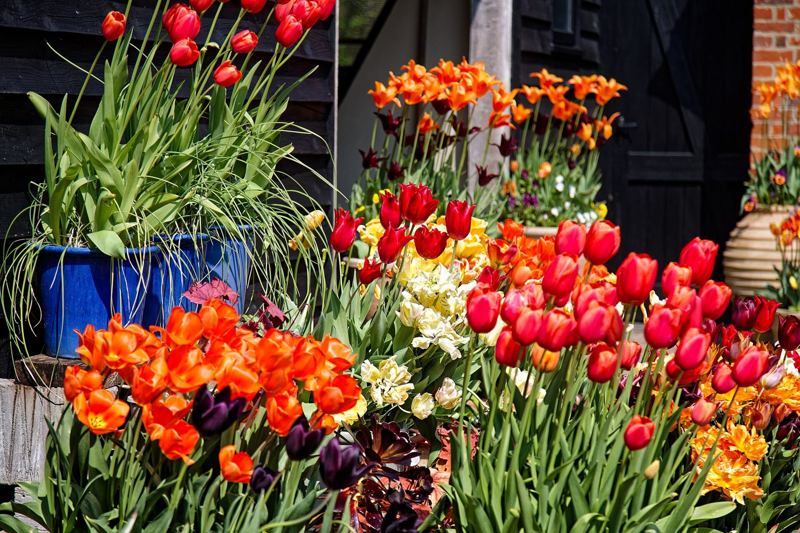 Tulip
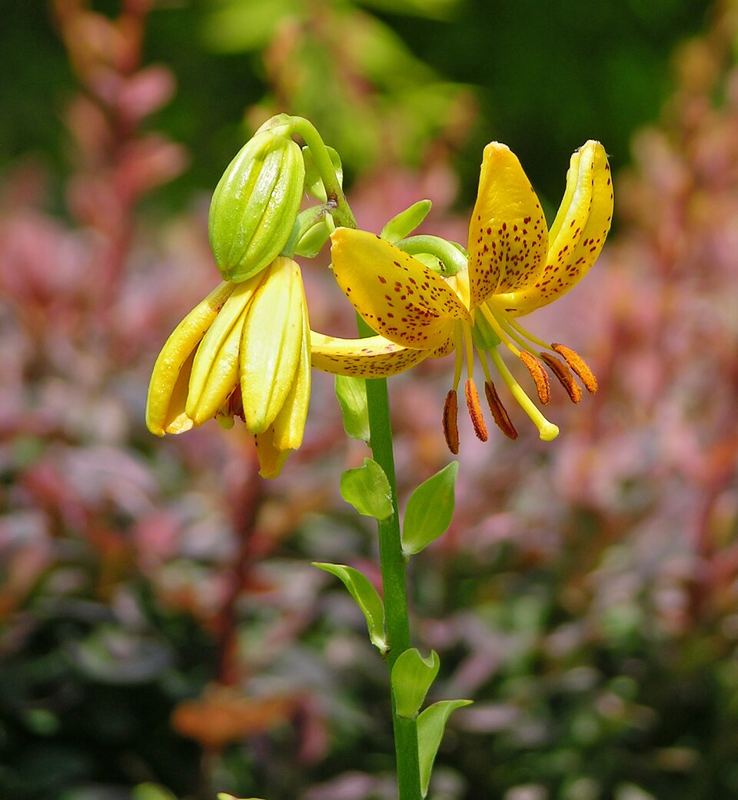 Lily
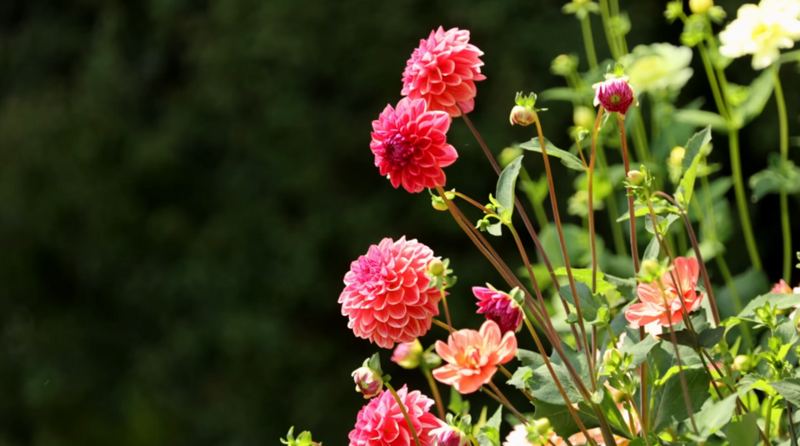 Dahlia