

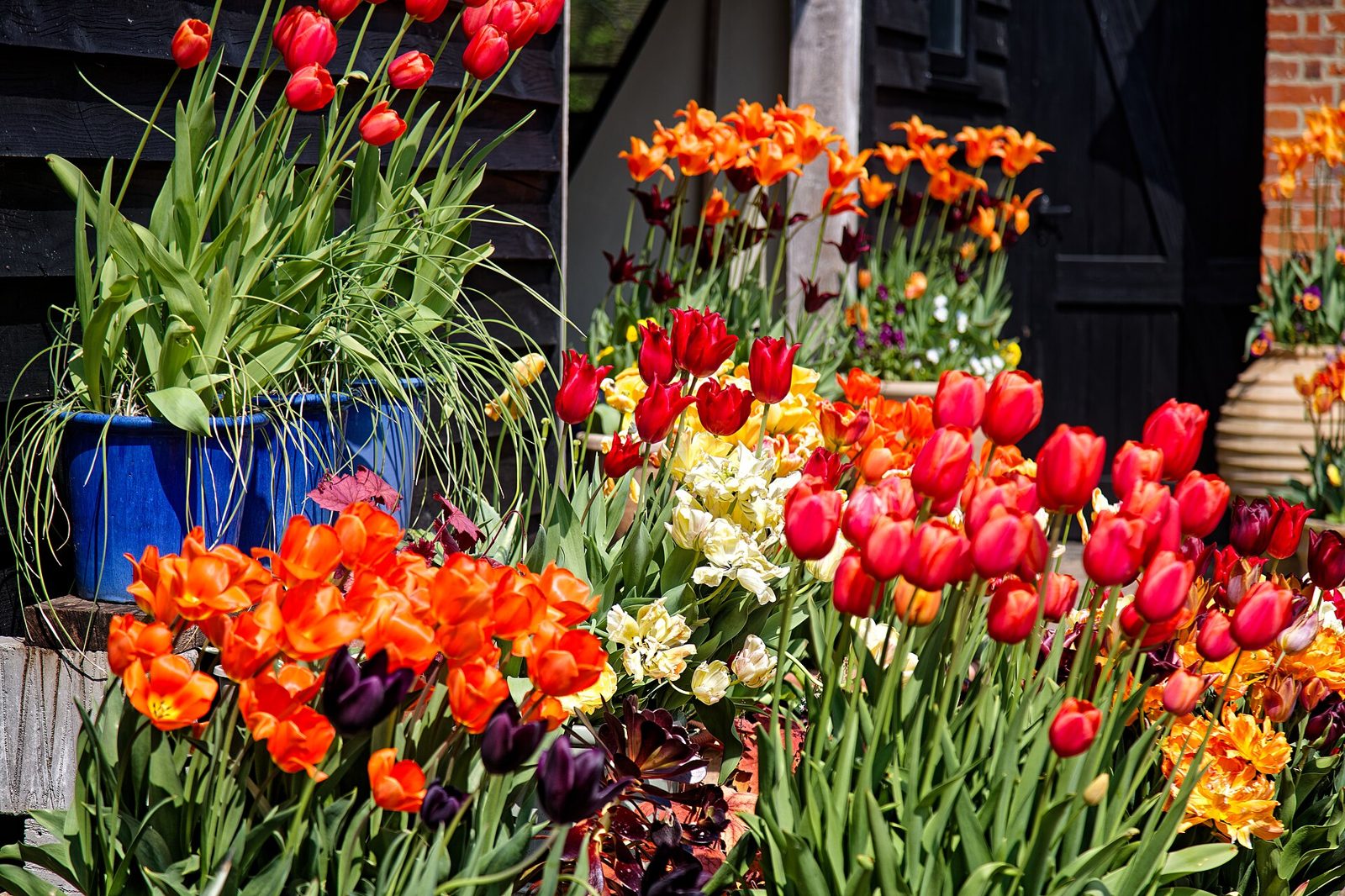
To grow tulips from bulbs, plant them in fall, several inches deep, in full sun and well-drained soil, and leave them alone through winter. Penn State says spring-blooming bulbs go in before the first frost, and Clemson says to wait until the soil at planting depth stays below 60°F (16°C). The flowers come in middle to late spring (NC State). The catch is the second year: tulips are happiest where winters are cool and moist and summers are warm and dry, and in warmer places they are treated as annuals. Do not count on a second season everywhere.
- Sun
- Full sun, 6+ hours
- Water
- Well drained, medium moisture; rain is usually enough
- Origin
- Middle East
- Container friendly
- Yes
- USDA zones
- 3–7 for lady tulip (T. clusiana); not given for garden tulips
- Planting depth
- 3× bulb depth, or 6–8 in (15–20 cm)
- Spacing
- 4–6 in (10–15 cm) (Clemson)
- Bloom time
- Middle to late spring
Can you grow tulips where you live?
NC State says tulips grow best in areas with cool, moist winters and warm, dry summers, and that the plant is intolerant of heat and loses floral vigor when soil temperatures reach 70°F (21°C). Our sources give no USDA zone range for garden tulips. The only range we have, zones 3 to 7, is for the lady tulip (Tulipa clusiana), a species, and NC State says it performs best there with moist winters and warm dry summers.
In the warm South the advice changes. Clemson says tulips can usually only be counted on for a single season of color in South Carolina and are treated like annual flowers, dug and discarded after they bloom. Clemson also says to refrigerate bulbs from the time of purchase until planting in November to late December to ensure spring flowering in Central and Coastal South Carolina. Tulips also have a chilling requirement, and we cover the hours in our guide to forcing tulips in pots.
When to plant tulip bulbs
Plant in fall. Penn State says spring-blooming bulbs are planted before the first frost for an early to late spring or early summer bloom. Clemson says to wait until the soil temperature at planting depth stays below 60°F (16°C), except for daffodils, which go in October or November. Our guide to when to plant tulip bulbs has the soil-temperature rule, the regional dates in our sources and the chilling times.
| Zones | January | February | March | April | May | June | July | August | September | October | November | December |
|---|---|---|---|---|---|---|---|---|---|---|---|---|
| Zone Central and coastal SC: plant bulbs Nov–Dec | November: plant bulbs | December: plant bulbs | ||||||||||
| Zone Coastal SC: plant bulbs Jan, Dec | January: plant bulbs | December: plant bulbs | ||||||||||
| Zone Bloom: bloom Apr–May | April: bloom | May: bloom |
- Plant bulbs
- Bloom
How deep should you plant tulips?
The sources give three different rules, and they are not identical.
| Source | Planting depth | Spacing |
|---|---|---|
| NC State | Three times the depth of the bulb | Not stated |
| Penn State | Two and a half to three times the bulb height | Not stated |
| Clemson | 6 to 8 inches (15–20 cm) | 4 to 6 inches (10–15 cm) apart |
The first two are multiples and the third is a fixed figure. They line up if your bulb is about 2 inches (5 cm) tall: three times that is 6 inches, which is the shallow end of Clemson’s range. That is our arithmetic, since our sources do not give a bulb size. For a larger bulb, use the multiple, which scales with size, rather than a fixed number.
Planting steps
- Pick a site with full sun and drainage. NC State says tulips want full sun (6 or more hours) and fertile, organically rich, well-drained, medium-moisture soil. Clemson says good drainage is essential and the soil pH for most bulbs should be between 6 and 7.
- Wait for cool soil. Clemson says to plant when the soil temperature at planting depth stays below 60°F (16°C), with no source giving a date for all regions.
- Plant at the right depth. Use the multiple that fits your bulb, or 6 to 8 inches (Clemson). Space bulbs 4 to 6 inches apart (Clemson).
- Water if the fall is dry. Clemson says normal rainfall usually provides enough moisture for spring-flowering bulbs. In a hot or dry spring it says extra water helps prolong blooming. Our sources give no fall watering amount.
Tulip care after planting
Water
Sun
After bloom
Winter
Which tulips to grow
Clemson recommends two groups. It calls the Single Late tulips one of the best groups for growing in warm climates. It also names the Lily-flowered group.
| Variety | Best for | Group | Flower | Notes |
|---|---|---|---|---|
| 'Halcro' | Warm climates | Single Late | Vibrant red | Recommended by Clemson |
| 'Queen of Night' | Warm climates | Single Late | Deep dark maroon | Recommended by Clemson |
| 'Renown' | Warm climates | Single Late | Rose-pink | Recommended by Clemson |
| 'Menton' | Warm climates | Single Late | Apricot-pink | Recommended by Clemson |
| 'Maureen' | Warm climates | Single Late | Pure white | Recommended by Clemson |
| 'West Point' | Garden color | Lily-flowered | Yellow | Excellent variety (Clemson) |
| 'White Triumphator' | Garden color | Lily-flowered | White | Excellent variety (Clemson) |
| 'Red Shine' | Garden color | Lily-flowered | Red | Excellent variety (Clemson) |
Why tulips do not always come back
NC State says tulips may be grown as perennials or annuals, and that species tulips often perform better than hybrid plants as perennials. Clemson says the garden hybrids are treated as annuals in South Carolina. If you want a repeat show, you have two options in our sources: choose a species such as the lady tulip, or plan to replant every fall. Our full explanation, including the other reasons a tulip may skip a year, is in why tulips do not come back.
Common tulip problems
NC State also lists tulip break virus, gray mold and mosaic virus as problems that may occur. It gives no treatment on the page we used.
Tulips in pots
NC State says tulips make wonderful outdoor container plants and can also be forced in containers as florist plants for indoor displays. Forcing needs a long cold period: 15 to 17 weeks by Penn State and UW-Madison, 12 to 16 weeks by Clemson. See our guide to tulips in pots and forcing.
Safety
NC State says tulip bulbs are toxic, with tulipalin as the toxic principle and the highest concentration in the bulb. Its species page recommends wearing gloves when handling bulbs to prevent skin allergies. Our sources do not rate tulips for cats or dogs.
What our sources do not tell you
They give no USDA zone range for garden tulips, no month-by-month planting dates for most regions, and no fall watering amount. They do not explain why hybrids decline, only that they often do.
Grow these next
If you like bulbs, calla lilies are the summer counterpart: planted from rhizomes in spring and dug in fall in cold climates. Our calla lily care guide has the details, and the overwintering guide shows how to store them. Fall is also hydrangea’s protect-the-buds season, covered in hydrangea fall care, and our fall bulb planting guide puts the fall jobs in order.
Frequently asked questions
When should I plant tulip bulbs?
In fall. Penn State says spring-blooming bulbs are planted in the fall, before the first frost. Clemson says to wait until the soil temperature at planting depth stays below 60°F (16°C). Clemson gives late December to early January for coastal South Carolina.
How deep do you plant tulip bulbs?
Our sources give three answers. NC State says three times the depth of the bulb. Penn State says two and a half to three times the bulb height. Clemson says 6 to 8 inches (15–20 cm) deep and 4 to 6 inches (10–15 cm) apart. All three put the bulb several inches down.
Do tulips come back every year?
Sometimes. NC State says tulips may be grown as perennials or annuals, although species tulips often perform better than hybrids as perennials. Clemson says tulips can usually only be counted on for a single season of color in South Carolina, where they are dug and discarded after bloom.
How much sun do tulips need?
NC State says full sun, which it defines as 6 or more hours of direct sunlight a day, in fertile, organically rich, well-drained, medium-moisture soil.
Are tulip bulbs poisonous?
NC State lists the toxic principle as tulipalin and says the highest concentration of the toxin is in the bulb. Its species page says the bulbs should not be ingested and recommends gloves when handling them to prevent skin allergies. Our sources do not rate tulips for pets.
Sources
- Tulipa (tulip), NC State Extension Plant Toolbox
- Tulipa clusiana (lady tulip), NC State Extension Plant Toolbox
- Spring Flowering Bulbs, Clemson Home & Garden Information Center
- Plant Bulbs in the Fall for a Spring Celebration, Penn State Extension
- Forcing Flowering Bulbs for Indoor Beauty, Penn State Extension
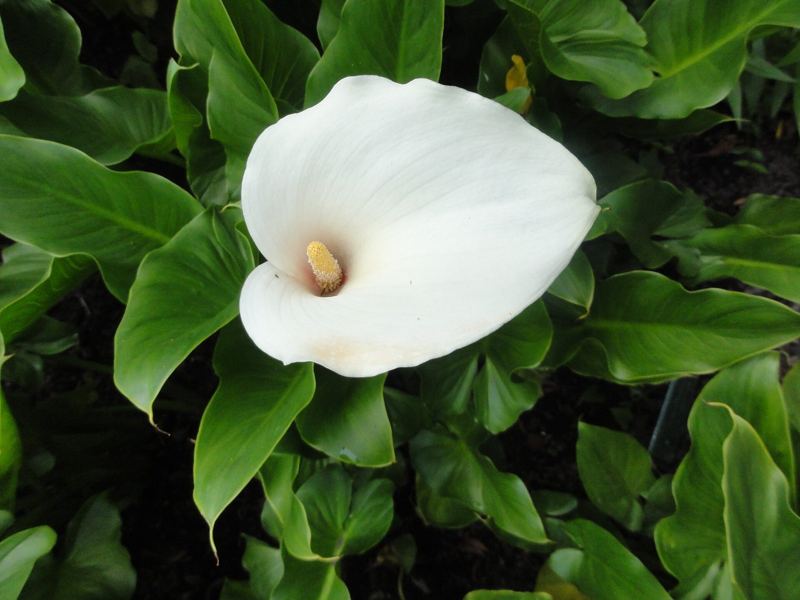 Calla Lily
 Lily
 Iris