

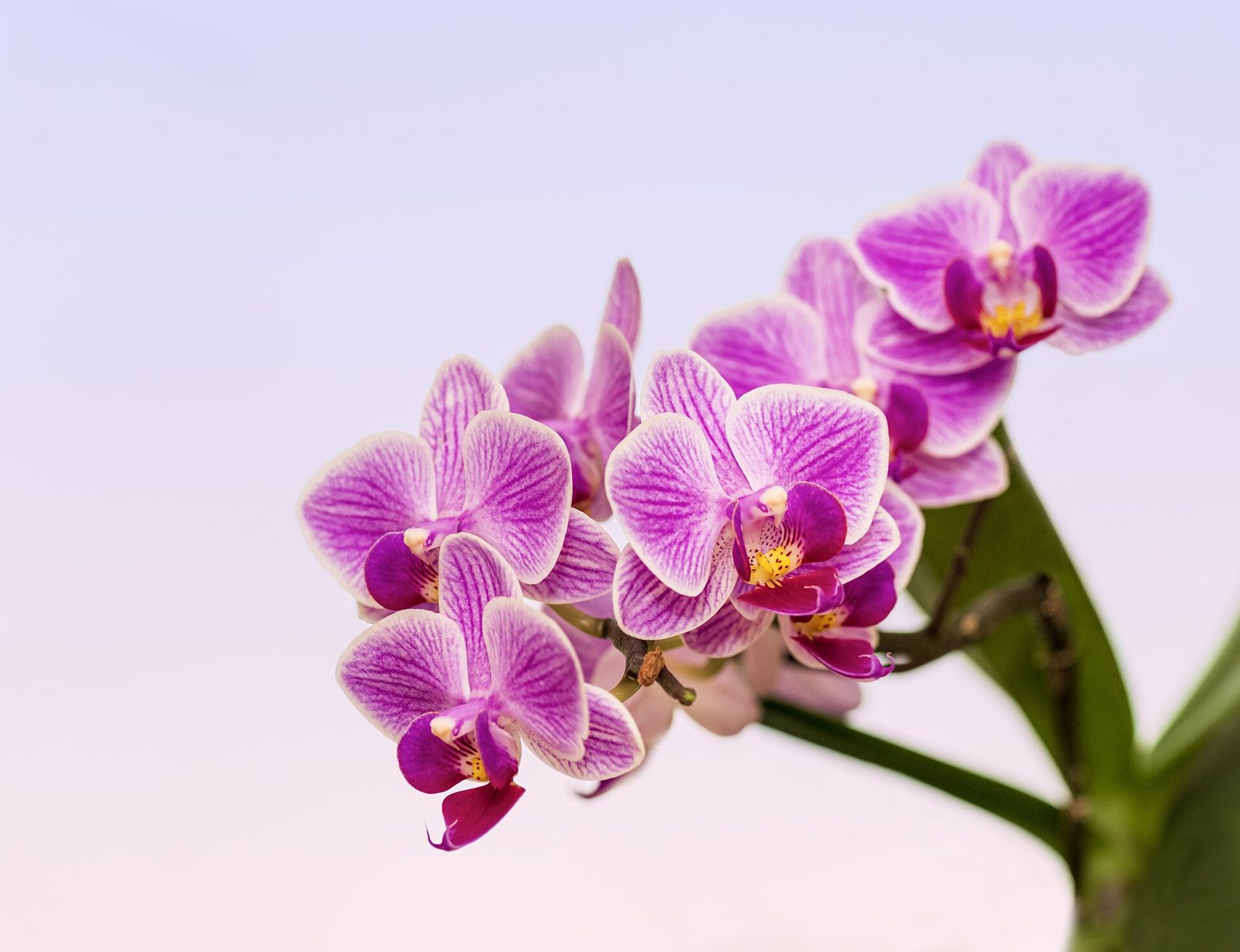
Moth orchids (Phalaenopsis) are houseplants almost everywhere in the US, and they grow easily in a bright window (UC ANR). They want a bright window with little or no direct sun, nights that stay at or above about 60°F, and a fast-draining bark mix that you water only when it is nearly dry. Clemson says orchids “must be protected from cold weather,” so outside a frost-free climate they live indoors all year. A well-grown plant flowers about once a year, and the flowers last for weeks. This guide focuses on the moth orchid, because that is the one most people bring home.
- Sun
- Part shade
- Water
- Thoroughly, when nearly dry
- Origin
- Asia
- Container friendly
- Yes
- Light
- Bright window, little or no direct sun
- Min night temp
- 60–65°F (15–18°C)
- Bloom time
- About once a year
- Potting mix
- Bark-based, soilless
- Frost hardy
- No
Indoors or outdoors?
Our sources treat orchids as indoor plants. They give no USDA zone for Phalaenopsis, so we will not invent one. What they do say is that orchids “require a temperature similar to other houseplants” (Clemson), that moth orchids want at least 60°F at night, and that you should avoid putting them near a window in extremely cold weather. In practice that means a living room or bright kitchen windowsill in every US zone.
Other orchids exist, and the sources mention two. Clemson lists cattleya, which needs about twice the light of a moth orchid, and dendrobium, which has a lower minimum night temperature (52°F against 65°F for Phalaenopsis). Everything below is about Phalaenopsis unless we say otherwise.
Light
Moth orchids do best in a bright window with little or no direct sun, such as an east window (Clemson). Penn State says an east or west window; Illinois Extension says east, west and south windows are all fine but warns that “the intense sun will burn the leaves.” UC ANR agrees they grow easily in a bright window with little to no sun. Clemson gives a number: Phalaenopsis can thrive under low light of 1,500 to 1,700 foot candles, and most orchids need partial shade for best flowering.
The failure to watch for is too little light. Clemson names light that is too low as one of the main reasons orchids fail to flower. If your plant has healthy leaves but no flower spike after a year, move it somewhere brighter before you change anything else. Our not-flowering guide walks through the order of fixes.
Water
Water thoroughly and do not water again until the mix is nearly dry throughout the pot (Clemson). While the plant is actively growing that works out to about once a week, and Clemson says to reduce watering after flowering, when orchids rest. Illinois Extension’s rule is the one to remember: “It would be better for the plant to get a little too dry than to overwater.” It adds that most people overwater, which kills the roots and ultimately the plant.
Two details matter. Do not let water sit on the leaves or in the leaf axils, where the leaves join the stem, because Clemson says this can lead to disease and death. And roots should never sit in water (Illinois). Tip the pot out of any decorative cover pot after watering.
Humidity and temperature
Night temperature
Humidity
Drafts and cold water
Air movement
Potting mix and pots
Phalaenopsis grow on trees in the wild. Penn State therefore wants a growing mix that is very well drained with lots of aeration, and Clemson says orchids grow best in soilless mixtures or attached to bark or cork. Clemson is blunt about the alternative: “One of the best ways to kill an epiphytic orchid is to plant it in soil.” Use an orchid mix, not a houseplant mix. Our repotting and containers guide covers when to repot, pot choice and what the sources say about the mix.
Feeding
Fertilizer advice varies. Clemson says to apply a soluble fertilizer monthly at the rate on the label. Penn State says a water-soluble houseplant fertilizer at half the recommended rate once or twice a month is adequate. UC ANR gives a high-nitrogen 30-10-10 twice a month in warmer months for bark-based mixes, or a balanced fertilizer for other mixes. Whichever you choose, Clemson adds a step that is easy to miss: each month, rinse accumulated fertilizer salts out of the pot with plain water.
Blooming and reblooming
A moth orchid usually flowers about once a year (Penn State). How long a flush lasts depends on who you ask: Illinois Extension says 6 to 8 weeks, while UC ANR says at least three months and often six or longer. Our sources do not explain the gap.
To get another round, the plant needs good light and a cooler spell. UC ANR says 3 to 4 weeks of 55 to 60°F nights in fall initiate flower spikes. Illinois Extension says 55 to 65°F nights and 70 to 80°F days for 6 to 8 weeks before a flowering stalk appears. UC ANR also warns that fluctuating temperatures can make buds drop. The full routine is in our orchid not-flowering guide.
Pruning and propagation
None of our sources gives pruning advice for Phalaenopsis, such as when to cut a spent flower spike, so we do not either. Propagation is also not covered for moth orchids. Clemson does give one practical point: it can take up to five years for a seedling to flower, so buy a flowering-size plant.
Common orchid problems
On the pest side, Clemson lists mealybugs, spider mites, scales and thrips. For disease it names leaf spots, petal blight, bacterial soft rot and many viruses. We do not have sourced treatments for them, so check the plant when you water and isolate anything that looks infested.
What our sources do not tell you
The four extension sources we rely on do not give a USDA zone, a pruning schedule, a method for propagating Phalaenopsis (keiki or division) or whether the plant is toxic to pets. They also name no moth orchid cultivars. If a fact matters to you and is missing here, check the label on your plant and your state extension office.
Grow these next
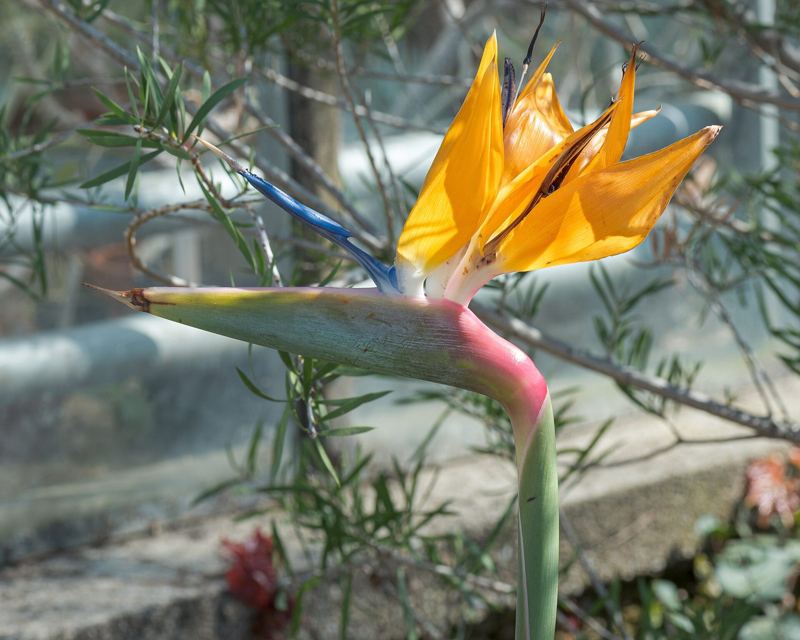
If you enjoy a houseplant that rewards bright light and patience, the bird of paradise is a bigger, bolder tropical for a sunny window. Our bird of paradise indoor guide shows how it compares in light and watering needs. For something that blooms in the dark months, try the Christmas cactus.
Frequently asked questions
How often should I water an orchid?
Water thoroughly, then wait until the mix is nearly dry throughout the pot. Clemson suggests about once a week while the plant is actively growing and less after flowering. Illinois Extension adds that it is better for the plant to get a little too dry than to be overwatered, and that most people overwater.
Can orchids grow in regular potting soil?
No. Clemson calls planting an epiphytic orchid in soil one of the best ways to kill it. Phalaenopsis grow on trees in the wild, so Penn State wants a very well-drained, airy mix; bark-based orchid mixes are the usual choice.
What light do moth orchids need?
A bright window with little or no direct sun. Clemson names an east window, Penn State says east or west, and Illinois Extension warns that intense sun burns the leaves. Light that is too low is one of the main reasons orchids fail to flower.
How do I get a moth orchid to bloom again?
Give it good light and a stretch of cooler nights. UC ANR says 3 to 4 weeks of 55 to 60°F nights in fall start flower spikes; Illinois Extension gives 55 to 65°F nights and 70 to 80°F days for 6 to 8 weeks. Our rebloom guide covers both.
Are orchids hard to grow?
UC ANR says moth orchids grow easily in a bright window. The failure Illinois Extension sees most is overwatering, not neglect. Keep the roots in a fast-draining mix, water only when it is nearly dry, and keep the plant warm and away from cold windows.
Sources
- Orchids (HGIC 1158), Clemson Cooperative Extension, Home and Garden Information Center
- Orchids as Houseplants, Penn State Extension
- Phalaenopsis: Beautiful but Picky, University of Illinois Extension
- Moth Orchids, UC ANR (Under the Solano Sun)
 Bird of Paradise