

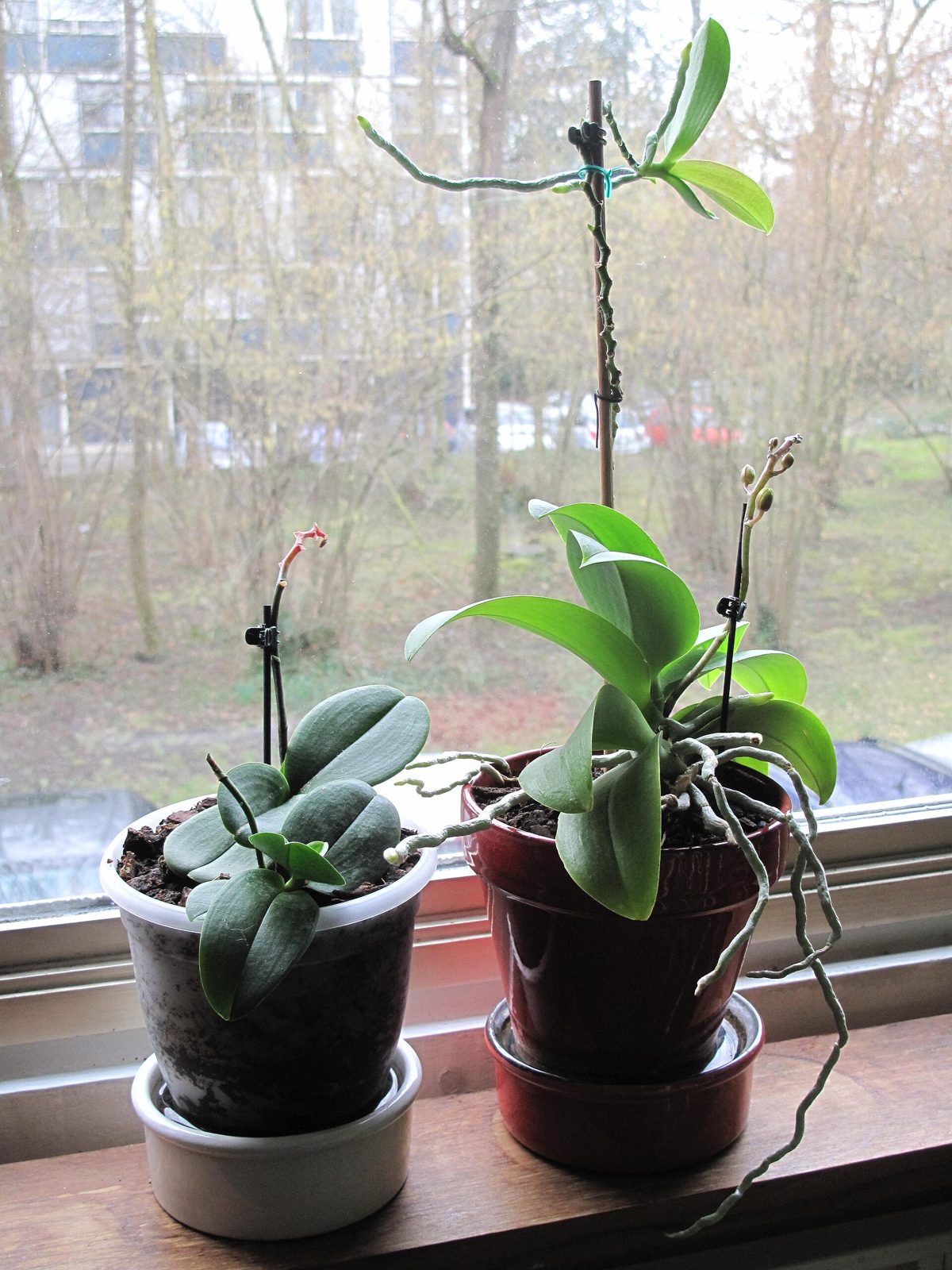
A moth orchid that will not flower usually needs more light, a cooler stretch of nights, or both. According to Penn State a healthy Phalaenopsis flowers about once a year. Two things start a new flower spike: good light, and several weeks of cooler nights. UC ANR puts the cool spell at 3 to 4 weeks of 55 to 60°F nights in fall; Illinois Extension asks for 55 to 65°F nights and 70 to 80°F days for 6 to 8 weeks. This guide sits under our main orchid care guide and covers the order of fixes.
Check the light first
Clemson names light that is “too low” as one of the main reasons orchids fail to flower. Moth orchids want a bright window with little or no direct sun (Clemson), such as an east window, or an east or west window per Penn State. Illinois Extension lists east, west and south windows but warns that intense sun burns the leaves. Clemson gives 1,500 to 1,700 foot candles as the low light level in which Phalaenopsis can still thrive, and says most orchids need partial shade for best flowering.
If the plant has been in a dim room, move it to a brighter window before touching anything else. Go too far and Illinois Extension warns the intense sun will burn the leaves, so brighten in steps.
Then give it cool nights
Both UC ANR and Illinois Extension tie new flower spikes to a spell of cooler nights. They give specific numbers, and the numbers do not agree exactly.
UC ANR
Illinois Extension
The difference is range and length: UC ANR’s window is cooler and shorter, Illinois Extension’s is warmer and longer. Both are for Phalaenopsis. Note also that Clemson’s recommended minimum night temperature (65°F) is warmer than UC ANR’s 55 to 60°F trigger, and Penn State’s minimum is 60°F. The sources do not reconcile this, so if you try the cooler range, hold it steady and watch the plant.
Steps
- Move it to a bright window. East or west light with little direct sun suits a moth orchid (Clemson, Penn State).
- Water only when nearly dry. Clemson says to water thoroughly and let the mix become nearly dry throughout the pot before watering again. Overwatering kills roots, according to Illinois Extension.
- Start the cool-night spell in fall. Aim for the lower night temperatures from UC ANR or Illinois Extension and keep daytime at 70 to 80°F. Keep the temperature steady, since fluctuating temperatures can cause bud drop (UC ANR).
- Keep feeding on schedule. Clemson recommends a soluble fertilizer monthly at label rate; Penn State suggests half strength once or twice a month. Rinse the pot with plain water monthly to clear fertilizer salts (Clemson).
- Wait for the spike. A flower spike appears after the cool spell. Keep conditions steady until the buds open.
Common reasons a moth orchid will not bloom
After the flowers fade
Clemson says orchids rest after flowering and that watering should be reduced at this time. UC ANR says repotting is best done in spring immediately after flowering, every 1 to 3 years; see the orchid containers guide for what the sources say about the mix and pot. Our sources do not say where to cut a spent flower spike, so we will not give a rule.
If the leaves are yellow instead
Yellow or limp leaves point to roots or watering rather than blooming. Start with our yellow leaves guide, and fix the leaves before you try to force flowers.
What the sources do not say
No source here gives the number of weeks from the last flower to the next spike, a pruning rule for the old spike, or a fertilizer to boost blooms beyond the monthly schedule. If you have done all the steps above and your plant is a seedling, remember Clemson’s note that it can take up to five years for a seedling to flower. For a faster result, buy a flowering-size plant.
Back to the orchid care guide. Orchids share a bright-window life with the bird of paradise, whose flowering also depends on good light. Christmas cactus also sets buds after a spell of cool nights, which UGA puts at 55 to 60°F; see its not-flowering guide and our flowering houseplants collection.
Frequently asked questions
How long does a moth orchid take to rebloom?
Illinois Extension says moth orchids need good light and 55 to 65°F nights with 70 to 80°F days for 6 to 8 weeks before a flowering stalk appears. UC ANR says 3 to 4 weeks of 55 to 60°F nights in fall start flower spikes. Our sources give no total time from the last flower to the next.
How often does a healthy orchid flower?
Penn State says Phalaenopsis usually produce spectacular flowers about once a year.
Can low light stop an orchid flowering?
Yes. Clemson names light levels that are too low as one of the main reasons orchids can fail to flower, so check light before anything else.
Why did my orchid drop its buds?
UC ANR says fluctuating temperatures can cause buds to drop. Keep the plant out of drafts and away from heating vents or cold glass once buds form.
Sources
- Moth Orchids, UC ANR (Under the Solano Sun)
- Phalaenopsis: Beautiful but Picky, University of Illinois Extension
- Orchids (HGIC 1158), Clemson Cooperative Extension, Home and Garden Information Center
- Orchids as Houseplants, Penn State Extension