

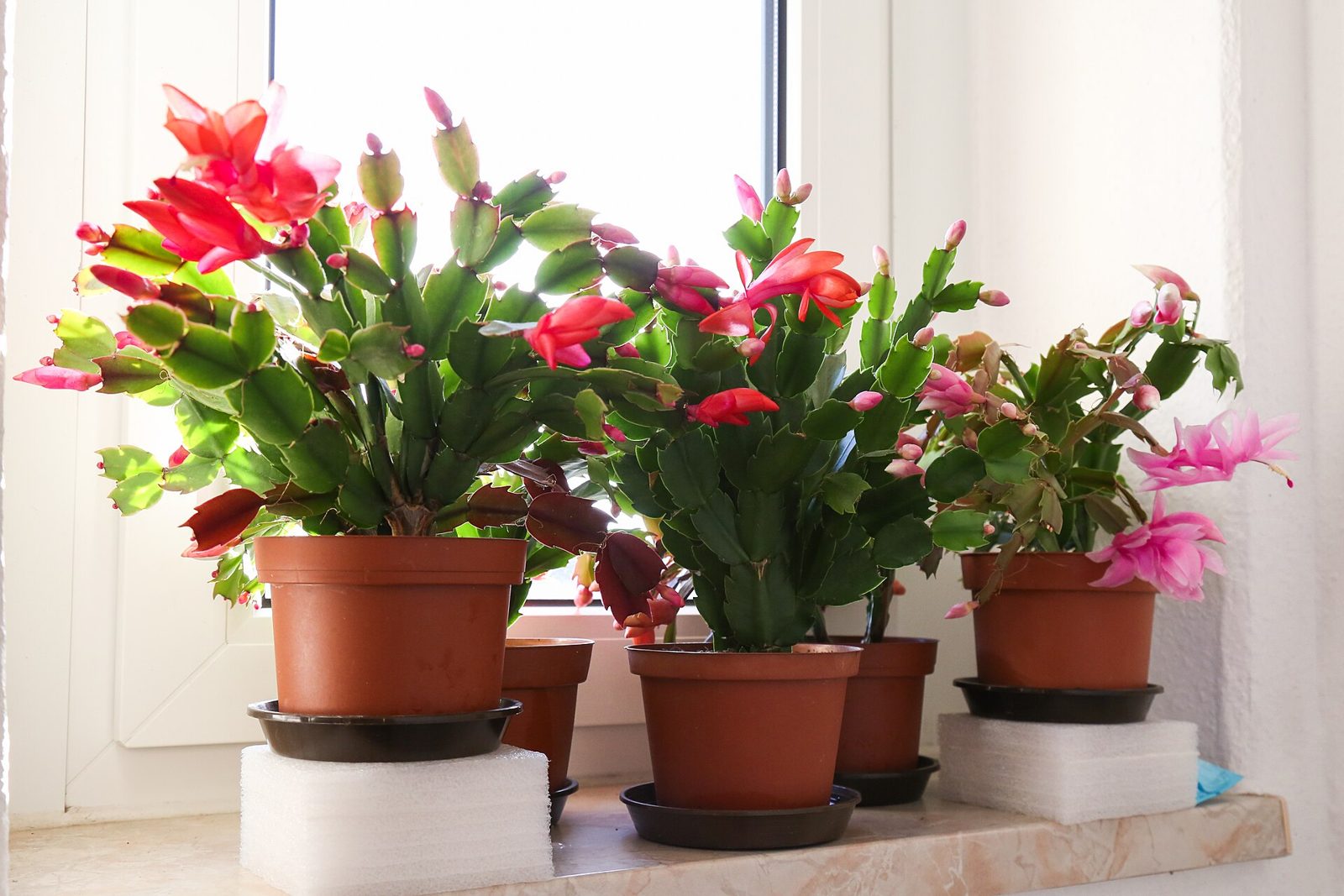
A Christmas cactus flowers when nights get long and cool, so a plant that stays in a lit, warm room all fall will often skip its bloom. UF/IFAS says it forms flower buds in response to shorter days in the fall. The sources then split on how long the night must be: 12 hours (Penn State), 13 hours (NC State) or 14 hours (UGA). This guide sits under our Christmas cactus care guide and takes the sources in turn.
How long should the dark period be?
Penn State: 12 hours
NC State: 13 hours
UGA: 14 hours
UF/IFAS: six weeks
The sources do not explain the gap. The practical reading is that 14 hours is the highest figure and meets all three minimums.
Night temperature
UGA says night temperatures between 55 and 60°F are ideal, and that continuous warm temperatures can cause flower buds to drop. Penn State says the optimal winter growing temperature for holiday cacti is 68°F by day and 60°F at night. UF/IFAS says to avoid drafts and heat sources. So the sourced target is cool but not cold nights, in the upper 50s.
Keep the dark period dark
UGA warns that as little as 2 hours of interrupted lighting will inhibit flower bud set. Any light that comes on during the dark period counts. UF/IFAS says to keep plants within 6 feet of a window for bright light in the day, which is the other half of the arrangement: bright days and dark, uninterrupted nights.
Feeding and water around bud time
UGA says to stop fertilizing during the late summer for greater flower bud production in the fall. Penn State says overfertilizing while buds develop is a problem. UGA also says that following bud set in the fall the growing medium must be kept evenly moist to prevent flower bud drop. UF/IFAS says to water whenever the top inch of soil feels dry. If you have been fertilizing into September, back off now.
Step by step
- Stop feeding in late summer. UGA says to stop fertilization in late summer for more fall flower buds.
- Begin the short days in fall. NC State puts the window mid-September to mid-November; UF/IFAS says six weeks of short days.
- Give 12 to 14 hours of uninterrupted darkness. The three sources give 12, 13 and 14 hours. No interruptions: UGA says 2 hours of light inhibits bud set.
- Keep nights at 55 to 60°F. UGA’s ideal range. Keep the plant out of drafts and away from heat sources (UF/IFAS).
- Once buds form, keep the mix evenly moist. UGA says this prevents bud drop.
Why buds drop
After the flowers
Penn State says to wait until the blooming period has ended and flowers have wilted before repotting. UGA says repotting is necessary only about every three years, in spring. Pruning timing conflicts: UGA says pinch in early June and again in late September, while UF/IFAS says the last pruning should be in late spring. If you want cuttings from the trimmings, see our cuttings guide.
What the sources do not say
No source gives a USDA zone or states how to build a dark closet beyond “uninterrupted darkness”. For the other succulents that share a windowsill, see the succulent care guide. Moth orchids also wait on a cool-night spell in fall before they start a flower spike; see how to get a moth orchid to rebloom, or compare indoor bloomers in our flowering houseplants collection.
Frequently asked questions
How many hours of darkness does a Christmas cactus need?
The sources disagree. Penn State says at least 12 hours of uninterrupted darkness a day. NC State says uninterrupted nights of at least 13 hours from mid-September until mid-November. UGA says 14 hours or more of continuous darkness before buds set.
What temperature sets buds?
UGA says night temperatures between 55 and 60°F are ideal. UF/IFAS says to keep the plant out of drafts and away from heat sources.
How long does the short-day treatment last?
UF/IFAS says the short-day treatment should last six weeks. NC State's window runs from mid-September to mid-November.
Can a light at night stop buds forming?
Yes. UGA says as little as 2 hours of interrupted lighting will inhibit flower bud set.
Sources
- Christmas Cactus Preparation, UF/IFAS Gardening Solutions
- Christmas or Thanksgiving Cactus?, University of Georgia Extension (Paulding County)
- Holiday Cacti Care, Penn State Extension
- Schlumbergera, NC State Extension Plant Toolbox