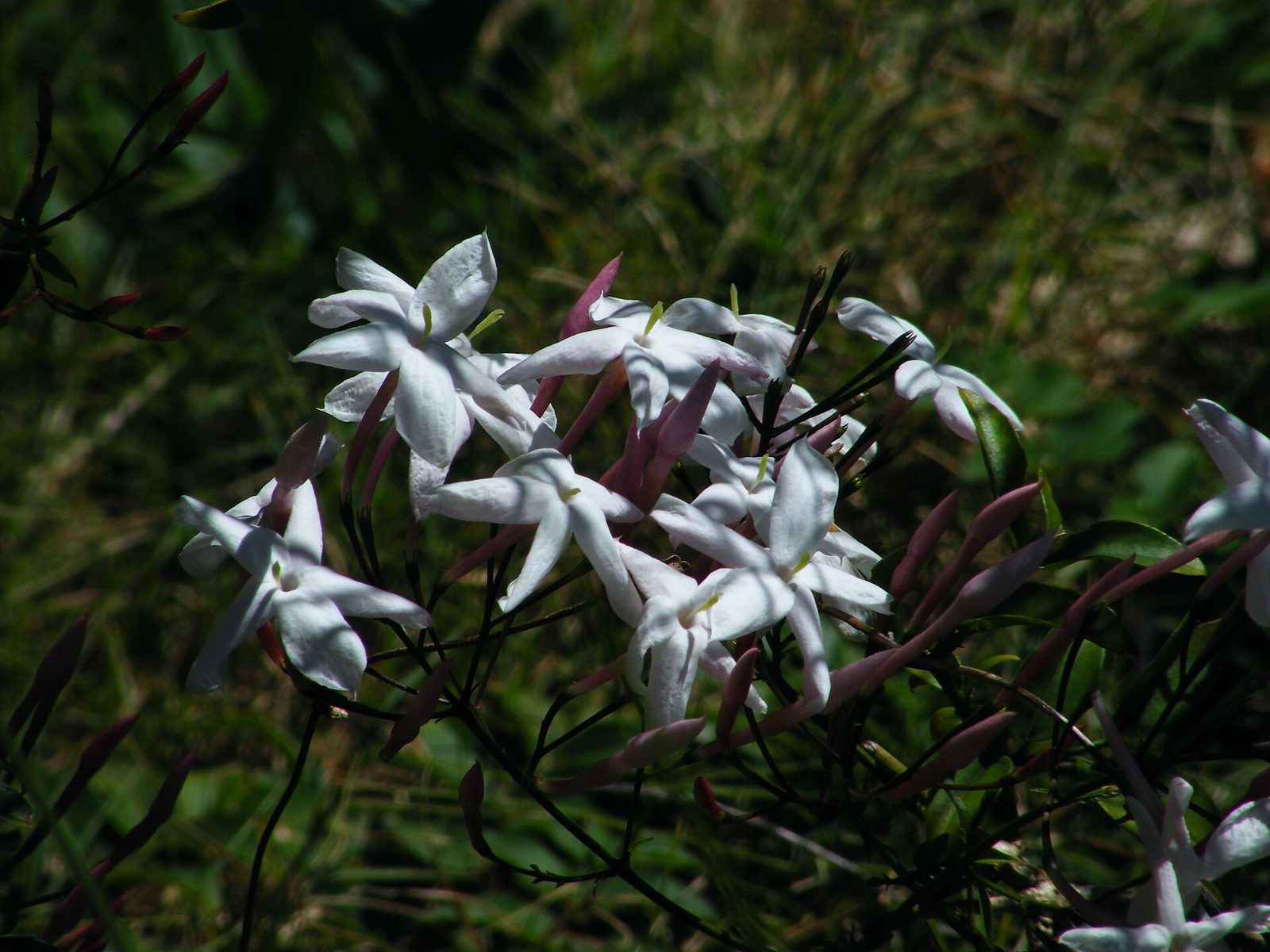
Jasmine care depends on which jasmine you have, because the plant most people call jasmine in the US is not always a true jasmine. This guide covers true jasmine (Jasminum), and specifically common or poet’s jasmine (Jasminum officinale): a vigorous plant with very fragrant white flowers up to 1 inch across, present all summer and into fall (Clemson). It wants full sun to partial shade, a warm site and moist, well-drained soil, and NC State rates it for USDA zones 7b to 10b. In colder places you can grow it in a pot and bring it indoors for winter. Star jasmine, also called Confederate jasmine, is a separate genus and gets its own section below.
- USDA zones
- 7b–10b (J. officinale, NC State)
- Sun
- Full sun to partial shade, warm site
- Water
- Moist, well-drained soil; drought tolerant (J. officinale)
- Origin
- Asia
- Container friendly
- Yes
- Bloom time
- Summer into fall
- Pruning
- After flowering
- Pets
- Non-toxic per NC State tags (J. officinale)
Which plant is it? True jasmine and star jasmine
Gardeners use “jasmine” for two unrelated groups, and the care differs, so check the label.
| True jasmine | Star or Confederate jasmine | |
|---|---|---|
| Genus | Jasminum | Trachelospermum |
| Species in our sources | Jasminum officinale (common jasmine) | Trachelospermum jasminoides |
| What the sources say | The plant covered on this page | Not a true jasmine (Clemson, NC State, UF/IFAS) |
Clemson says star jasmine is not a true jasmine at all but a member of the genus Trachelospermum. NC State says its flowers are very fragrant like jasmine but are not part of the jasmine genus, and UF/IFAS says it is not a true jasmine either. Everything below is about Jasminum. Our sources for star jasmine are limited to this genus note, so we do not give star jasmine care here.
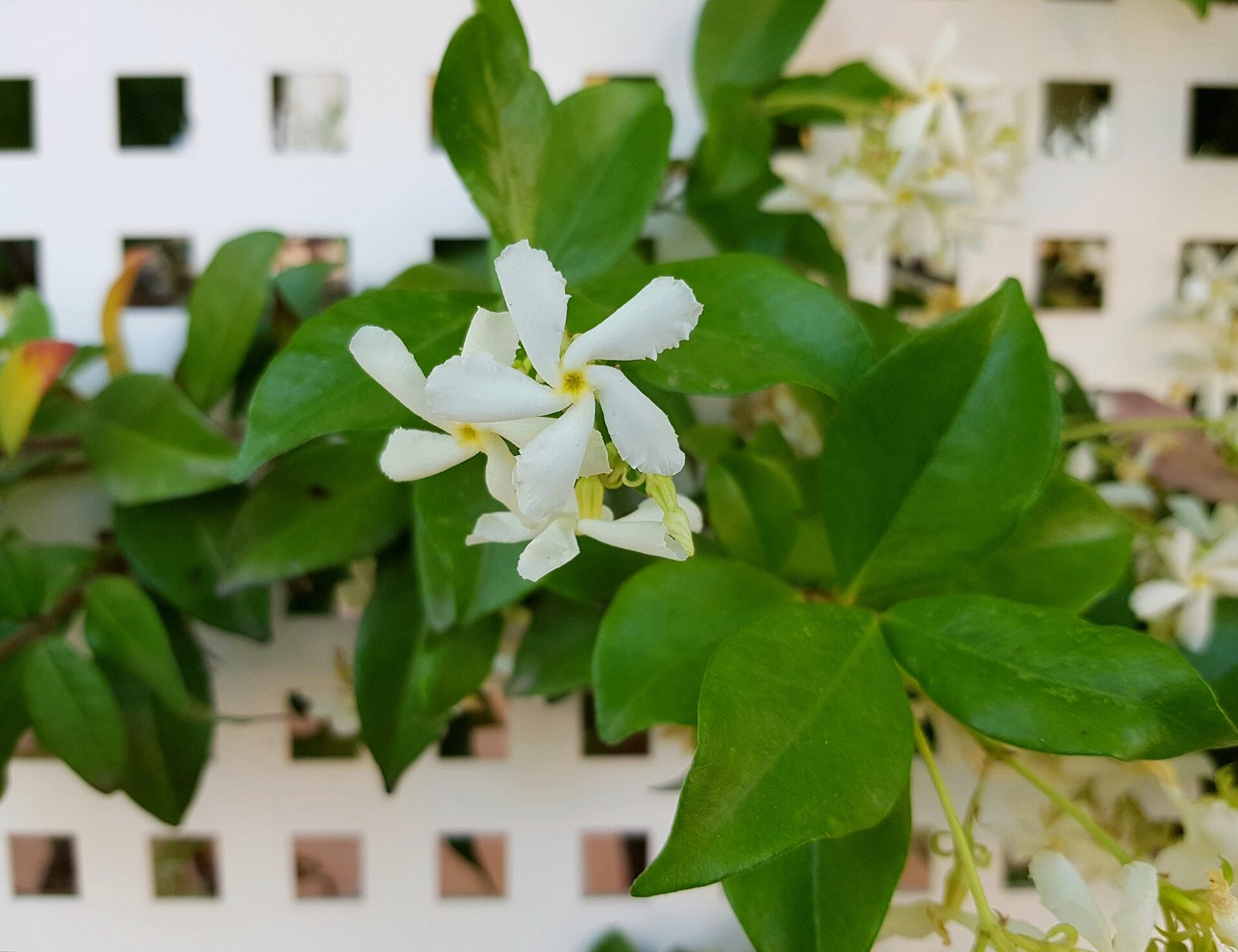

Other true jasmines are not covered by our sources either: we found no extension-site guidance for Jasminum polyanthum or Jasminum sambac, so we do not give care for them. Clemson also names winter jasmine (Jasminum nudiflorum) and showy jasmine (Jasminum floridum), whose yellow flowers are unscented, and those are not the fragrant white jasmine described here.
How to tell which jasmine you have
The flowers are the quickest clue, according to our sources.
| Plant | Flowers | Source |
|---|---|---|
| Common jasmine (Jasminum officinale) | Very fragrant, white, up to 1 in (2.5 cm) wide, all summer and into fall | Clemson |
| Winter jasmine and showy jasmine (Jasminum) | Yellow and unscented, 1 in (2.5 cm) wide | Clemson |
| Star jasmine (Trachelospermum jasminoides) | Very fragrant, but the plant is not a true jasmine | NC State, Clemson, UF/IFAS |
If your plant has yellow, unscented flowers, it does not match common jasmine’s description. Our sources do not walk through every other species.
Where can you grow jasmine?
NC State lists USDA Plant Hardiness Zones 7b, 8a, 8b, 9a, 9b, 10a and 10b for common jasmine, and says it is not cold tolerant beyond zone 7, but can be grown as a container plant and brought inside to overwinter. Clemson is more cautious: common white jasmine or poet’s jasmine is hardy throughout the Midlands of South Carolina but questionable in the Upstate. NC State’s genus page adds that the less hardy species are houseplants or conservatory subjects in cold areas. The two sources are consistent about the edge of the range, with zone 7b as the northern limit in NC State’s terms and the Upstate as the doubtful area for Clemson.
Planting jasmine
- Choose a warm spot with sun. Clemson says all jasmines prefer full sun to partial shade and a warm site. NC State’s genus page says jasmines need full sun for optimal health, or at least bright light.
- Prepare moist, well-drained soil. NC State says common jasmine prefers a moist, well-drained, light soil enriched with organic matter, but tolerates average soil. Clemson says jasmines grow well in regular garden soil with moderate fertility and moisture. We found no soil pH.
- Plant after frost, in spring. Clemson says semi-tropical Jasminum species are best planted in the spring after the danger of frost is past. It separately says containerized plants are best planted in the fall. The factsheet does not say how the two statements fit together, so we report both.
- Give it room and a support. Clemson says jasmines bush out and should not be jammed together. NC State says that indoors it requires a trellis or support, and common jasmine is a vigorous plant.
Our sources give no planting depth or numeric spacing for Jasminum.
Jasmine care
Water
Sun
Pruning
Winter
NC State’s genus page says jasmine flowers are borne on old growth, which is why the timing of pruning matters so much. Our jasmine pruning guide goes through it.
Jasmine through the year
| Time | What to do | Source |
|---|---|---|
| Spring, after frost | Plant semi-tropical Jasminum species | Clemson |
| Summer into fall | Common jasmine blooms | Clemson |
| After the blooms fade | Prune, including severe pruning for common jasmine | NC State |
| Before cold weather beyond zone 7 | Bring container plants inside | NC State |
| Winter indoors | 4+ hours of direct sun or 14 to 16 hours of strong artificial light; 68 to 72°F day, 50 to 55°F night | Clemson |
Jasmine in pots and indoors
NC State says common jasmine can be a container plant, and its genus page says container plants will usually stay at 4 to 5 feet and are easily pruned to size. Clemson says that indoors jasmines need at least four hours of direct sunlight daily or 14 to 16 hours of strong artificial light, with day temperatures of 68 to 72°F (20–22°C) and night temperatures of 50 to 55°F (10–13°C). See our guide to jasmine in containers.
Which jasmine to choose
NC State lists three cultivars of Jasminum officinale.
| Variety | Best for | Size | Flower / foliage | Notes |
|---|---|---|---|---|
| 'Affine' | Larger flowers | Not stated | Slightly larger flowers | J. officinale cultivar (NC State) |
| 'Frojas' | Gold foliage | Not stated | Gold foliage, fragrant white summer flowers | J. officinale cultivar (NC State) |
| 'Aureovariegatum' | Variegated foliage | Not stated | Variegated leaves | J. officinale cultivar (NC State) |
Common jasmine problems
Are jasmine plants safe for pets?
NC State’s plant tags list common jasmine (Jasminum officinale) as non-toxic for cats, horses and dogs. We have no equivalent source for other jasmines or for star jasmine, so do not assume the tag carries over.
What our sources do not tell you
They do not give a planting depth, spacing, soil pH, propagation method or fertilizer rate for Jasminum. They also say nothing about Jasminum polyanthum or Jasminum sambac. Common jasmine’s mature size is not stated in the sources we used.
Grow these next
If fragrance is what you want, lavender is the sun-baked counterpart: another plant that wants full sun and well-drained soil, though it prefers to stay dry. Jasmine is the trellis plant for a warm wall; lavender is the one for the sunny bed.
Frequently asked questions
Is star jasmine a true jasmine?
No. Clemson, NC State and UF/IFAS all say star or Confederate jasmine (Trachelospermum jasminoides) is not a true jasmine. Clemson says it is a member of the genus Trachelospermum, not Jasminum, though its flowers are very fragrant like jasmine.
What zones does jasmine grow in?
NC State lists USDA Plant Hardiness Zones 7b to 10b for common jasmine (Jasminum officinale) and says it is not cold tolerant beyond zone 7. Clemson says it is hardy throughout the Midlands of South Carolina but questionable in the Upstate.
How much sun does jasmine need?
Clemson says all jasmines prefer full sun to partial shade and a warm site. NC State says common jasmine grows in full sun to partial shade and is drought and pollution tolerant.
When do you prune jasmine?
After flowering. NC State says flowers are borne on old growth, so prune after flowering to ensure a good bud set for the next season. Common jasmine responds well to severe pruning after the blooms fade.
Is jasmine safe for pets?
NC State's plant tags list common jasmine (Jasminum officinale) as non-toxic for cats, horses and dogs. That tag is for that species only, and the same sources say star jasmine is a different plant, which we do not cover here.
Sources
- Jasminum officinale (common jasmine), NC State Extension Plant Toolbox
- Jasminum (jasmine), NC State Extension Plant Toolbox
- Jasmine, Clemson Home & Garden Information Center
- Trachelospermum jasminoides (star jasmine), NC State Extension Plant Toolbox
- Star Jasmine, UF/IFAS Gardening Solutions
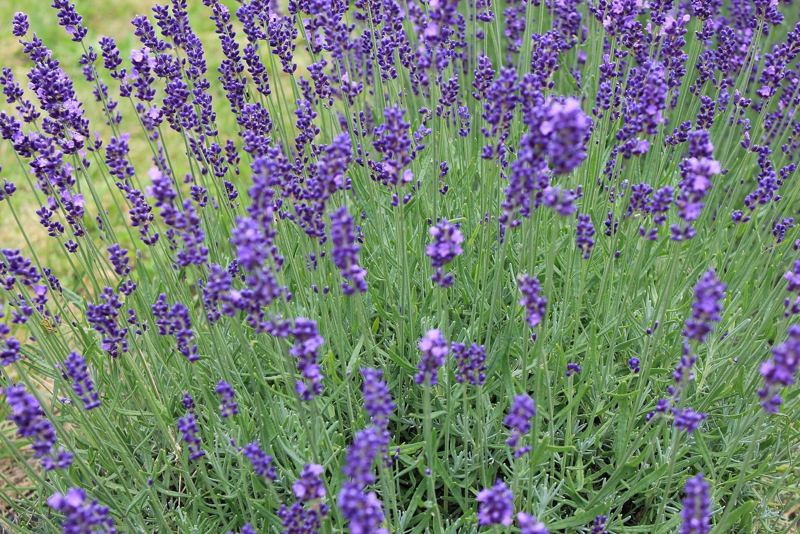 Lavender
 Honeysuckle
 Wisteria