
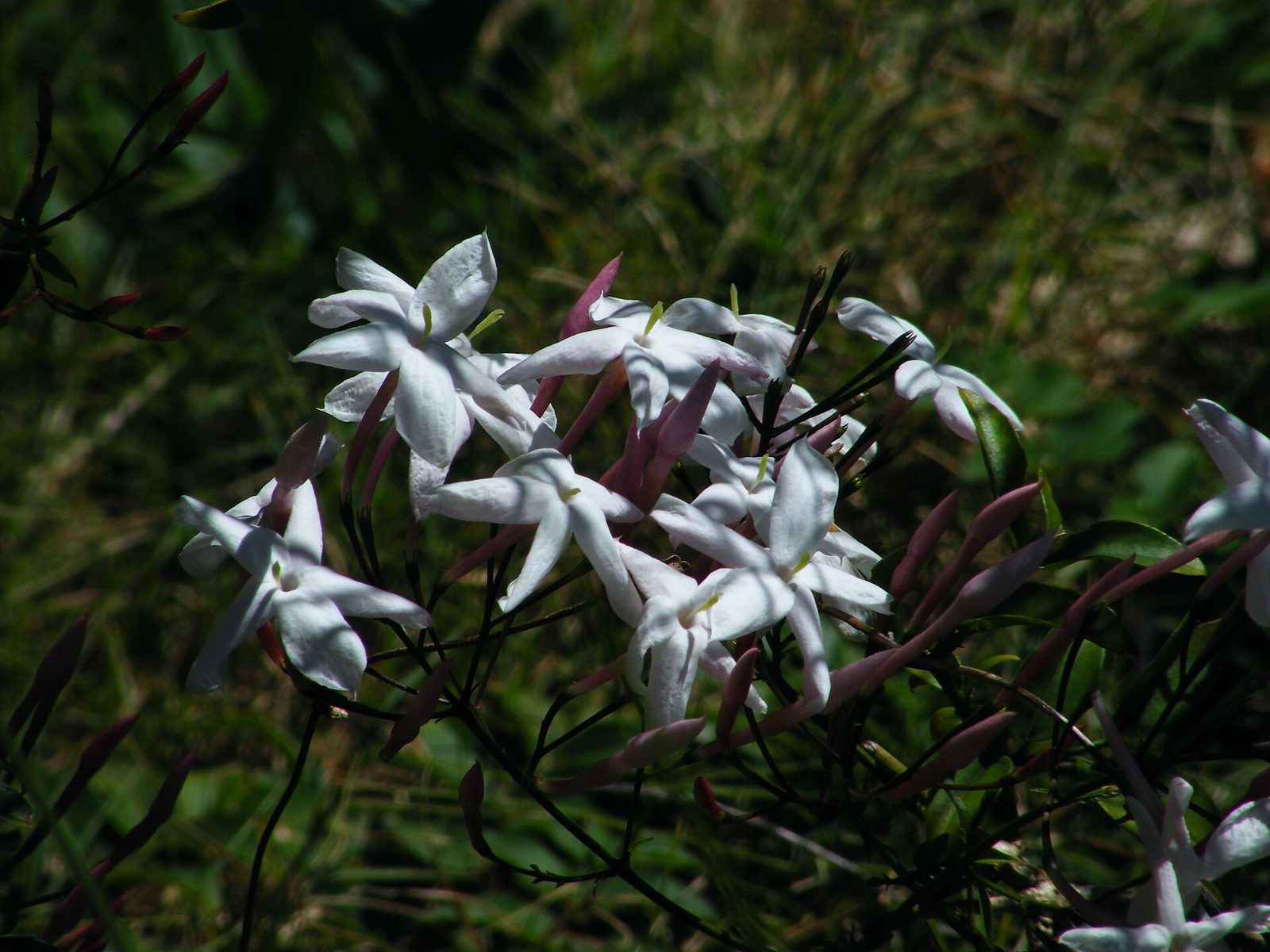
Common jasmine does well in a container, and a pot is the practical way to grow it north of zone 7. NC State says Jasminum officinale is not cold tolerant beyond zone 7 but can be grown as a container plant and brought inside to overwinter. Container plants will usually stay at 4 to 5 feet (1.2–1.5 m) and are easily pruned to size (NC State, genus page). This guide belongs to our jasmine care guide and covers true jasmine (Jasminum), not star jasmine.
Why grow jasmine in a pot?
Hardiness is the main reason. NC State lists zones 7b to 10b for common jasmine, and Clemson says it is hardy throughout the Midlands of South Carolina but questionable in the Upstate. Outside that range, the choice is a pot you can carry indoors. NC State’s genus page also describes the less hardy species as houseplants or conservatory subjects in cold areas.
How to pot jasmine
- Pick the right plant. Make sure it is a true jasmine (Jasminum). Clemson, NC State and UF/IFAS say star or Confederate jasmine (Trachelospermum) is a different genus, and this page does not cover it.
- Choose a sunny, warm spot. Clemson says all jasmines prefer full sun to partial shade and a warm site. NC State’s genus page says jasmines need full sun for optimal health or at least bright light.
- Use moist, well-drained, organic soil. NC State says common jasmine prefers a moist, well-drained, light soil enriched with organic matter. Our sources give no pot size, mix recipe or soil pH.
- Add a support. NC State says that grown indoors common jasmine requires a trellis or support. The same support is useful outside, since the plant is vigorous.
- Prune after flowering. Flowers are borne on old growth (NC State), so cut after bloom. See our jasmine pruning guide.
Clemson says semi-tropical Jasminum species are best planted in spring after frost is past, and that containerized plants are best planted in fall. The page does not reconcile the two, so we report both rather than choose.
Watering potted jasmine
NC State says most jasmines need moist, well-drained soil, though some species are somewhat tolerant of dry soils. Its common jasmine page says the plant is drought and pollution tolerant. Together that points to a plant that likes steady moisture but copes with dry spells. Our sources give no watering amounts, so check the soil by touch.
Bringing jasmine indoors for winter
Clemson gives indoor conditions for jasmines.
| Need | Clemson says |
|---|---|
| Light | At least 4 hours of direct sunlight daily, or 14 to 16 hours of strong artificial light |
| Day temperature | 68 to 72°F (20–22°C) |
| Night temperature | 50 to 55°F (10–13°C) |
NC State adds that if common jasmine is grown indoors it will require hard pruning and a trellis or support. It also says problems are more likely to occur for plants brought indoors for the winter, naming aphids or spider mites, leaf spot and root rot on the genus page, and scale, mealybugs and aphids on the common jasmine page. Watch for them when the plant comes inside.
Clemson gives these indoor figures for jasmines in general, not for common jasmine specifically, so treat them as a guide rather than a measured requirement.
Moving back outside
Our sources give no date or temperature for moving jasmine back outdoors. If you are making room at a bright window, our guide to growing succulents indoors gives the figure for those plants: at least six to eight hours of bright light (Illinois Extension).
Pests and problems in containers
NC State says insect and disease problems are uncommon for outdoor plants, but more likely on plants brought indoors. The pages name aphids or spider mites, leaf spot and root rot.
What our sources do not tell you
They do not give a pot size, repotting schedule, fertilizer rate, overwintering method for pots left outside or a propagation method for Jasminum. They also do not cover Jasminum polyanthum or Jasminum sambac, which are often sold as houseplants.
Frequently asked questions
Can jasmine grow in a pot?
Yes. NC State says common jasmine (Jasminum officinale) can be grown as a container plant and brought inside to overwinter, and that container plants will usually stay at 4 to 5 feet and are easily pruned to size.
How much light does indoor jasmine need?
Clemson says indoors, jasmines need at least four hours of direct sunlight daily or 14 to 16 hours of strong artificial light.
What temperature should jasmine have indoors?
Clemson gives day temperatures of 68 to 72°F (20–22°C) and night temperatures of 50 to 55°F (10–13°C).
Are potted jasmines more likely to get pests?
NC State says problems are more likely to occur for plants brought indoors for the winter. It lists aphids or spider mites, leaf spot and root rot, and scale, mealybugs and aphids for common jasmine.
Sources
- Jasminum officinale (common jasmine), NC State Extension Plant Toolbox
- Jasminum (jasmine), NC State Extension Plant Toolbox
- Jasmine, Clemson Home & Garden Information Center