

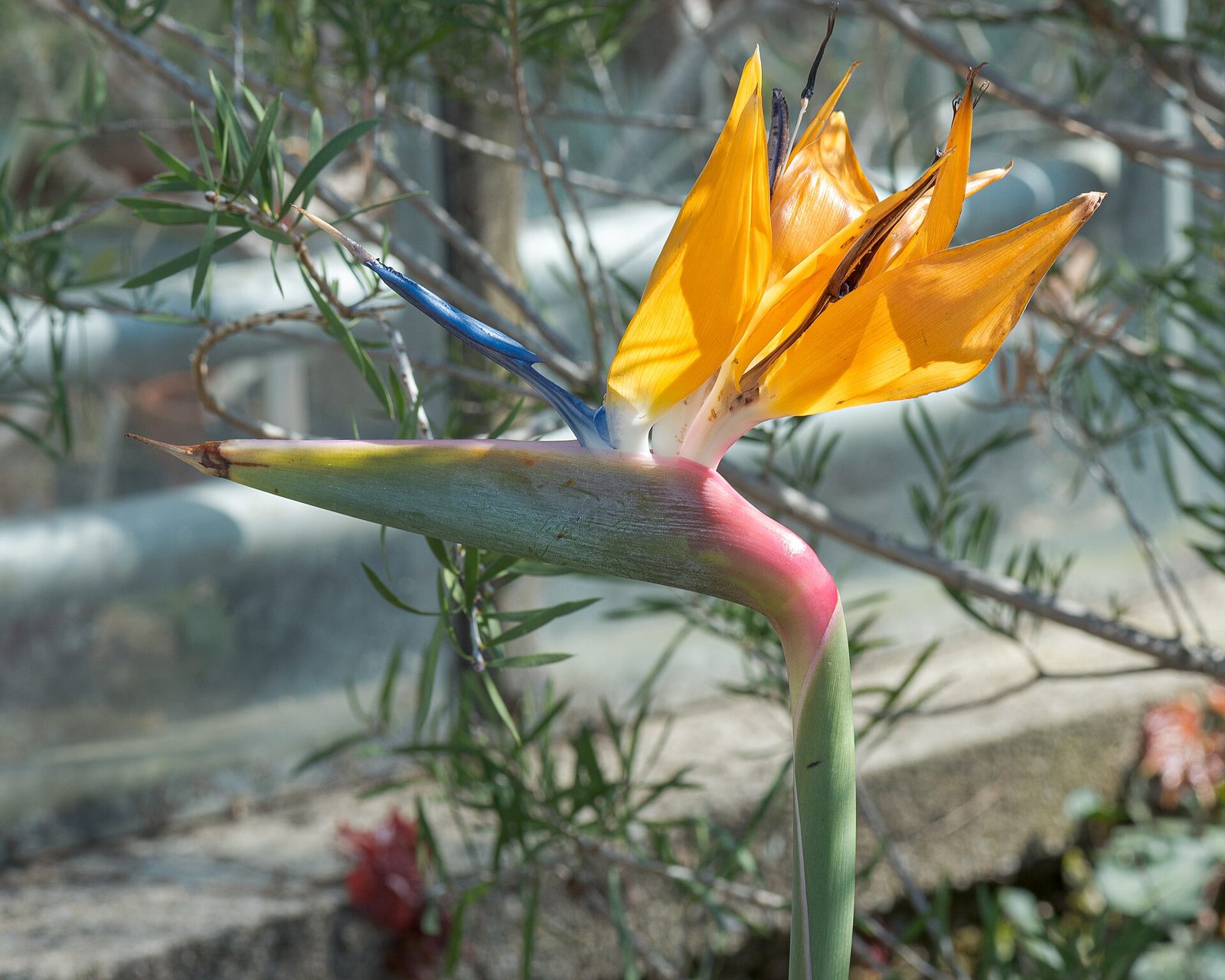
Bird of paradise (Strelitzia reginae) is a landscape plant in USDA zones 10 and 11 and a big, sun-hungry houseplant everywhere else. UF/IFAS says it thrives in zones 10 through 11 and can survive further north with frost protection. In cold-winter areas, grow it in a large pot, keep it outdoors in the warm months and bring it in before the first frost. It wants as much light as you can give it, regular water and food in the growing season, and a drier winter. UF/IFAS EDIS says blooms appear intermittently most of the year, but a plant grown from seed can take 4 to 7 years to start (Wisconsin).
- USDA zones
- 10–11 outdoors
- Sun
- Full sun
- Water
- Freely in summer, less in winter
- Origin
- Africa
- Container friendly
- Yes
- Light
- Full sun; bright window indoors
- Bloom time
- Intermittent, late winter to spring (Clemson)
- Min temp
- 24–28°F for a short time
- Pet safe
- No: toxic to cats, dogs, horses
Outdoors or indoors?
The answer depends on your zone. UF/IFAS says Strelitzia reginae thrives in zones 10 through 11 and can survive further north with frost protection. The University of Wisconsin says to grow it in a large pot or tub and bring it in before the first frost. In north Florida, UF/IFAS EDIS recommends a container that can be moved indoors during freezes to ensure flower production. The practical split is below.
Types: reginae, nicolai and cultivars
| Variety | Best for | Size | Flower | Notes |
|---|---|---|---|---|
| Strelitzia reginae | The plant this guide covers | Not given in our sources | Orange with a blue tongue | The common bird of paradise |
| Mandela's Gold | Yellow flowers | Not given in our sources | Yellow sepals and petals, blue tongue | Named by Wisconsin and Clemson |
| S. nicolai (white or giant) | A tall landscape plant | 15–30 ft (4.6–9 m), per UF/IFAS | White with blue tongues | Large paddle leaves on a distinct stem |
| S. reginae var. juncea | A smaller flower | Not given in our sources | Smaller than the orange form | Leaf blades do not develop (Clemson) |
This guide is about Strelitzia reginae. The giant S. nicolai appears only in the table; UF/IFAS EDIS describes it as growing 15 to 30 feet (4.6 to 9 m) with large, paddle-like leaves arranged spirally around a distinct stem.
Light
Clemson says bird of paradise prefers full sun but tolerates lower light levels, such as a south-facing window. UF/IFAS EDIS says plants in sun or partial shade flower, and that partial shade gives taller plants with somewhat larger flowers. The Gardening Solutions page says it should have partial shade with minimal salt spray in the landscape. In other words, the sources disagree on how much shade is acceptable, but they agree it is a light-demanding plant. Wisconsin Extension says insufficient light is one of the most common reasons mature plants fail to bloom well, so give a potted plant the sunniest spot you have. NC State says to grow it indoors in a well-lit, sunny spot.
Water, humidity and soil
Water
Humidity
Soil
Root rot
Feeding
Fertilizer advice varies more than any other point. The University of Wisconsin calls the plant a heavy feeder: every 2 weeks through summer and monthly in winter with a water-soluble fertilizer. Clemson says every 2 weeks in spring and weekly in summer. UF/IFAS Gardening Solutions says about every three months in the landscape. Clemson also warns that overfertilizing leads to excessive foliage with little or no flowering.
UF/IFAS’s figure is for the landscape and Clemson’s is for containers; Wisconsin does not say. If your plant is leafy and not blooming, ease off before you add more.
Bloom time and how to get flowers
UF/IFAS EDIS says blooms appear intermittently most of the year. Clemson says that beginning in late winter or early spring the flowers open in succession. If yours is not blooming, the sources point to a short list: insufficient light (Wisconsin), too much nitrogen (Clemson), planting too deep (UF/IFAS EDIS), and a pot that is too large, since plants tend to bloom more profusely when pot-bound (Wisconsin). Wisconsin adds that exposing the top of the roots may encourage flowering. Seed-grown plants take 4 to 7 years to bloom, according to Wisconsin; divisions flower in 1 to 2 years (UF/IFAS EDIS). Our not-flowering guide goes through them in order.
Pruning
UF/IFAS EDIS says dead leaves and old flower stalks should be removed to increase the aesthetic quality of the plant. The Gardening Solutions page says to prune any dead leaves and excess growth at the base of the stalk, if desired. Our sources give no pruning timing.
Planting and starting a new plant
UF/IFAS says the ideal planting location has fertile, well-drained soil that is high in organic matter, and adds that in the landscape the plant should have partial shade with minimal salt (a light spray is tolerated). In a pot, the University of Wisconsin says any well-draining soil or soilless potting mix in a large pot or tub will do. To start a new plant, divide an established one:
- Choose early spring. Clemson says the easiest way to propagate bird of paradise is to divide the underground stems, known as rhizomes, and gives early spring as the time.
- Dig up and separate the clump. UF/IFAS says to divide clumps with four to five shoots into single-stem divisions. Wisconsin says young suckers can also be removed from the parent plant and planted.
- Plant at the right depth. UF/IFAS says planting too deeply may delay flowering, so do not bury the crown.
- Expect flowers in 1 to 2 years. That is UF/IFAS EDIS’s figure for divisions. Seed-grown plants take 4 to 7 years (Wisconsin).
Repotting and propagation
Wisconsin says early spring is the best time to repot, when the roots have cracked open the pot, and that replacing the top soil every year or so is enough. The easiest propagation, according to Clemson, is dividing the underground rhizomes in early spring. UF/IFAS EDIS says to dig up and separate old clumps, dividing those with four to five shoots into single-stem divisions. Wisconsin says young suckers can be removed from the parent plant and planted. For seeds, expect a long wait.
Common problems
Pests are the other issue: Clemson lists scales, mealybugs, whiteflies and aphids, and NC State and Wisconsin mention spider mites. We have no sourced treatments, so inspect the leaves when you water. Keep pets away: NC State says the plant is toxic to cats, dogs and horses.
What our sources do not tell you
They give no pruning timing and no single agreed feeding schedule. The sources differ on minimum temperature (24°F against 28°F), on whether shade helps and on night temperatures indoors, which we explain in the overwintering guide.
Grow these next
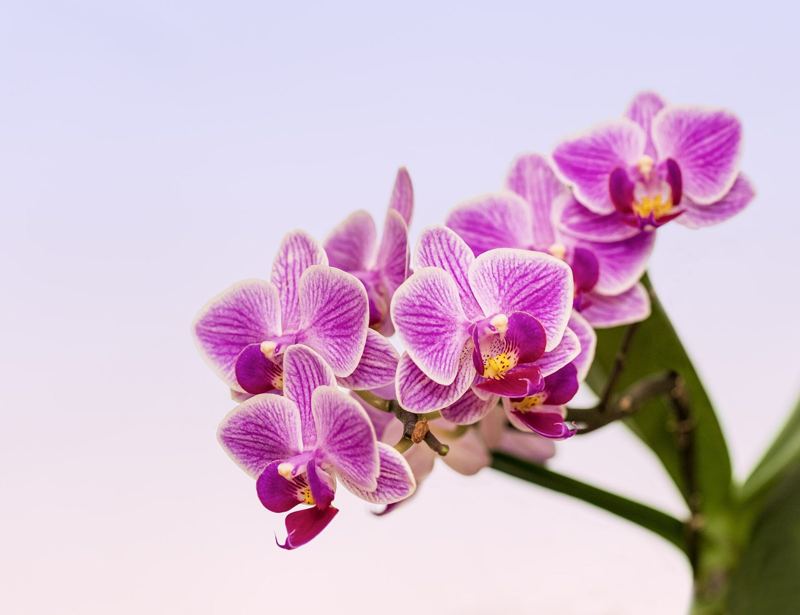
If a sunny window is your bird of paradise’s home, the moth orchid is a bright-window flower that wants little or no direct sun. The indoor care guide shows how the two differ in light and watering.
Frequently asked questions
Can bird of paradise grow outside in the US?
UF/IFAS says Strelitzia reginae thrives in USDA zones 10 through 11 and can survive further north with frost protection. In colder climates it is a container plant that you bring inside before the first frost (Wisconsin Extension).
How cold can a bird of paradise tolerate?
UF/IFAS EDIS says about 24°F for a short time, and notes that freezing damages developing flower buds and flowers. The University of Wisconsin says a limited time down to about 28°F. Because the sources differ, protect it as soon as a frost is forecast.
Why is my bird of paradise not blooming?
Wisconsin Extension says insufficient light is one of the most common reasons mature plants do not bloom well, and that plants tend to bloom more profusely when pot-bound. Clemson adds that overfertilizing leads to excess foliage with little or no flowering. UF/IFAS says planting too deeply may delay flowering.
How often should I water a bird of paradise?
Water freely in spring and summer and keep it drier in winter (NC State). Indoors, Wisconsin Extension says to let the pot dry out between waterings, and Clemson says to wet the mix thoroughly and let it dry slightly before watering again.
Is bird of paradise toxic to pets?
NC State Plant Toolbox says the plant is toxic to cats, dogs and horses.
Sources
- Strelitzia reginae, NC State Extension Plant Toolbox
- Bird of Paradise, UF/IFAS Gardening Solutions
- Bird of Paradise (HGIC), Clemson Cooperative Extension, Home and Garden Information Center
- Bird of Paradise (Strelitzia reginae), University of Wisconsin-Madison Division of Extension Horticulture
- Strelitzia reginae, Bird-of-Paradise (MG106), UF/IFAS Extension (EDIS)
 Orchids