

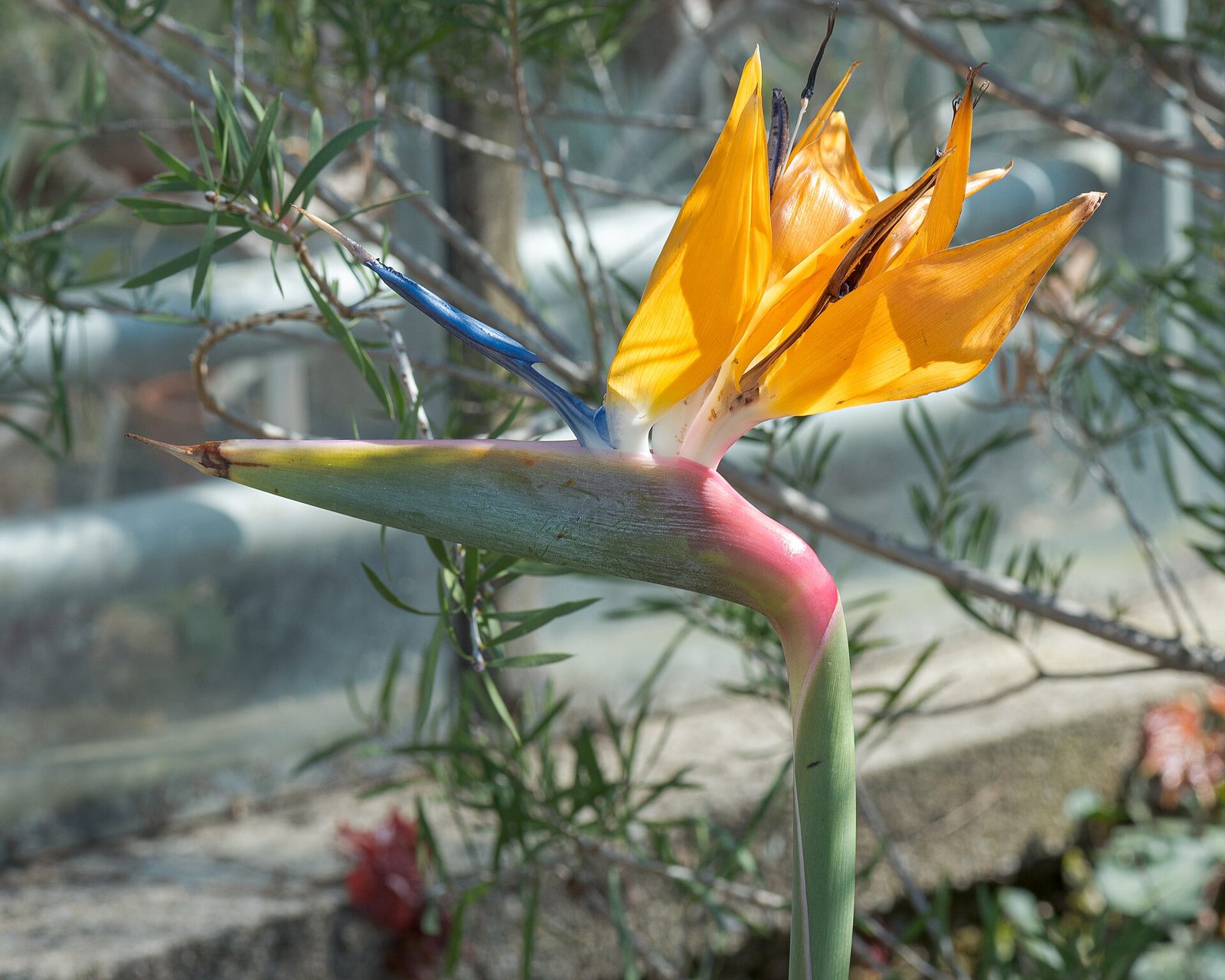
The first thing to fix on a bird of paradise that will not bloom is the light. The University of Wisconsin says one of the most common reasons mature Strelitzia do not bloom well is insufficient light. After light, the sources point to too much fertilizer (Clemson), a plant set too deep (UF/IFAS EDIS), and a pot that is too roomy (Wisconsin). Age matters as well: a seedling can take years. This guide sits under our bird of paradise care guide.
Is the plant old enough?
UF/IFAS EDIS says plants propagated by division can flower in 1 to 2 years. Wisconsin says it takes 4 to 7 years for seed-propagated plants to begin blooming. If you bought a small seedling or grew your own from seed, patience may be the only fix. A division from an established clump, by contrast, should be quicker.
Cause 1: not enough light
Clemson says bird of paradise prefers full sun but tolerates lower light, such as the light from a south-facing window. UF/IFAS EDIS says it can flower in sun or partial shade and that plants in partial shade will be taller with somewhat larger flowers. NC State says to grow it indoors in a well-lit, sunny spot. The sources are not unanimous about shade, but Wisconsin is clear that insufficient light is a leading reason for failure to bloom. For a plant indoors that means the sunniest window, and if you have been keeping it in a corner, move it. Outdoors, give it as much sun as the plant tolerates in your climate.
Cause 2: too much fertilizer
Fertilizer advice runs from every few months to weekly, and the wrong end can cost you flowers. Clemson says overfertilization will lead to excessive foliage with little or no flowering. Wisconsin calls the plant a heavy feeder (every 2 weeks in summer, monthly in winter), and Clemson says every 2 weeks in spring and weekly in summer. UF/IFAS Gardening Solutions says to fertilize about every three months in the growing season to attain prolific flowering. If your plant is lush but not flowering, the lower figure is the one to try first.
Cause 3: planted too deep
UF/IFAS EDIS says planting too deeply may cause a delay in flowering. Wisconsin adds that exposure of the top of the roots may encourage flowering. If you set the plant deep when you repotted, Wisconsin’s note about exposing the top of the roots suggests setting it shallower at the next spring repot.
Cause 4: a roomy pot
Wisconsin says plants tend to bloom more profusely when pot-bound. It also says repotting is best done in early spring, when the roots have cracked open the pot, and that you can simply replace the top soil every year or so. So the fix here is to leave it alone until the roots fill the pot.
Cause 5: cold or frost damage
UF/IFAS EDIS says freezing temperatures will damage developing flower buds and flowers, and says in north Florida to grow it in a container that can be moved indoors during freezes to ensure flower production. If your plant was caught by a cold night, the buds may be lost for the season. The overwintering guide explains the cold limits and why the sources give 24°F and 28°F.
Quick checklist
- Confirm the age. Division plants: 1 to 2 years. Seed plants: 4 to 7 years (UF/IFAS EDIS, Wisconsin).
- Brighten the spot. Full sun is preferred (Clemson); insufficient light is a leading cause (Wisconsin).
- Ease off the fertilizer. Overfeeding leads to leaves instead of flowers (Clemson).
- Check the planting depth. Too deep may delay flowering (UF/IFAS EDIS).
- Leave it pot-bound. Do not repot until roots crack the pot (Wisconsin).
What the sources do not say
No source here gives a month or temperature that triggers flower buds, and none gives a bloom-booster feed. When the flowers do arrive, Clemson says they open in succession starting in late winter or early spring, and UF/IFAS EDIS says blooms appear intermittently most of the year. For the rest of care, go back to the main guide. If you also grow a moth orchid and it is the one that is not blooming, see orchids not flowering.
Frequently asked questions
What is the most common reason bird of paradise does not bloom?
Wisconsin Extension says one of the most common reasons mature Strelitzia do not bloom well is insufficient light.
Does fertilizer help or hurt flowering?
Both, depending on the amount. Clemson says overfertilization leads to excessive foliage with little or no flowering. UF/IFAS Gardening Solutions suggests fertilizing about every three months in the growing season for prolific flowering in the landscape.
How long until a bird of paradise blooms?
UF/IFAS EDIS says divisions flower in 1 to 2 years. Wisconsin Extension says it takes 4 to 7 years for seed-grown plants to begin blooming.
Can I make it bloom by leaving it pot-bound?
Wisconsin Extension says plants tend to bloom more profusely when pot-bound, and that exposing the top of the roots may encourage flowering. UF/IFAS EDIS says planting too deeply may delay flowering.
Sources
- Bird of Paradise (Strelitzia reginae), University of Wisconsin-Madison Division of Extension Horticulture
- Bird of Paradise (HGIC), Clemson Cooperative Extension, Home and Garden Information Center
- Strelitzia reginae, Bird-of-Paradise (MG106), UF/IFAS Extension (EDIS)
- Bird of Paradise, UF/IFAS Gardening Solutions