

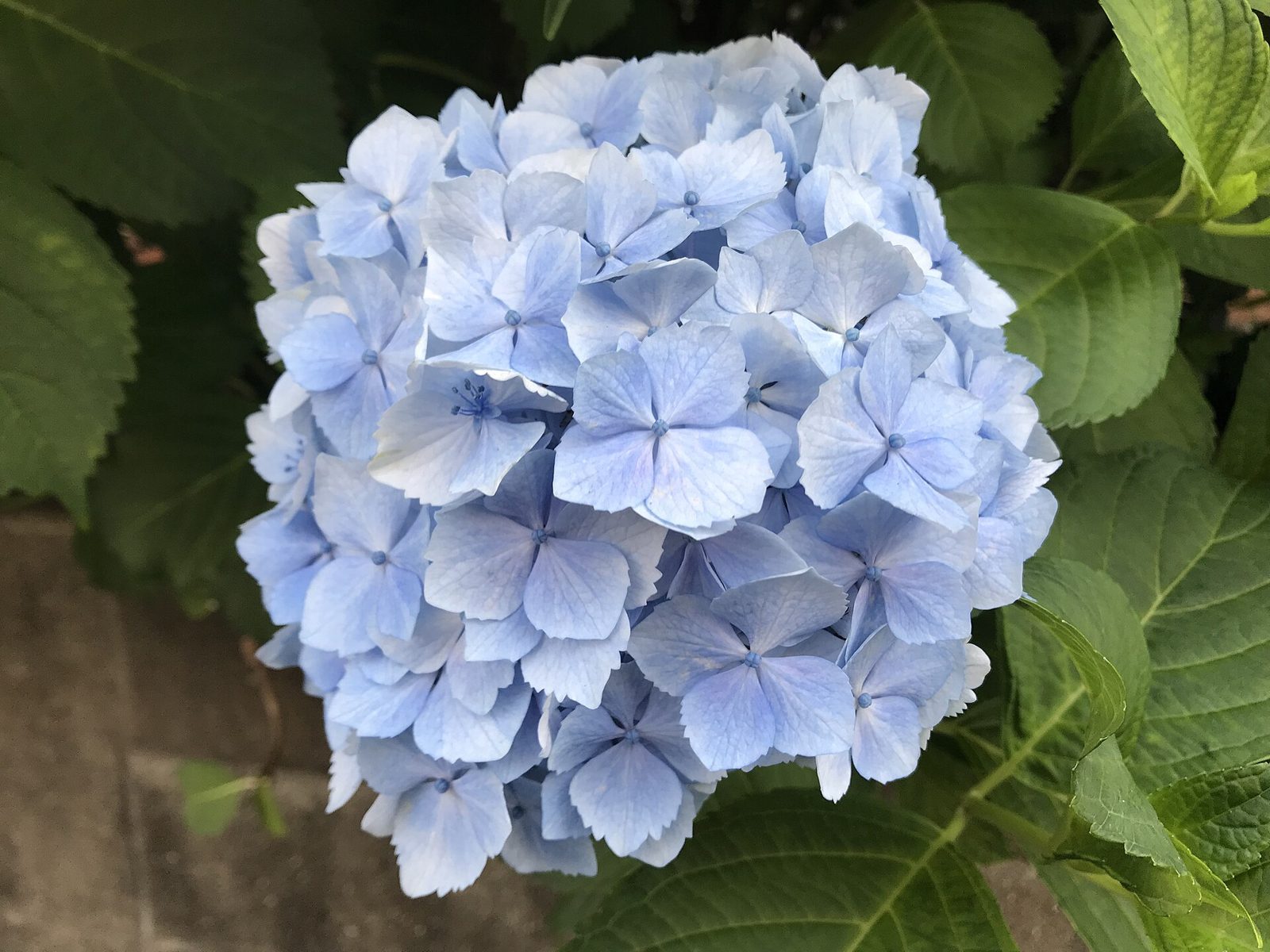
Bigleaf hydrangea (Hydrangea macrophylla) is a shrub for USDA zones 5 through 10, and some types tolerate zone 4. Give it morning sun and afternoon shade, water it deeply about once a week, and prune only right after it flowers. Oregon State says bigleaf types are less cold hardy than other hydrangea species, and Penn State warns that winter freezes can kill the flower buds. In cold-winter regions that makes bud protection part of the care. It also grows in a container: NC State says a single specimen can accent a patio. This guide covers H. macrophylla, the one with blue or pink mophead and lacecap flowers.
- USDA zones
- 5–10, some 4 (Oregon State)
- Sun
- Morning sun, afternoon shade
- Water
- Deeply, about once a week
- Origin
- Asia
- Container friendly
- Yes
- Bloom time
- Late spring and summer, on last year's wood
- Best soil
- Well-drained, rich in organic matter
- Prune
- Right after flowering, before Aug 1
Outdoors or in a pot?
Outdoors is the default in zones 5 through 10; Oregon State says some tolerate zone 4. NC State says a single specimen can be grown in a container. Oregon State says that in colder interiors you should grow bigleaf and serrata hydrangeas in large containers and overwinter them in an unheated garage to protect the buds. Our overwintering guide has the winter steps.
Sun and site
Clemson says bigleaf hydrangea prefers morning sun and afternoon shade and to avoid hot, dry, exposed sites. NC State says it performs best in dappled sunlight, partial shade or even deep shade.
Water and soil
Clemson says to water deeply once a week, or more often in dry conditions, and that hydrangeas often need deep watering twice weekly in sandy soils in South Carolina’s summer heat. Oregon State says they dislike soggy roots. For soil, Clemson says well-drained soil rich in organic matter or humus; NC State says it tolerates both clay and sandy soil and has some salt tolerance.
Feeding
Clemson says to use a balanced fertilizer such as 10-10-10, 2 cups per 100 square feet in March, May and July. Oregon State says to apply a slow-release, balanced fertilizer lightly in spring. Oregon State warns that excess nitrogen encourages foliage at the expense of flowers, and that high phosphorus can inhibit blue blooms.
Flower color and soil pH
Only certain H. macrophylla and H. serrata varieties can change color (Oregon State). For those, the soil decides, but the sources do not agree on the pH numbers.
Clemson
Oregon State
Penn State
So the threshold for pink is 6.0 (Clemson), 6.0 to 6.2 (Penn State) or 6.5 (Oregon State). Blue is pH 5.0 to 5.5 (Clemson) or 5.5 or lower (Oregon State). Penn State adds that to get pink you add lime and a fertilizer high in phosphorus; Oregon State says high phosphorus can inhibit blue blooms, so the two sources agree that phosphorus pushes toward pink. Clemson says to maintain pH 5.0 to 5.5 for blue using sulfur or aluminum sulfate, and to test your soil before applying sulfur or lime to avoid over-correction. Oregon State says amendments are best added in fall and that color changes can take several years.
Some hydrangeas ignore the soil. Clemson says ‘Blushing Bride’ starts white and matures to pink regardless of soil chemistry, and says oakleaf hydrangea color is not affected by soil pH. See our color notes in the not-flowering guide and the pruning guide for the rest.
Pruning
Bigleaf hydrangeas bloom on old wood: NC State says they bloom in late spring and summer on the previous year’s growth. Penn State says if you cut back a hydrangea between autumn and early spring and it blooms on old wood, you have trimmed off all the future flowers. Clemson says to prune bigleaf right after flowering and to avoid pruning after August 1 to prevent removing next year’s buds; NC State says do any pruning before August 1. If you must prune in winter or spring after buds have formed, Clemson says to remove no more than one-third of the plant. Reblooming types such as ‘Endless Summer’ flower on both old and new wood (Clemson, Penn State). Our pruning guide goes deeper.
Planting and site
Clemson says hydrangeas are easy to grow in well-drained soil rich in organic matter or humus, and to avoid hot, dry, exposed sites. NC State describes bigleaf hydrangea as a plant for dappled sun to shade that tolerates both clay and sandy soil, with some salt tolerance. In sandy soils, plan on more frequent watering: Clemson says deep watering twice a week may be needed in summer heat in South Carolina. Oregon State says hydrangeas dislike soggy roots, so well-drained soil matters just as much as water.
A year of hydrangea care
- Early spring: divide or propagate. Clemson says to divide old established clumps in early spring. NC State says to propagate by layering or stem cuttings.
- March, May and July: feed. Clemson recommends 10-10-10 at 2 cups per 100 sq ft in each month. Oregon State prefers a light slow-release feed in spring and warns that excess nitrogen cuts flowers.
- Summer: water deeply once a week. More often in dry conditions (Clemson). Flowers open in late spring and summer (NC State).
- After flowering: prune, by August 1. Clemson and NC State give the August 1 line (see the pruning guide).
- Fall and winter: protect the buds. Do not prune. Cover canes with frost blankets before a late cold snap (Clemson), and overwinter pots in an unheated garage in colder regions (Oregon State).
Propagation
NC State says propagate by layering or stem cuttings. Clemson says that in early spring you can divide old established clumps into smaller plants with a shovel, or dig a shallow trench near the parent plant to layer a stem.
Common problems
Clemson lists Cercospora leaf spot, anthracnose and powdery mildew as common diseases, plus aphids and leaftiers. NC State lists leaf spot, bacterial wilt and powdery mildew. We have no sourced treatments for these. Our sources do not say whether hydrangeas are toxic to pets.
Varieties named in our sources
| Variety | Best for | Blooms on | Color | Notes |
|---|---|---|---|---|
| Endless Summer | Mophead, widely available | Old and new growth | Not given | A reblooming type (Clemson) |
| Nikko Blue | Blue flowers in acid soil | Not given | Rich blue in acid soil | Color follows soil pH (Clemson) |
| Blushing Bride | Pink regardless of soil | Not given | White, maturing to pink | Unaffected by soil chemistry (Clemson) |
| Twist-n-Shout | A lacecap | Old or new wood | Not given | Lacecap (Clemson) |
| Ayesha | A mophead with spoon-like petals | Not given | Pale pink (or blue) | Listed by NC State |
What our sources do not tell you
They give no repotting advice, no indoor light advice and no pet toxicity information. Other hydrangea species mentioned in passing (smooth, oakleaf, panicle) bloom differently from bigleaf and we do not cover their care here.
If you are planning a bed around a small tree, see our Japanese maple guide: it is rated for zones 5B through 8B (UF/IFAS), so it overlaps bigleaf hydrangea’s zones 5 through 10 in zones 5 through 8, and both avoid hot afternoon sun in warm climates.
Frequently asked questions
How much sun does a hydrangea need?
Clemson says bigleaf hydrangea prefers morning sun and afternoon shade, and says to avoid hot, dry, exposed sites. NC State says it performs best in dappled sunlight, partial shade or deep shade.
How often should I water hydrangeas?
Clemson says water deeply once a week, or more often during dry conditions, and twice weekly in sandy soils in South Carolina summer heat. Oregon State says hydrangeas dislike soggy roots.
How do I change hydrangea flower color?
Only certain H. macrophylla and H. serrata varieties can change color (Oregon State). Acidic soil gives blue flowers and alkaline soil gives pink, but the pH thresholds differ by source. See the color section below.
When should I prune a hydrangea?
Bigleaf hydrangea blooms on last year's wood, so prune right after flowering. Clemson says to avoid pruning after August 1; NC State says do any pruning before August 1.
Why is my hydrangea not blooming?
Penn State says freezes can kill the flower buds and stems. Pruning between fall and early spring on an old-wood hydrangea removes the future flowers, and Oregon State says excess nitrogen encourages foliage at the expense of flowers.
Sources
- Hydrangea Care in South Carolina, Clemson Cooperative Extension, Home and Garden Information Center
- Hydrangea macrophylla, NC State Extension Plant Toolbox
- Pruning Hydrangeas, Clemson Cooperative Extension, Home and Garden Information Center
- Why Doesn't My Hydrangea Bloom?, Penn State Extension
- Hydrangeas Bring Beauty and Variety to Oregon Gardens, Oregon State University Extension