

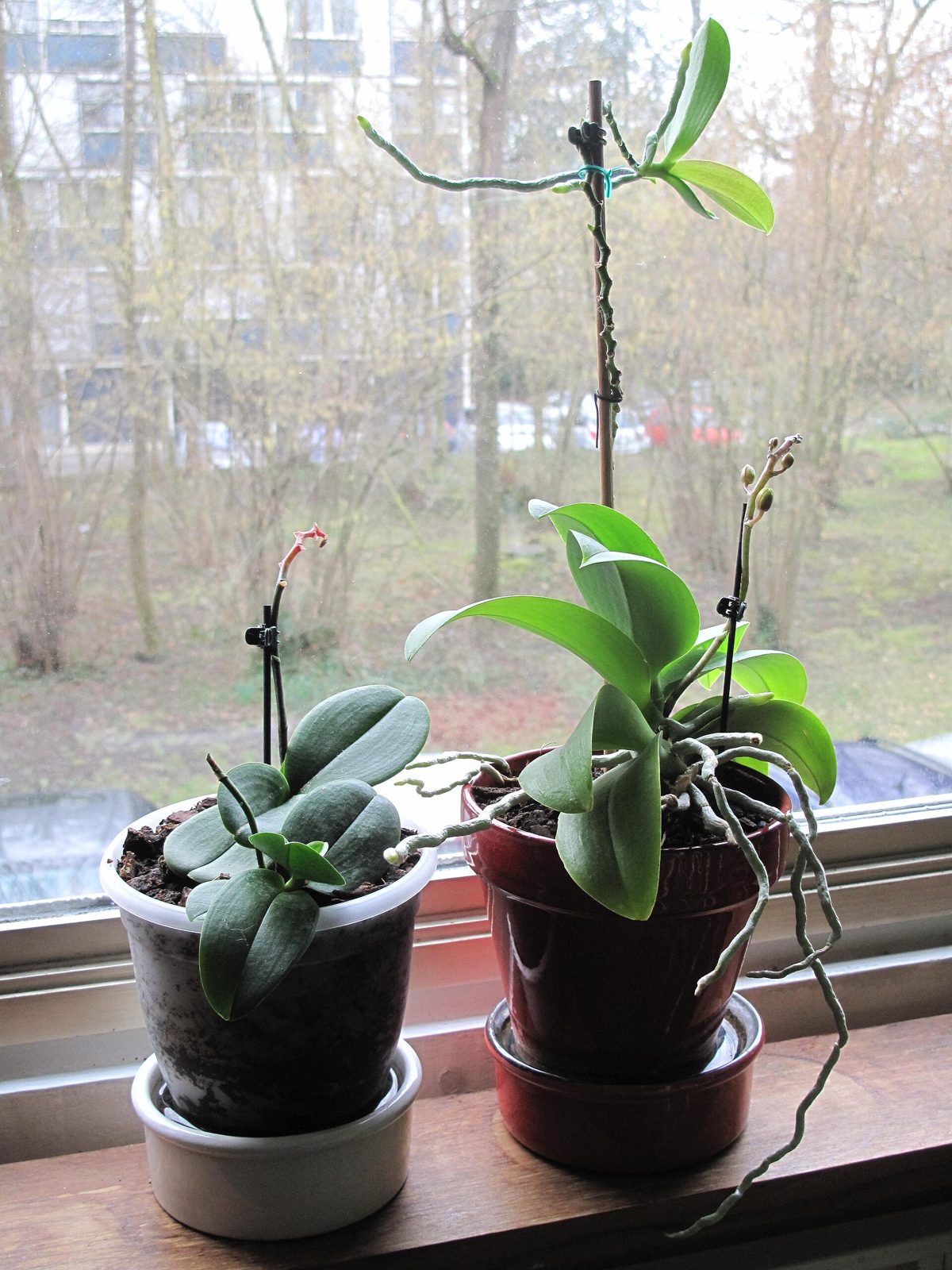
None of the four extension sources we use has a section on yellow orchid leaves, so we cannot give you a symptom-to-cause chart. What they do document are the conditions that damage orchid roots and leaves. Check those in this order: watering and roots first, then water in the crown, then light, then salts and pests. This guide sits under our main orchid care guide.
We would rather tell you what is sourced than guess at a yellowing pattern.
1. Watering and roots
Illinois Extension says that most people tend to overwater orchids, “and that will kill the roots, and ultimately the plant.” The same source says it would be better for the plant to get a little too dry than to be overwatered, and that roots should never sit in water. Clemson’s rule is to water thoroughly, then not again until the mix is nearly dry throughout the pot, which in active growth is about once a week.
To check: slide the plant out of its pot if you can and look at the roots and the mix. Our sources do not describe what a rotted root looks like, so use your own judgment. If the mix is soggy at the bottom or the pot has no drainage, fix that first. UC ANR says these orchids dislike soggy bottoms and cold water, and our orchid containers guide covers pots, drainage and mix.
2. Water in the leaf axils
Clemson warns not to allow water to remain on the leaves or in the leaf axils, “as this may readily lead to disease and death.” The leaf axil is where a leaf meets the stem. Water the mix, not the crown. Clemson lists leaf spots, petal blight, bacterial soft rot and many viruses among common orchid diseases.
3. Light
Moth orchids prefer a bright window with little or no direct sun (Clemson). Illinois Extension says east, west and south windows are best but that the intense sun will burn the leaves. If a plant has moved to a brighter spot recently, think about that before blaming the roots.
At the other end, Clemson names light that is too low as one of the main reasons orchids fail to flower. Low light is a flowering problem rather than a leaf problem in our sources, so see the not-flowering guide if the leaves are healthy but there are no blooms.
4. Fertilizer salts
Clemson says to apply soluble fertilizer monthly at label rates and, each month, to use plain water to rinse accumulated fertilizer salts out of the pot. Penn State is more conservative: half the manufacturer’s recommended rate once or twice a month. If you have fed heavily and never flushed, back off and flush. The sources do not say that salts cause yellow leaves, so treat this as housekeeping rather than a diagnosis.
5. Pests
Clemson lists mealybugs, spider mites, scales and thrips as common insect pests. Our sources do not give treatments for orchids, so we will not either. Check under leaves and along the stem when you water.
What to do next
- Check the mix and the roots. Is the mix wet at the bottom? Is the pot draining? Roots must not sit in water (Illinois Extension).
- Cut back watering. Water thoroughly, then wait until nearly dry (Clemson). Err on the dry side.
- Dry the crown. Keep water out of the leaf axils (Clemson).
- Look at the light. A bright window with little direct sun suits a moth orchid. Move away from intense sun (Clemson, Illinois Extension).
- Inspect for pests and rinse the salts. Look for mealybugs, mites, scales and thrips. Rinse the pot with plain water monthly (Clemson).
What our sources do not tell you
Nothing in these four sources says which leaf to cut, how to tell a rotted root from a healthy one, or what a lower-leaf yellowing means. If the plant keeps declining, take it to your state extension office or master gardener helpline with a photo. Back to the orchid care guide, or see how a bird of paradise handles the same bright-window life.
Frequently asked questions
Why are my orchid leaves turning yellow?
Our sources do not give a yellow-leaf diagnosis. They do document what damages orchids: overwatering that kills the roots (Illinois Extension), water standing in the leaf axils (Clemson), intense sun that burns leaves (Illinois Extension) and pests such as mealybugs, spider mites, scales and thrips (Clemson). Check those in order.
Is overwatering the most common orchid mistake?
Illinois Extension says most people tend to overwater, which kills the roots and ultimately the plant, and that it is better for the plant to get a little too dry.
Can fertilizer damage an orchid?
Clemson says to rinse accumulated fertilizer salts out of the pot with plain water each month. It does not link salts to yellow leaves directly, but it is a documented maintenance step.
Which pests attack orchids?
Clemson lists mealybugs, spider mites, scales and thrips as the common insect pests.
Sources
- Orchids (HGIC 1158), Clemson Cooperative Extension, Home and Garden Information Center
- Phalaenopsis: Beautiful but Picky, University of Illinois Extension
- Moth Orchids, UC ANR (Under the Solano Sun)
- Orchids as Houseplants, Penn State Extension