

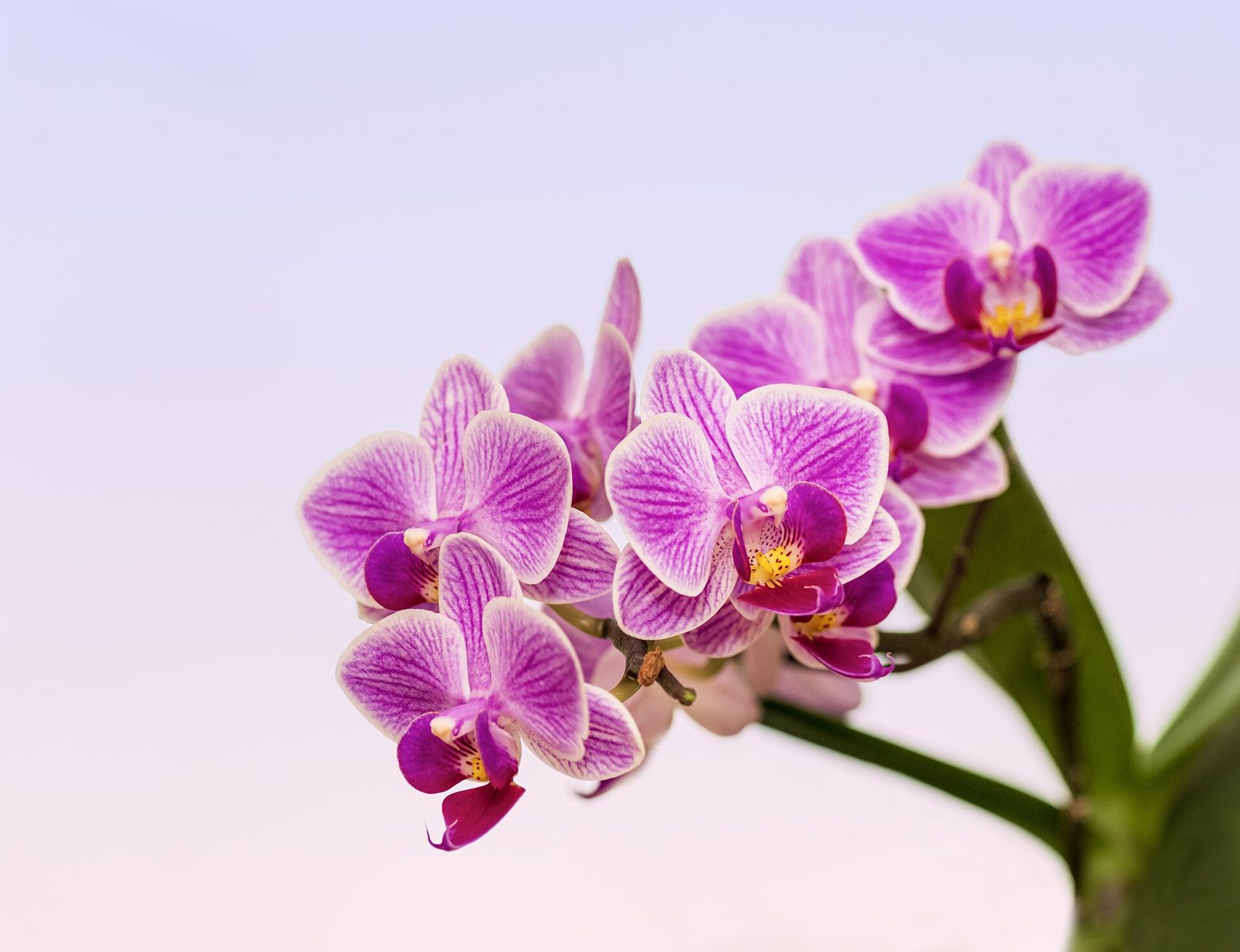
A moth orchid belongs in a porous, bark-based mix in a pot with real drainage, and it needs repotting every 1 to 3 years in spring, right after it flowers. That is the UC ANR rule. The reason is that Phalaenopsis grow on trees in the wild, so their roots want air as much as water. This guide is part of our orchid care guide and covers the mix, the pot and the repotting itself.
Why the mix matters
Penn State explains it plainly: since Phalaenopsis grow on trees, the growing mix “should be very well-drained with lots of aeration.” Clemson says orchids grow best in soilless mixtures, or attached to pieces of bark or cork, and that planting an epiphytic orchid in soil is one of the best ways to kill it. In practice that means a bark-based orchid mix rather than a general houseplant mix.
The mix also affects feeding. UC ANR pairs a high-nitrogen 30-10-10 fertilizer with a bark-based medium, and says other mix types do well with a balanced fertilizer. Clemson adds that each month you should use plain water to rinse accumulated fertilizer salts out of the pot.
Our sources do not give a recipe, such as a ratio of bark to moss or perlite, so we will not either. If you buy a ready-made orchid mix, check that it is labeled for Phalaenopsis or epiphytic orchids.
Choosing the pot
Drainage holes
Roots above water
Avoid soggy bottoms
Size and material
When to repot
UC ANR says repotting is best done in spring immediately after flowering, with a porous mix, every 1 to 3 years. Clemson says orchids rest after flowering and that watering should be reduced then. Together that means a plant that has just finished flowering is the right candidate, and it is also in its quiet phase.
Our sources do not give specific signs that a plant needs repotting, such as roots coming out of the pot. They do give the interval and the timing. If your plant is still in bloom, wait.
How to repot a moth orchid
- Wait until the flowers are finished. UC ANR says to repot in spring, immediately after flowering. Do not repot a plant that is in the middle of a flower display.
- Pick a pot with drainage. Any pot you use needs drainage holes. Add holes to a clay pot if it has only one small hole (Clemson).
- Use fresh orchid mix. Choose a porous, soilless mix, bark-based as in the sources, with lots of aeration (Penn State, Clemson). Never plain potting soil.
- Set the plant so roots stay above water. Illinois Extension says roots should never sit in water. Do not let water pool at the bottom of the pot.
- Water thoroughly, then let it dry. Clemson says to water thoroughly and wait until the mix is nearly dry throughout the container before watering again. Keep water out of the leaf axils.
Keeping the roots healthy afterward
Illinois Extension says most people overwater, which kills the roots and ultimately the plant, and that it is better for the plant to get a little too dry than to overwater. UC ANR lists soggy bottoms among the things these orchids dislike. Clemson says to water about once a week when the plant is actively growing, then less after flowering.
Fertilizer routines differ by source (see the main orchid guide), but all agree on moderation: Clemson says monthly at label rate, Penn State half strength once or twice a month, UC ANR twice a month in warm months with 30-10-10 in a bark mix. Rinse the salts out monthly with plain water.
Problems that start in the pot
What our sources do not say
No source here gives a pot size, a bark grade, a ratio for a homemade mix, signs that a plant needs repotting or a method for dividing a plant. We would rather say so than guess. For the orchid care basics, go back to the main orchid guide. If the leaves are yellowing after a repot, see orchid yellow leaves.
Frequently asked questions
When should I repot a moth orchid?
UC ANR says repotting is best done in spring, immediately after flowering, with a porous mix, every 1 to 3 years.
Can I use regular potting soil for an orchid?
No. Clemson says orchids grow best in soilless mixtures or attached to bark or cork, and that one of the best ways to kill an epiphytic orchid is to plant it in soil.
Do orchids need a pot with drainage holes?
Yes. Clemson wants a well-drained pot, and says to enlarge the drainage hole or add holes near the bottom of the sides if you use clay. Illinois Extension says roots should never sit in water.
How big a pot does an orchid need?
Our sources do not give pot sizes. They focus on drainage and a porous, airy mix instead.
Sources
- Orchids (HGIC 1158), Clemson Cooperative Extension, Home and Garden Information Center
- Orchids as Houseplants, Penn State Extension
- Moth Orchids, UC ANR (Under the Solano Sun)
- Phalaenopsis: Beautiful but Picky, University of Illinois Extension