

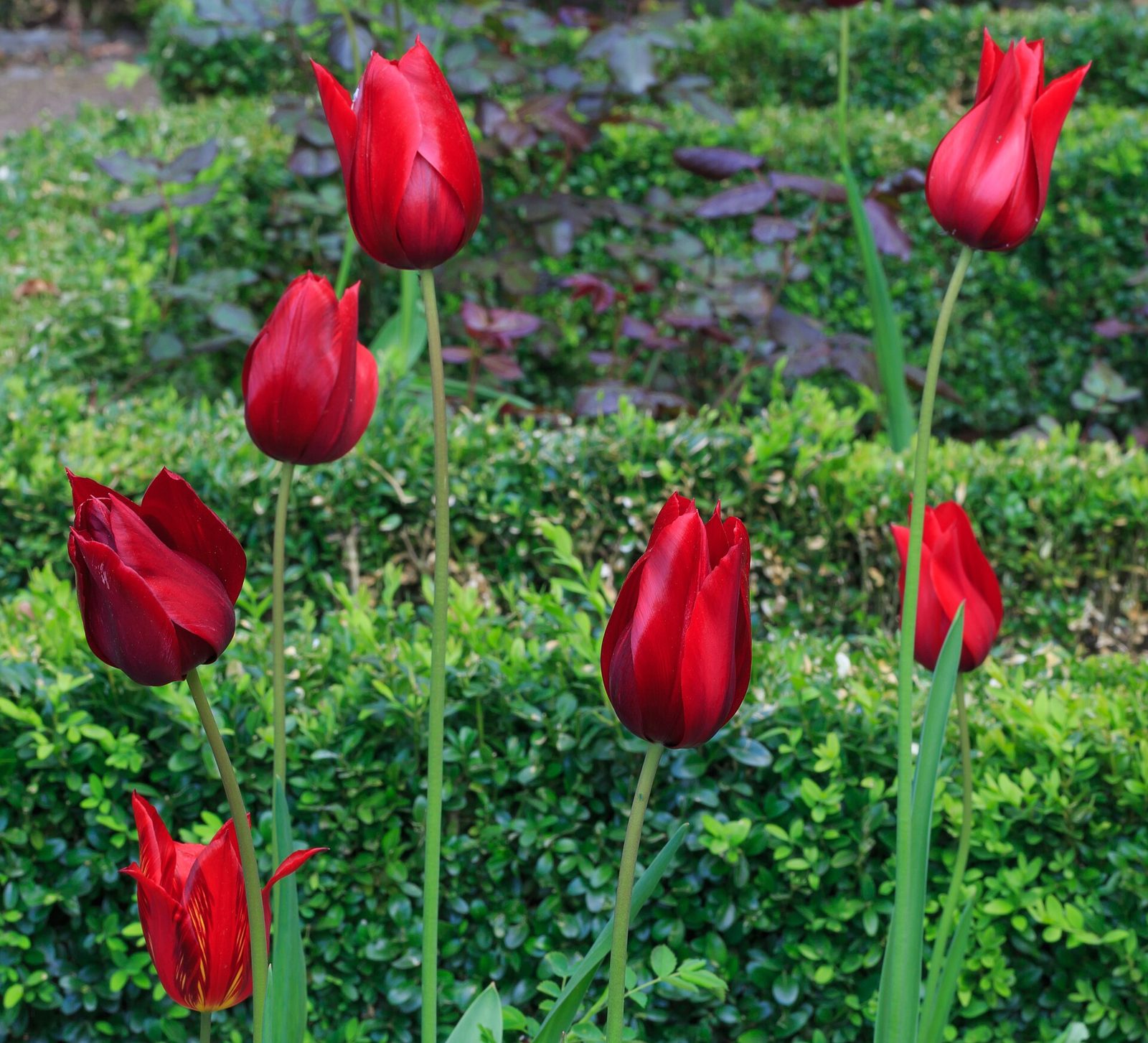
Tulips often do not come back because most garden tulips are hybrids, and hybrids tend to be one-season plants. NC State says tulips may be grown as perennials or annuals, although species tulips often perform better than hybrid plants as perennials. Clemson goes further for the warm South: tulips can usually only be counted on for a single season of color in South Carolina, so they are treated like annuals, dug and discarded after they bloom. This guide is part of our tulip growing guide.
Species versus hybrid tulips
The key conflict in our sources is how long a tulip planting lasts.
| Source | What it says | Applies to |
|---|---|---|
| NC State | Tulips may be perennials or annuals; species tulips often perform better than hybrids as perennials | Tulips in general |
| Clemson HGIC | Tulips can usually be counted on for one season of color; dug and discarded after bloom | South Carolina |
| NC State (lady tulip) | Propagates by seeds, naturalization or division; zones 3 to 7 with moist winters and warm dry summers | Tulipa clusiana, a species |
These do not strictly contradict each other. NC State is describing what is possible, Clemson is describing what to expect in a warm climate, and the species page describes a plant that naturalizes. The difference is climate and type. Our sources do not explain why hybrids decline, only that they often do, so we will not give a mechanism.
Reasons a tulip may skip a year
Use this table to diagnose, then follow the source for each fix.
| What you see | Possible cause | What the sources say |
|---|---|---|
| No flowers the second spring | Hybrid in a warm climate | Clemson treats tulips as annuals in South Carolina |
| Weak flowers after a hot spell | Warm soil | NC State says tulips lose floral vigor when soil reaches 70°F (21°C) |
| Foliage was cut early | Leaves removed too soon | NC State says not to remove foliage until it yellows; Clemson says leave leaves at least six weeks after bloom |
| Bulbs missing or dug up | Animals | Mice and voles eat bulbs; squirrels may dig up new bulbs (NC State) |
| Soft, rotten bulbs | Wet soil | Bulb and root rots occur in wet, poorly drained soils (NC State) |
| Plants that look unhealthy | Virus or gray mold | NC State lists tulip break virus, mosaic virus and gray mold as problems that may occur |
| Little sun | Shade | NC State recommends full sun, 6 or more hours a day |
Our sources describe each cause on its own. They do not rank them or say which is most common, and they do not link cut-back foliage directly to a missed bloom: they say simply to leave it. Treat the table as a checklist rather than a diagnosis.
How to improve your odds of a second bloom
- Choose a species tulip if you want perennials. NC State says species tulips often perform better than hybrids as perennials. The lady tulip, Tulipa clusiana, is the species our sources describe, and NC State says it performs best in zones 3 to 7 with moist winters and warm dry summers.
- Remove spent flowers, not leaves. Take off the flower stem after bloom to prevent seeding, but leave the foliage until it yellows (NC State) and for at least six weeks (Clemson).
- Give them sun and drainage. NC State says full sun and well-drained soil. Wet soil causes bulb rot.
- Keep animals away. NC State warns about mice, voles and squirrels. It does not name a deterrent.
- Plant at the right depth. NC State says three times the bulb depth, Penn State says 2.5 to 3 times the bulb height and Clemson says 6 to 8 inches. See our when-to-plant guide for how they compare.
What if you want tulips in a warm climate?
Clemson says Single Late tulips are one of the best groups for warm climates, and names ‘Halcro’ (vibrant red), ‘Queen of Night’ (deep dark maroon), ‘Renown’ (rose-pink), ‘Menton’ (apricot-pink) and ‘Maureen’ (pure white). It also says to refrigerate bulbs from purchase to planting in Central and Coastal South Carolina, with planting in November to late December. Even so, Clemson says you should expect one season of color, so plan to replant. The tulip pillar page has the full variety table.
Do forced tulips return?
Clemson says tulips are best discarded after forcing, which is the same single-season picture. See tulips in pots for the forcing details.
Are tulips safe to handle when you dig them?
NC State says the highest concentration of the toxin tulipalin is in the bulb, and its lady tulip page says to wear gloves when handling bulbs to prevent skin allergies. Wear gloves if you lift the bulbs.
What our sources do not tell you
They do not say how many years a hybrid typically lasts, whether bulbs that skip a year can recover, or how to lift and store tulip bulbs for replanting. We would rather leave those gaps open than guess.
Frequently asked questions
Do tulips come back every year?
Sometimes. NC State says tulips may be grown as perennials or annuals, although species tulips often perform better than hybrid plants as perennials. Clemson says tulips can usually only be counted on for a single season of color in South Carolina.
Should I cut back tulip foliage after they bloom?
Remove the spent flower stems to prevent seeding, but not the foliage until it yellows (NC State). Clemson says to leave the leaves on the plant for at least six weeks after bloom is finished, or until they turn brown.
Do squirrels and voles eat tulip bulbs?
NC State says mice and voles are attracted to the bulbs and will eat them, and squirrels may dig up newly planted bulbs.
Sources
- Tulipa (tulip), NC State Extension Plant Toolbox
- Tulipa clusiana (lady tulip), NC State Extension Plant Toolbox
- Spring Flowering Bulbs, Clemson Home & Garden Information Center