

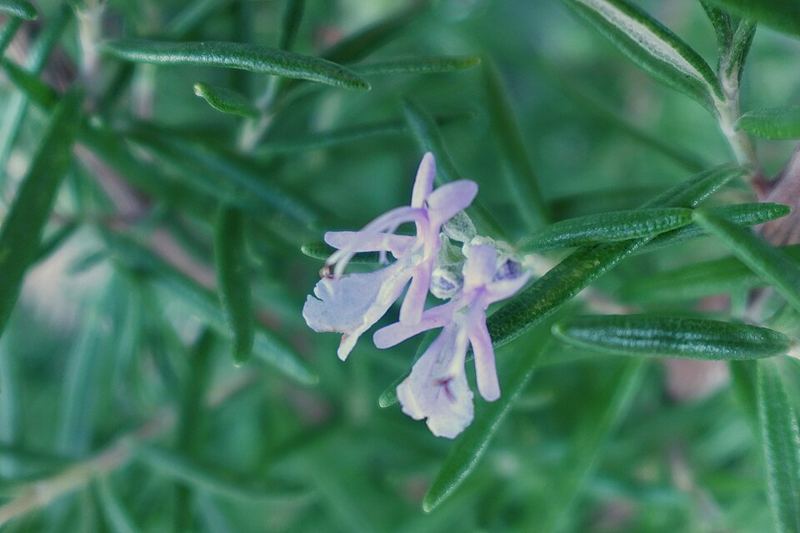
Rosemary is an evergreen woody shrub that wants full sun, light well-drained soil and a dry root zone, and it is reliably hardy only in about USDA zones 8 to 10. Penn State describes it as an aromatic shrub with needle-like leaves, growing 2 to 6 feet tall. Colder gardens can still grow it in a pot and bring it indoors. The ASPCA lists rosemary as non-toxic to dogs, cats and horses. This guide treats rosemary as an ornamental shrub for borders, hedges and containers; its plant name is Salvia rosmarinus at NC State, and Rosmarinus officinalis at UMD Extension.
- USDA zones
- 8–10 (Penn State); a few cultivars to zone 6b–7 with protection
- Sun
- Full sun, at least 6 hours
- Water
- Drought tolerant once established
- Origin
- Mediterranean
- Container friendly
- Yes
- Soil
- Light, well drained; not clay
- Size
- 2–6 ft tall and wide (Penn State)
- Bloom time
- Spring into summer
- Pets
- Non-toxic to dogs, cats and horses (ASPCA)
Zones and winter
Penn State gives USDA zones 8 to 10. Illinois Extension says rosemary is not reliably hardy in zone 6 or colder, and that in the Midwest it often does not overwinter and is best treated as a tender perennial and brought indoors for the winter. UMD Extension also describes it as tender in the Northeast and Midwest.
Penn State lists hardier cultivars: ‘Arp’, ‘Athens Blue Spire’, ‘Madalene Hill’ and ‘Miss Jessop’s Upright’ tolerate zone 7, or zone 6b with protection. Choose among these if you garden at the cold edge and want to keep a rosemary in the ground.
Sun and light indoors
NC State lists full sun. Penn State says most herbs need 6 hours of direct sunlight, and that herbs grown indoors need a sunny window or grow lights to get it.
Soil and water
NC State says rosemary grows in light, slightly acidic, dry to medium, well-drained soil and tolerates most soil types except clay. UMD Extension gives a different pH: it says rosemary grows best in well-drained soil with a pH of 6.5 to 7.0. Both agree on drainage. NC State says it tolerates drought, partial shade, salt, heavy pruning and most soil types except clay, and that overwatering and wet, humid conditions are the main risk.
Size and use
Penn State says 2 to 6 feet tall and 2 to 6 feet wide, NC State says 4 to 5 feet tall, erect and rounded, and UMD Extension says 36 to 72 inches. Penn State separates two habits.
| Variety | Best for | Habit | Use | Notes |
|---|---|---|---|---|
| Upright | Hedges and borders | Erect and rounded (NC State) | — | Named by Penn State |
| Prostrate | Groundcover, containers, hanging baskets, walls | — | — | Named by Penn State |
| 'Arp' | Colder gardens | — | — | Zone 7, or 6b with protection (Penn State) |
| 'Madalene Hill' | Colder gardens | — | — | Zone 7, or 6b with protection (Penn State) |
Planting and containers
Illinois Extension says rosemary plants grown in the garden do not transplant very well, so plant in a container if you will be moving it indoors for winter. That also suits the prostrate types Penn State recommends for pots and hanging baskets.
- Choose full sun and light soil. At least 6 hours of direct sun (Penn State), in well-drained soil that is not clay (NC State).
- Decide: ground or pot. In zone 8 to 10 the ground is fine; colder gardens are better with a container (Illinois Extension).
- Water to avoid wet feet. Overwatering and humid, wet conditions are the main risk (NC State).
- Bring pots in before cold arrives. Move to a protected spot or indoors for winter (UMD Extension, Illinois Extension).
Feeding and pruning
Illinois Extension says to fertilize regularly for the best foliage. NC State says severe pruning after bloom encourages dense growth, and UMD Extension says to pinch seedlings and young plants to direct growth. Our rosemary pruning guide covers timing, how much to take and why bare woody stems should not be cut.
Flowers
NC State says rosemary blooms from spring into summer, with small white, pink, blue or lavender flowers that draw pollinators. Illinois Extension says that during the summer it produces small white, pink or blue flowers. For the plants it sits beside in the garden, our bloom calendar shows how long each one flowers.
Propagation
Illinois Extension says stem cuttings are the most reliable way to propagate rosemary, because seed is slow to germinate. NC State adds that layering or division also work.
Grow these next
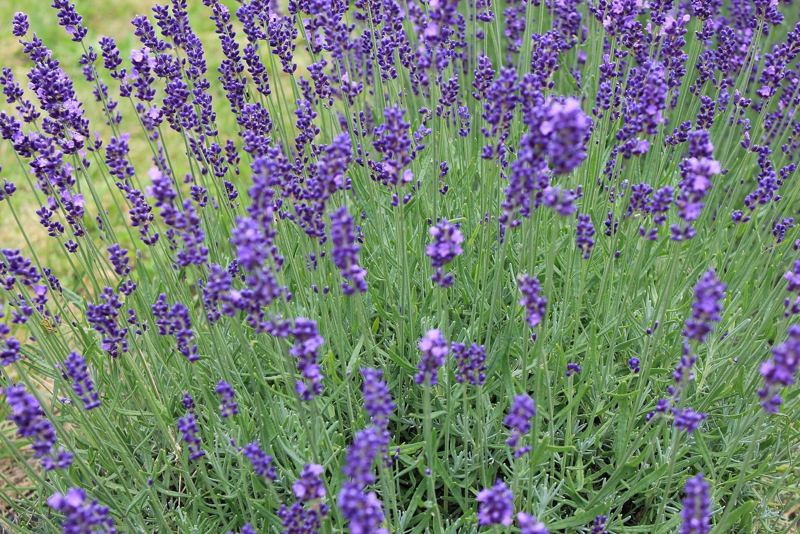
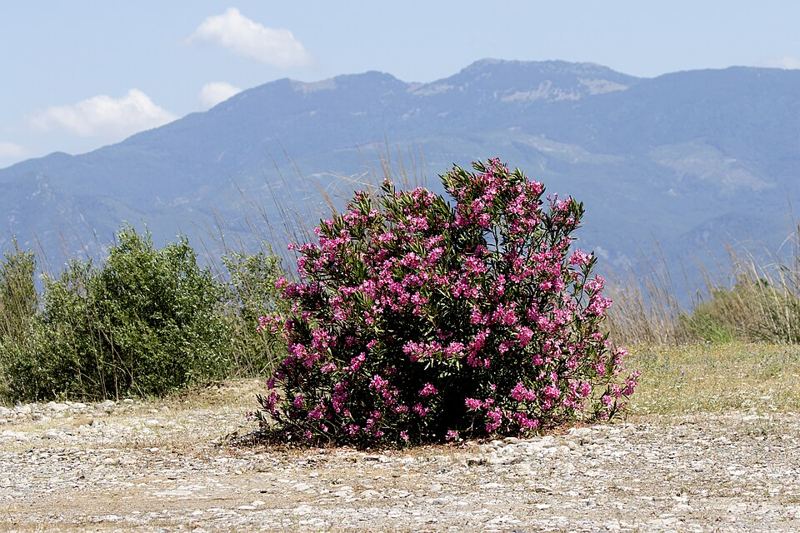
Rosemary shares its need for sun and drainage with the lavender guide, another shrub that dislikes wet roots. For a heat-loving shrub that grows much larger, read the oleander guide, which carries a pet-toxicity warning, unlike rosemary.
Frequently asked questions
What zones can rosemary grow in?
Penn State gives USDA zones 8 to 10. Illinois Extension says rosemary is not reliably hardy in zone 6 or colder and is best overwintered indoors there. Penn State lists a few hardier cultivars, 'Arp', 'Athens Blue Spire', 'Madalene Hill' and 'Miss Jessop's Upright', as tolerating zone 7 or 6b with protection.
How much sun does rosemary need?
Full sun. NC State lists full sun, and Penn State says most herbs need 6 hours of direct sunlight, with a sunny window or grow lights when grown indoors.
What soil does rosemary like?
Light, well-drained soil; NC State says it tolerates most soil types except clay. NC State describes slightly acidic soil, while UMD Extension says best growth at pH 6.5 to 7.0.
When should you prune rosemary?
NC State says severe pruning after bloom encourages dense growth. UMD Extension says to pinch young plants to direct growth.
Is rosemary safe for pets?
The ASPCA lists rosemary as non-toxic to dogs, cats and horses.
Sources
- Salvia rosmarinus (Rosemary), NC State Extension Plant Toolbox
- Herb Garden Plants: Rosemary, Penn State Extension
- Rosemary, University of Illinois Extension
- Rosemary, University of Maryland Extension
- Growing Herbs Indoors, Penn State Extension
- Rosemary, ASPCA Animal Poison Control
 Lavender
 Oleander
 Camellia