

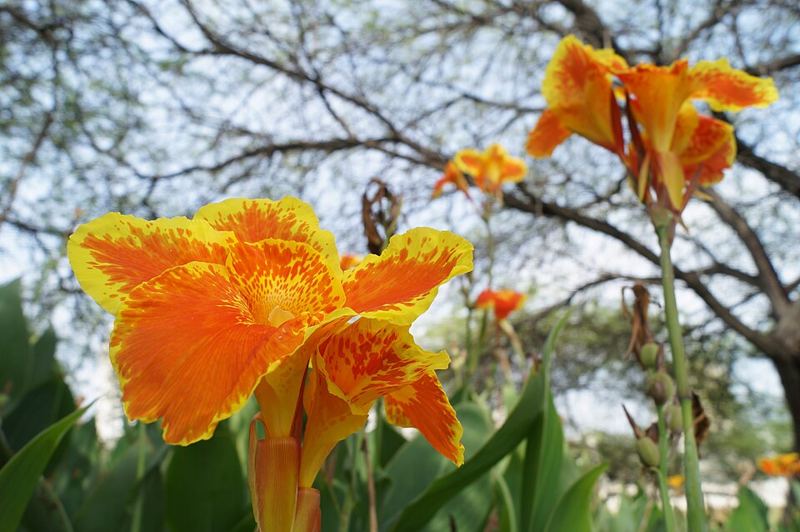
Canna lilies are tropical rhizomatous perennials with large, colorful lily-like flowers and upright, spear-shaped foliage, and they grow best in full sun and rich, moist soil. UF/IFAS describes them that way. Plant the rhizomes at least 5 inches deep and 12 inches apart (NC State), feed through the season, remove spent flowers, and in cold zones dig the rhizomes in fall and store them cool and dry. The ASPCA lists canna lily as non-toxic to dogs, cats and horses.
- Sun
- Full sun; poor flowering in shade
- Lifecycle
- Perennial
- Origin
- The Americas
- Planting depth
- At least 5 in (NC State)
- Spacing
- 12 in apart
- Soil
- Rich, moist, well-drained
- Winter
- Leave in warm zones; dig and store at 45–50°F in cold ones
- Pet safe
- Yes: ASPCA lists non-toxic
Sun, soil and water
UF/IFAS says cannas grow best in sites that have rich, organic soil and full sun. NC State says they can grow in shade but will not flower well. The same page says they adapt to a variety of soils, clay or loam, acidic or slightly alkaline, with high organic matter being the preference. NC State says they grow best in moist, well-drained soils but can tolerate some standing water or drought once they are established.
Planting rhizomes
- Pick the date. NC State says to plant the rhizomes after the last spring frost. UF/IFAS says two weeks before the last spring frost.
- Plant deep enough. NC State says it is best to plant the rhizomes at least 5 inches deep.
- Space them out. Set them 12 inches apart (NC State). UF/IFAS says plants range from a few feet to over 15 feet tall, depending on the cultivar.
- Feed. UF/IFAS says to feed with monthly applications of a balanced fertilizer, or with fewer applications of a slow-release one.
Care through the season
NC State says spent flowers should be removed to encourage continued flowering through the summer months. Keep feeding on the schedule above and keep the plants in the full sun they prefer.
Cultivars
UF/IFAS says ‘Black Knight’, ‘Pretoria’, ‘Tropicanna’ and ‘Wyoming’ and others will grow in most gardens if given adequate care, and warns that some are sold under multiple names.
| Variety | Best for | Notes | Named by | Caution |
|---|---|---|---|---|
| Black Knight | Garden use | — | UF/IFAS | May be sold under other names |
| Pretoria | Garden use | — | UF/IFAS | May be sold under other names |
| Tropicanna | Garden use | — | UF/IFAS | May be sold under other names |
| Wyoming | Garden use | — | UF/IFAS | May be sold under other names |
Winter and storage
NC State says that in warmer zones the rhizomes may be left in the soil to overwinter. In colder zones, dig up the rhizomes and bring them inside, and store them in peat or vermiculite in a cool, dry space with temperatures between 45 and 50°F.
Propagation
NC State says the plant may be propagated by seeds, rhizomes and division. Dividing the rhizomes is the usual way to multiply a plant you already have.
Grow these next
Another rhizome plant for summer color is the ginger lily, which is cold hardy in zones 8 to 10 according to Clemson. For a bold-leaved tropical that stays in pots, see bird of paradise, or browse the tropical flowers collection.
Frequently asked questions
When should I plant canna rhizomes?
The sources differ. NC State says to plant rhizomes after the last spring frost. UF/IFAS says rhizomes should be planted two weeks before the last spring frost.
How deep and how far apart do I plant cannas?
NC State says it is best to plant the rhizomes at least 5 inches deep and 12 inches apart.
Do cannas need full sun?
UF/IFAS says cannas grow best in sites with rich organic soil and full sun. NC State says they can grow in shade but will not flower well.
How do I overwinter cannas?
NC State says in warmer zones the rhizomes may be left in the soil over winter. In colder zones, dig them up, bring them inside and store them in peat or vermiculite in a cool, dry space at 45 to 50°F.
Are cannas toxic to pets?
The ASPCA lists canna lily as non-toxic to dogs, cats and horses.
Sources
- Canna x generalis, NC State Extension Plant Toolbox
- Cannas, UF/IFAS Gardening Solutions
- Canna Lily, ASPCA Animal Poison Control
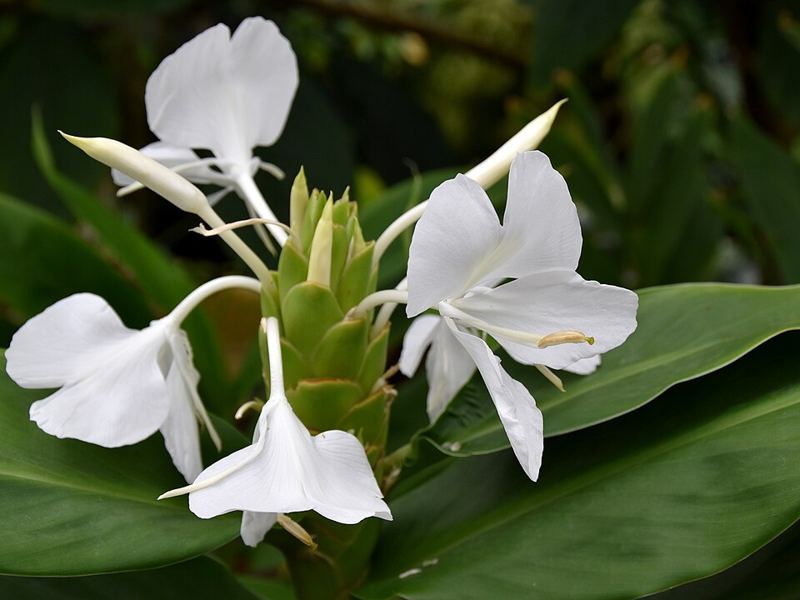 Ginger Lily
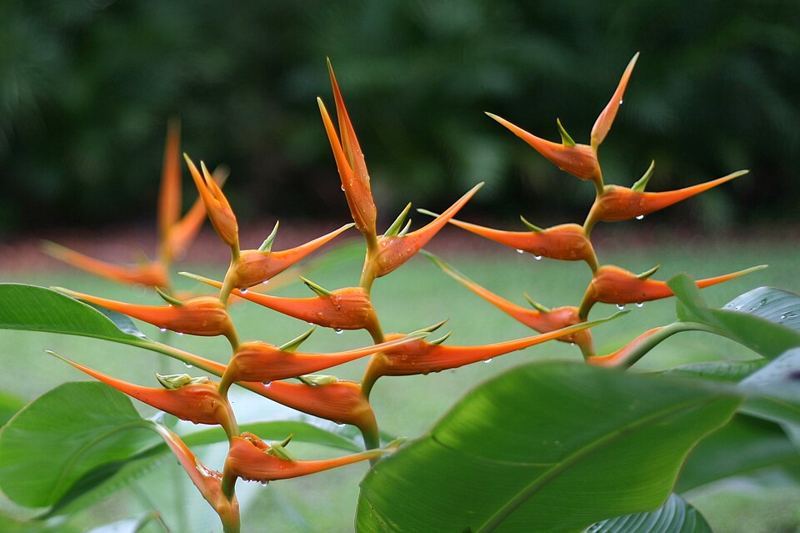 Heliconia
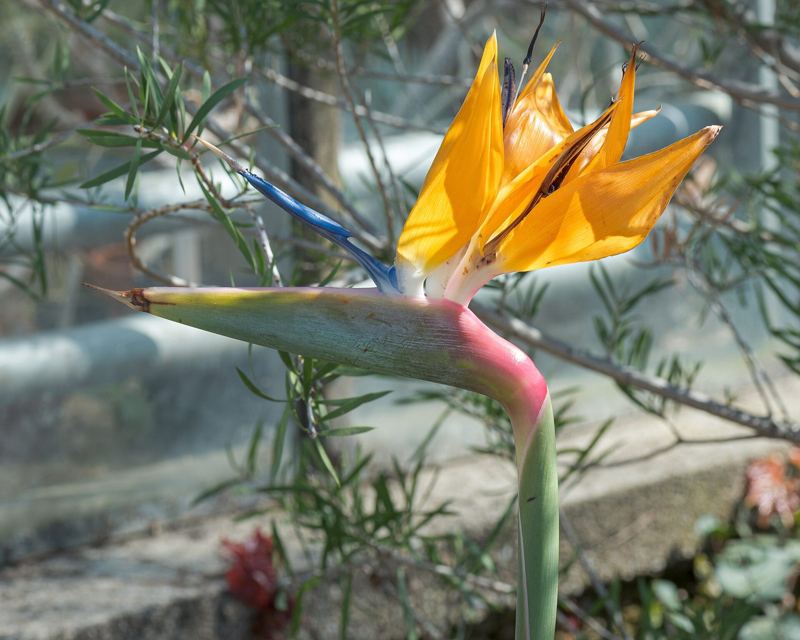 Bird of Paradise