

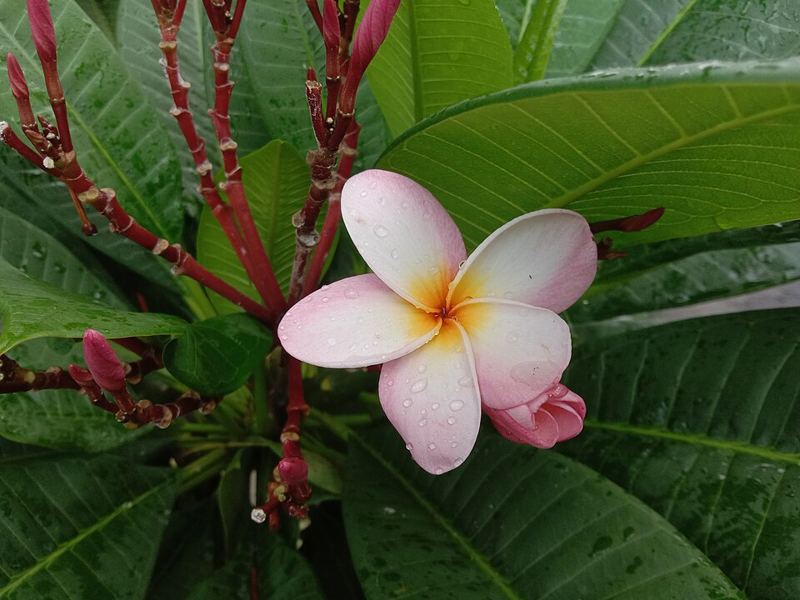
Plumeria, or frangipani, is a tropical flowering tree that wants full sun, well-drained soil and no frost. UF/IFAS says plumerias are best suited to USDA Hardiness Zones 10b to 11, and that farther north they can be grown in containers and brought inside when cold weather strikes. Once established, they are fairly drought and salt tolerant. New plants are started from cuttings, and in Florida most plants go dormant and drop their leaves in winter while the stems stay green.
- USDA zones
- 10b–11 outdoors (UF/IFAS)
- Sun
- Full sun
- Origin
- The Americas
- Container friendly
- Yes
- Soil
- Well-drained
- Water
- Fairly drought and salt tolerant once established
- Bloom time
- May to November in Florida (UF/IFAS)
- Pets
- Sap contains irritants; not considered particularly poisonous (UF/IFAS)
What plumeria is
UF/IFAS describes plumerias as a group of closely related flowering plants, endemic to much of the Caribbean Basin. Hawaii CTAHR says plumeria is generally a small tree growing to about 30 feet high, with a broad, usually round-headed canopy that is often about as wide as the tree is tall. Flowers range from pure white to yellow, orange, pink, red or a combination of these colors (UF/IFAS).
Where can you grow plumeria?
If a freeze hits a planted tree, UF/IFAS says it often regrows from the base as long as it was not killed to the ground. In colder zones, treat plumeria as a pot plant that spends warm months outside, as described in the container section below.
Sun, soil and water
Sun
Soil
Water
Feeding
How to start plumeria from cuttings
UF/IFAS says plumerias can be grown from cuttings. Hawaii CTAHR adds the details that matter for success.
- Take a tip cutting. CTAHR describes tip cuttings from the end of a branch.
- Let it cure before planting. CTAHR says tip cuttings are allowed to cure before they are planted.
- Rooting compound is optional. Treating the base of the cutting with a rooting compound enhances rooting but is not a requirement (CTAHR).
- Go easy on water while it roots. CTAHR says not to water too much or too often while rooting is occurring.
Pruning and size
Hawaii CTAHR says pruning is easiest in winter, following leaf drop, but that heavy pruning sacrifices the spring bloom. Since the tree can reach about 30 feet high with a canopy about as wide, leave room for it, or keep it in a container. Our plumeria pruning guide has the other cuts and the sap warning.
Bloom time
UF/IFAS says flowers bloom between May and November in Florida. Hawaii CTAHR gives March to October for the cultivars it covers in Hawaii. The two ranges are for different places, so expect your own season to follow your climate.
Plumeria in pots
UF/IFAS says plumeria can be grown in containers and brought indoors when cold weather strikes. That is the approach for everyone outside zones 10b to 11. UF/IFAS says most plants in Florida go dormant and lose their leaves in winter, with the stems staying green, so leaf drop in cool weather is part of the plant’s cycle there.
Common problems
Plumeria rust
Stem borer
Mealybugs
Cold
Are plumeria plants safe for pets?
UF/IFAS says the sap of these plants contains harmful irritants and that some consideration should be given to landscapes with pets and children. The same page also says plumeria is not considered particularly poisonous relative to other landscape plants. We state both points as UF/IFAS gives them.
Grow these next
If you already grow plumeria for warm-climate flowers, the bird of paradise shares the same zone 10 to 11 outdoor range and the same pot-and-bring-it-in routine. For a plant that needs no direct sun, the moth orchid covers the shaded window.
Frequently asked questions
What zones can plumeria grow outdoors in?
UF/IFAS says plumerias are best suited to tropical climates, USDA Hardiness Zones 10b to 11. Farther north it can be grown in a container and brought inside when cold weather strikes.
How do you start a new plumeria?
From cuttings. UF/IFAS says plumerias can be grown from cuttings. Hawaii CTAHR says tip cuttings are cured before planting, and that a rooting compound helps rooting but is not required.
When does plumeria bloom?
UF/IFAS says flowers bloom between May and November in Florida, in white, yellow, orange, pink, red or a mix of these. Hawaii CTAHR gives March to October for Hawaii cultivars.
Why does my plumeria drop its leaves in winter?
UF/IFAS says that in Florida most plumeria tend to be dormant and lose their leaves in the winter months, and that the stems stay green.
Is plumeria poisonous to pets?
UF/IFAS says the sap of these plants contains harmful irritants and that some consideration should be given to landscapes with pets and children. It also says plumeria is not considered particularly poisonous relative to other landscape plants.
Sources
- Plumeria, UF/IFAS Gardening Solutions
- Plumeria (OF-24), University of Hawaii CTAHR
- Frangipani (plumeria) rust (PP172), UF/IFAS Extension (EDIS)
- Mealybugs (IP-36), University of Hawaii CTAHR
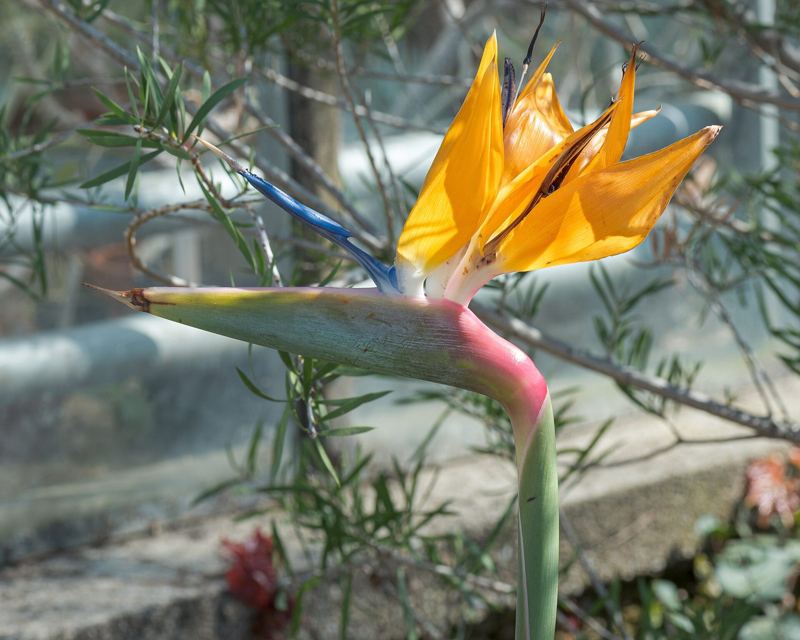 Bird of Paradise
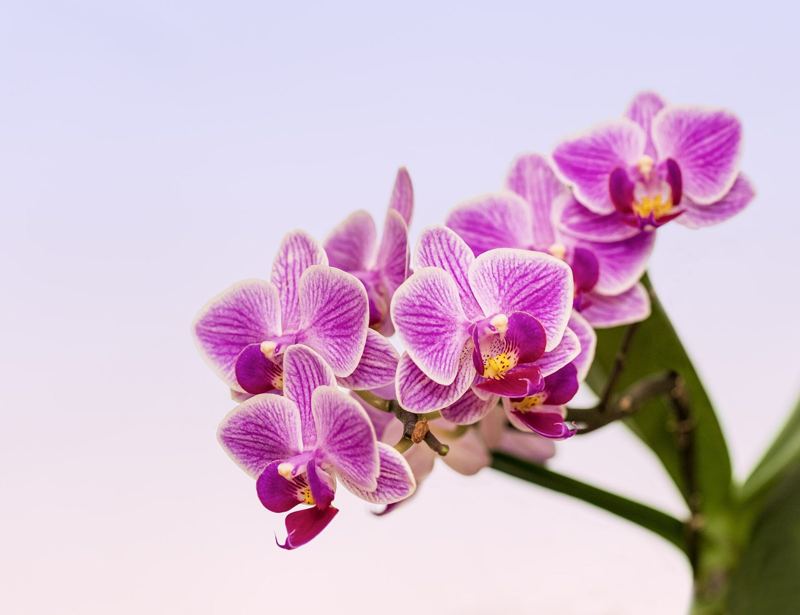 Orchids