

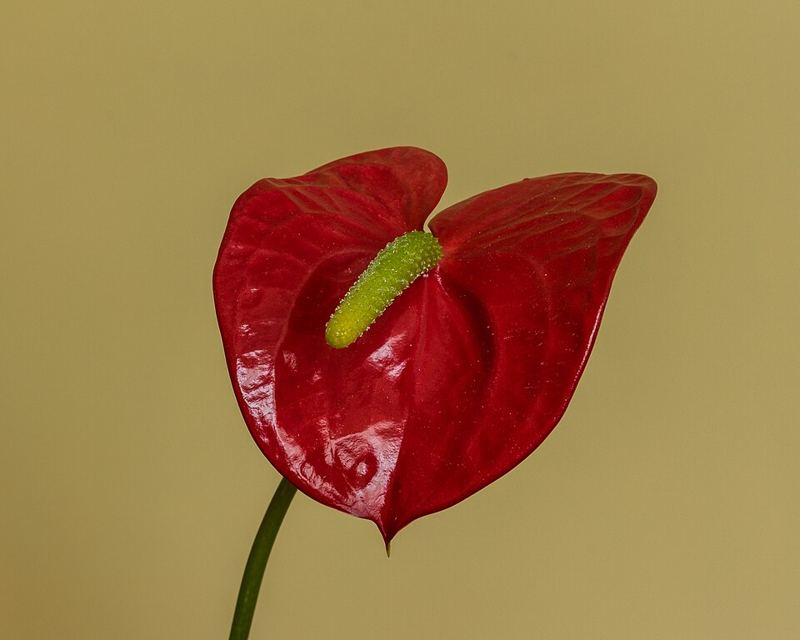
Anthurium (Anthurium andraeanum), the flamingo flower, is a houseplant in most of the US that wants bright indirect light, warmth and humidity. NC State Extension calls it a strikingly beautiful and popular perennial houseplant native to tropical Colombia and Ecuador. It is winter hardy outdoors only in USDA zones 11 to 12, so in the rest of the country it lives in a pot. Water when the top inch of the soil feels dry, keep it between 65 and 80°F and away from drafts, and expect color nearly all year: UF/IFAS says the blooms come continuously, each lasting about six weeks on the plant.
- USDA zones
- 11–12 outdoors (NC State)
- Origin
- The Americas
- Sun
- Bright, indirect; direct sun scorches
- Water
- When the top inch of soil is dry
- Temperature
- 65–80°F, humidity 60–80%
- Bloom time
- Through the year; each bloom about 6 weeks
- Pet safe
- No: ASPCA lists toxic to dogs, cats, horses
Indoors or outdoors?
NC State says anthuriums are winter hardy in USDA hardiness zones 11 to 12. That means a frost-free garden. In every other zone the plant is a houseplant, and the rest of this guide is written for a pot on a windowsill. UF/IFAS describes the typical size: anthuriums grow two to three feet tall, though dwarf forms are smaller. NC State gives a houseplant 1 to 1.5 feet tall and 9 to 12 inches wide.
Light
NC State says the plant prefers bright, indirect sunlight, moist, well-drained soil, and warm, humid conditions, and that direct sun can scorch its leaves. UF/IFAS makes a distinction between settings: outdoors, anthuriums do best in low light, but as a houseplant they need bright indirect light to thrive. So a spot near a bright window, back from the glass where the sun does not land on the leaves, is the target.
Water, soil and humidity
Water
Soil
Temperature
Humidity
Bloom time
UF/IFAS says anthuriums bloom continuously throughout the year, with each bloom lasting about six weeks on the plant. NC State describes the plant as having glossy heart-shaped leaves and colorful spathes.
Pets
The ASPCA lists the flamingo flower (Anthurium scherzeranum) as toxic to dogs, cats and horses, and names insoluble calcium oxalates as the toxic principle. The ASPCA page is for A. scherzeranum rather than the A. andraeanum covered here, so treat any anthurium in the house as a plant to keep out of reach of pets.
Grow these next
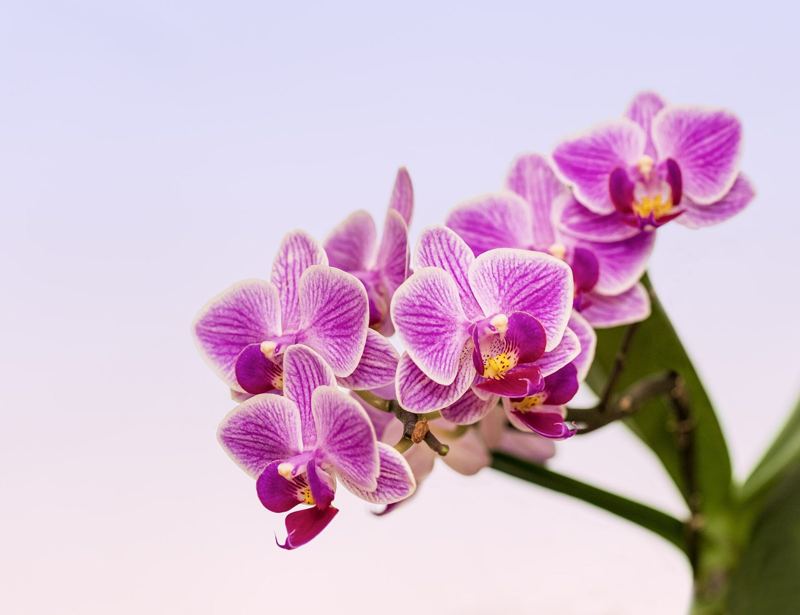
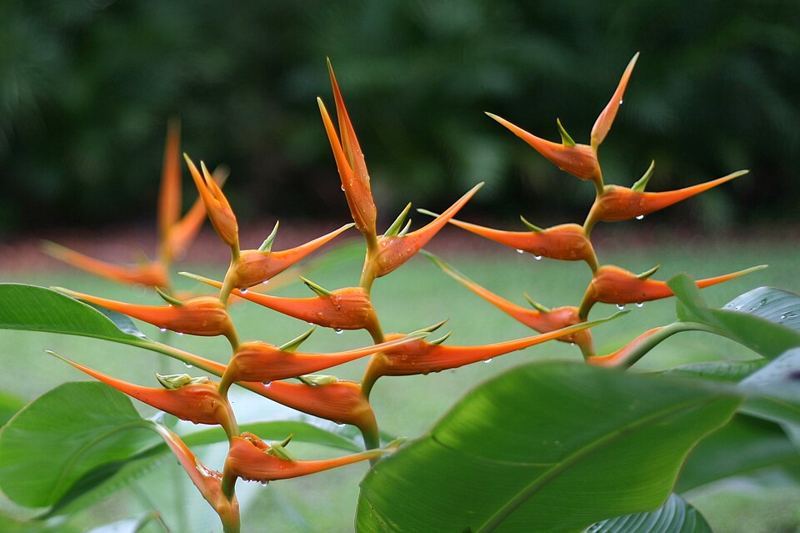
If a bright window is where your anthurium lives, the moth orchid is another bloomer that wants little or no direct sun. For a tropical that does better outdoors in a frost-free garden, see heliconia, or browse the whole tropical flowers collection.
Frequently asked questions
How much light does an anthurium need?
NC State Extension says anthurium prefers bright, indirect sunlight and that direct sun can scorch its leaves. UF/IFAS adds that outdoors anthuriums do best in low light, but as a houseplant they need bright indirect light to thrive.
How often should I water an anthurium?
NC State says it is best to water when the top inch of the soil feels dry. The soil should stay moist and well drained, not soggy (NC State, UF/IFAS).
What temperature and humidity does an anthurium want?
NC State says 65 to 80°F and humidity of 60 to 80 percent. It does not tolerate cold drafts or sudden temperature changes. UF/IFAS suggests a tray of moist gravel to raise humidity indoors.
Can anthurium grow outdoors in the US?
NC State says anthuriums are winter hardy in USDA zones 11 to 12. Everywhere else, grow it as a houseplant.
Is anthurium toxic to pets?
The ASPCA lists flamingo flower (Anthurium scherzeranum) as toxic to dogs, cats and horses, and names insoluble calcium oxalates as the toxic principle. Keep any anthurium out of reach of pets.
Sources
- Anthurium andraeanum, NC State Extension Plant Toolbox
- Anthurium, UF/IFAS Gardening Solutions
- Flamingo Flower, ASPCA Animal Poison Control
 Orchids
 Heliconia
 Bird of Paradise