

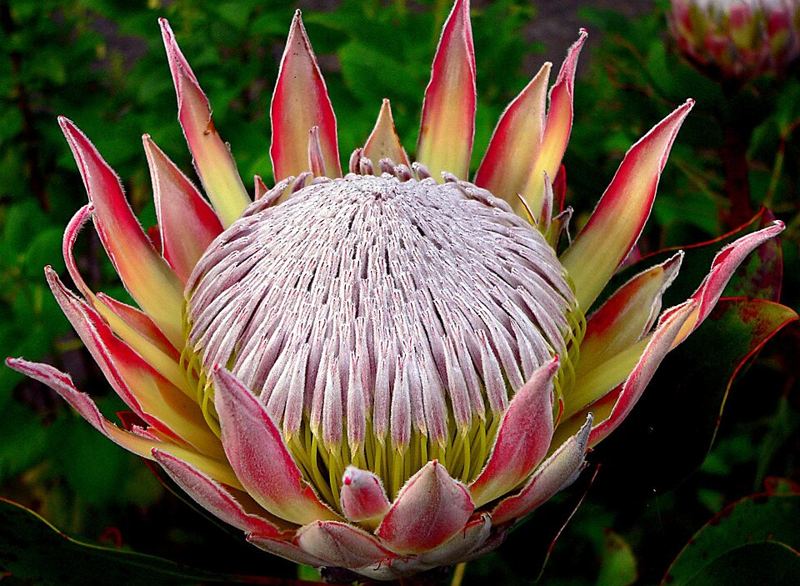
Protea is a drainage-first plant: extension sources point to well-drained loam or sandy loam, drip irrigation, and watering that is cut back rather than increased when the soil drains slowly. University of Hawaii CTAHR calls protea crops relatively tolerant of occasional drought. A 2007 University of California cost study from San Diego County adds the field details: how far apart to plant, how often a planting was watered and how young plants were pruned. Its figures describe one California budget, and we label them that way.
- Origin
- Africa
- Soil
- Well-drained loam or sandy loam (CTAHR)
- Drought
- Relatively tolerant of occasional drought (CTAHR)
- Irrigation
- Drip; once a week in spring and winter, twice in summer (California cost study)
- Spacing
- 4 x 4 ft to 10 x 10 ft, by species (California cost study)
- Young plants
- Pinch or cut the terminals for the first three years (California cost study)
Soil and drainage
Best soil
Clay or slow drainage
Drought
Watering
Both sources point to drip irrigation. CTAHR recommends it for prolonged drought. In the California cost study, the drip system was installed before planting, and the planting holes were irrigated in January before the plants went in. From the second year the study’s field was watered once a week in spring and winter and twice a week in summer. That schedule suits that grower’s soil and climate, so adjust it to yours. CTAHR’s advice for heavier soil goes the other way: water less often and for shorter periods.
Planting
CTAHR says digging planting holes by hand is recommended to limit soil disruption. The cost study lays out the field and installs the irrigation before the plants go in.
- Choose a well-drained site. Loam or sandy loam is ideal (CTAHR). On clay, plan to add compost and water less (CTAHR).
- Install drip irrigation first. The cost study installs the drip system before planting and irrigates the holes before the plants go in.
- Dig the holes by hand. CTAHR says hand-digging limits soil disruption.
- Space by species. The cost study says spacing runs from 4 by 4 feet to 10 by 10 feet depending on species or variety. Its budget used 6 by 6 foot triangular spacing.
Pruning young plants
The cost study says pruning in the first three years consists of pinching out or cutting the terminals.
Disease prevention
The CTAHR publication behind the soil guidance is about disease management, and its advice on drainage and irrigation belongs to that goal: less water in heavy soil and compost to improve drainage. The California cost study also budgets a preventive fungicide, applied through the irrigation water in January and June from the first year. That is a commercial practice recorded in a budget, not a home-garden recommendation. If you grow protea for cut flowers or the garden and see decline, your state extension office can advise on local products and rules.
Grow these next
Protea sits in the same collection as other showy warm-climate flowers. Plumeria is the tree for frost-free gardens and pots, and bird of paradise pairs bold blooms with a clear pot-and-bring-it-in routine. For the full group, see the tropical flowers collection.
Frequently asked questions
What soil does protea need?
University of Hawaii CTAHR says well-drained soils, such as loam or sandy-loam textures, are ideal. In clay or poorly drained soils it advises reducing irrigation frequency and duration and adding compost to improve drainage.
Is protea drought tolerant?
CTAHR says protea crops are relatively tolerant of occasional drought. During prolonged drought, it advises irrigating by drip.
How far apart do you plant protea?
A 2007 University of California cost study says spacing depends on the species or variety and ranges from 4 by 4 feet to 10 by 10 feet. The study's own budget assumed 6 by 6 foot triangular spacing.
How often is protea watered?
In the 2007 University of California cost study of a California protea planting, the field was irrigated once a week in spring and winter and twice a week in summer, beginning in the second year. That is one commercial budget, not a rule for every site.
How do you prune a young protea?
The same cost study says pruning in the first three years consists of pinching out or cutting the terminals.
Sources
- Disease Management of Protea and Leucospermum spp. (OF-61), University of Hawaii CTAHR
- Sample Costs to Establish and Produce Protea, South Coast, San Diego County (2007), University of California Cooperative Extension
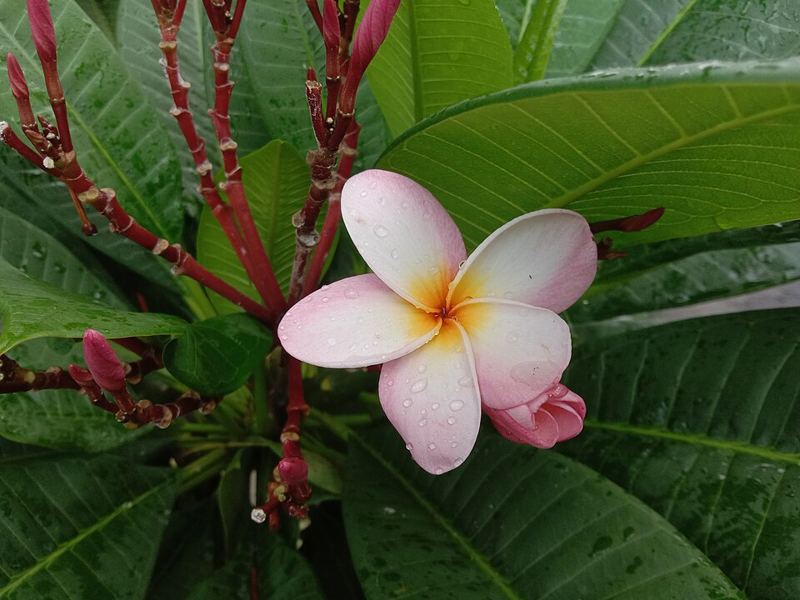 Plumeria
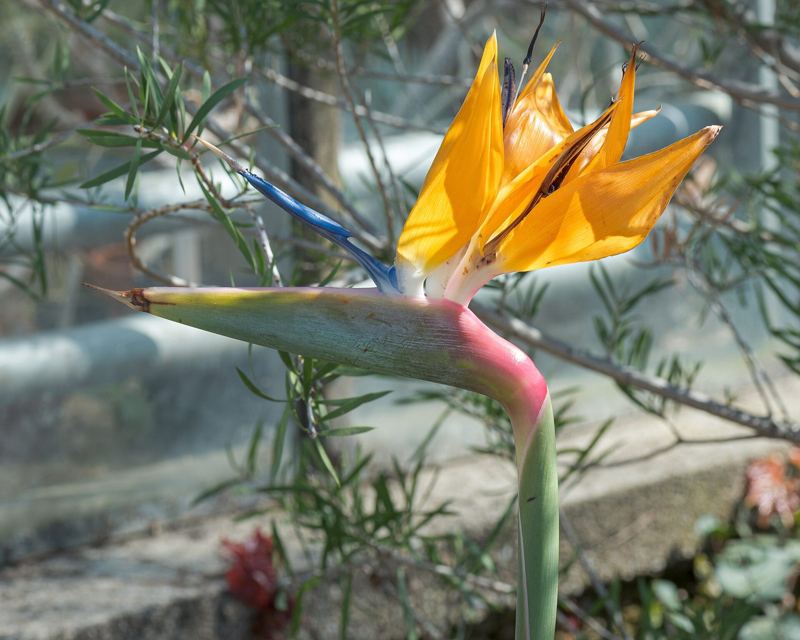 Bird of Paradise