

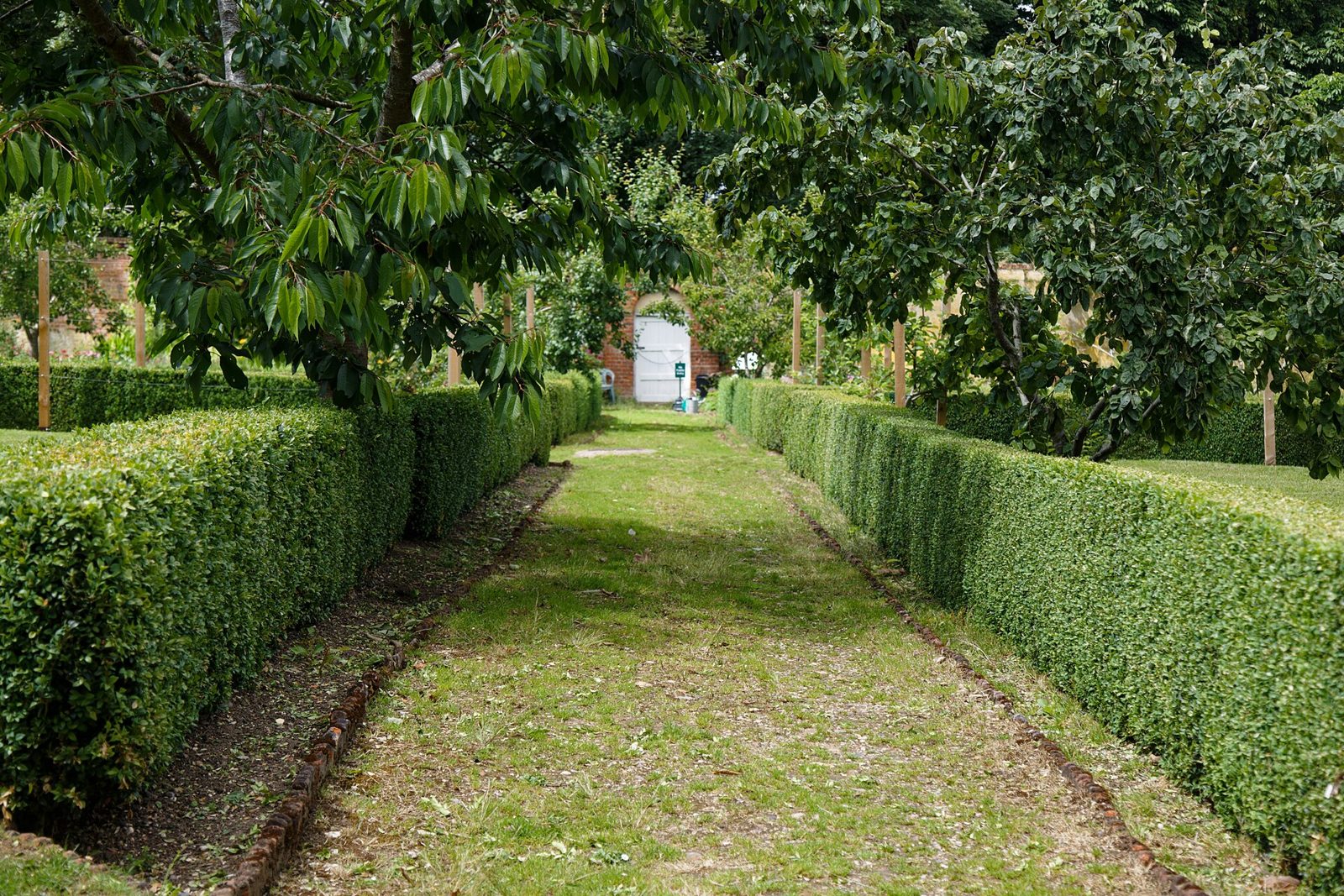
Boxwood is an evergreen shrub that does best in well-drained soil, away from drying wind and full winter sun, and that is pruned by thinning rather than shearing. Clemson names American boxwood (Buxus sempervirens) and littleleaf boxwood (Buxus microphylla) as the species it covers, and NC State profiles Buxus sempervirens. NC State says it is shallow-rooted and adapts to a wide range of light and soil conditions.
- Origin
- Europe
- Size
- Up to 15–20 ft slowly; can be kept shorter (NC State)
- Soil
- Well-drained; do not plant too deeply
- Light
- Wide range; shelter from wind and full winter sun
- Roots
- Shallow
- Prune
- Thin; avoid too early in spring or late in summer
- Pets
- Toxic to dogs, cats and horses (ASPCA)
Site and soil
NC State says to protect boxwood from winds and full winter sun by placing it where these conditions are limited, because they can cause dehydration and bronzing. It also says boxwood prefers well-drained soil and that it is best not to plant too deeply. Clemson says to amend heavy clay soils with porous materials such as composted pine bark.
Drainage matters because of root rot. Clemson says high soil moisture, from overwatering or prolonged heavy rain, and warm soil temperatures favor the development of Phytophthora root rot, and that the disease is more severe in heavy clays or poorly drained soils.
Size
NC State says American boxwood can grow slowly up to 15 to 20 feet tall at maturity, but can be kept much shorter through pruning.
Pruning boxwood
NC State’s timing advice is short: do not prune too early in the spring or late in summer. University of Maryland Extension says the most appropriate pruning method is thinning, the removal of entire stems or branches at their point of attachment, and that thinning instead of shearing helps prevent and control Volutella by improving air circulation and light penetration. Clemson says thinning should preferably be done annually, and that the best time to shear is early June. If a branch is diseased, Maryland Extension says to prune it out when the foliage is dry. Our boxwood pruning guide covers timing, shearing and restoring overgrown plants. For another shrub where pruning timing matters, see our azalea guide.
Boxwood blight
Clemson calls boxwood blight a serious fungal disease caused by Calonectria pseudonaviculata that leads to leaf spots, stem cankers and defoliation. It says the pathogen can survive for at least five years on blighted and fallen foliage, as well as on infected stems. Clemson also says no fully resistant boxwood varieties are available, and that fungicides may not kill the pathogens in infected plants.
Volutella canker
Clemson says Volutella buxi may cause a dieback or stem blight and often follows winter injury. It says copper-based fungicides are very effective in preventing canker. Thinning, as above, is the cultural measure Maryland Extension recommends.
Care in order
- Choose the site. Sheltered from wind and full winter sun (NC State), with well-drained soil.
- Plant at the right depth. Not too deeply (NC State). Amend heavy clay with composted pine bark (Clemson).
- Water without overdoing it. Overwatering favors root rot (Clemson).
- Prune by thinning. Remove stems at their point of attachment for air and light (Maryland Extension), and avoid early spring and late summer (NC State).
- Cut out diseased branches when the foliage is dry. Maryland Extension’s advice.
Frequently asked questions
How big does boxwood get?
NC State says American boxwood (Buxus sempervirens) can grow slowly up to 15 to 20 feet tall at maturity, but it can be kept much shorter through pruning.
What soil does boxwood need?
NC State says boxwood prefers well-drained soil and should not be planted too deeply. Clemson says to amend heavy clay soils with porous materials such as composted pine bark.
What is boxwood blight?
Clemson says boxwood blight is a serious fungal disease caused by Calonectria pseudonaviculata that leads to leaf spots, stem cankers and defoliation. It adds that no fully resistant boxwood varieties are available.
Should I thin or shear boxwood?
Maryland Extension says thinning, which removes interior stems, helps prevent and control Volutella by improving air circulation and light penetration, and recommends it instead of shearing.
Is boxwood poisonous to pets?
The ASPCA lists boxwood as toxic to dogs, cats and horses. The toxic principle is alkaloids, and signs in dogs and cats include vomiting and diarrhea.
Sources
- Boxwood Diseases and Insect Pests, Clemson Cooperative Extension, Home and Garden Information Center
- Boxwood, Clemson Cooperative Extension, Home and Garden Information Center
- Boxwood: Identify and Manage Common Problems, University of Maryland Extension
- Volutella Blight Disease of Boxwood, University of Maryland Extension
- Buxus sempervirens, NC State Extension Plant Toolbox
- Boxwood, ASPCA Animal Poison Control
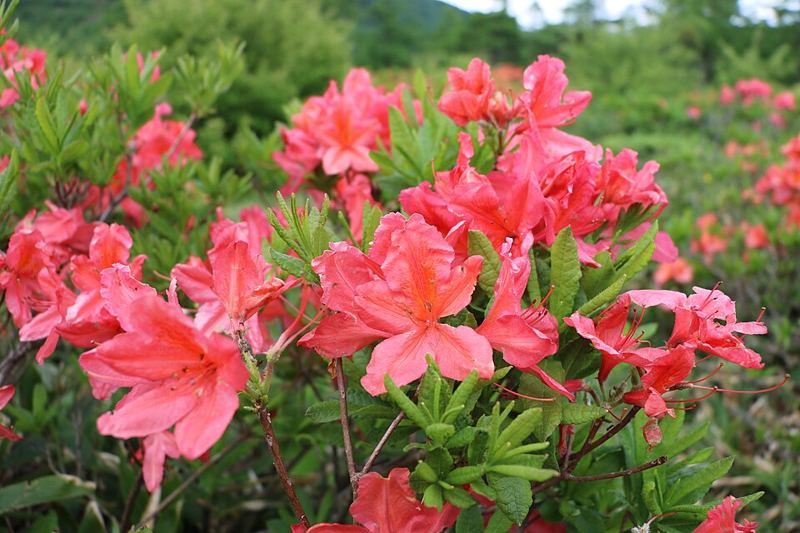 Azalea
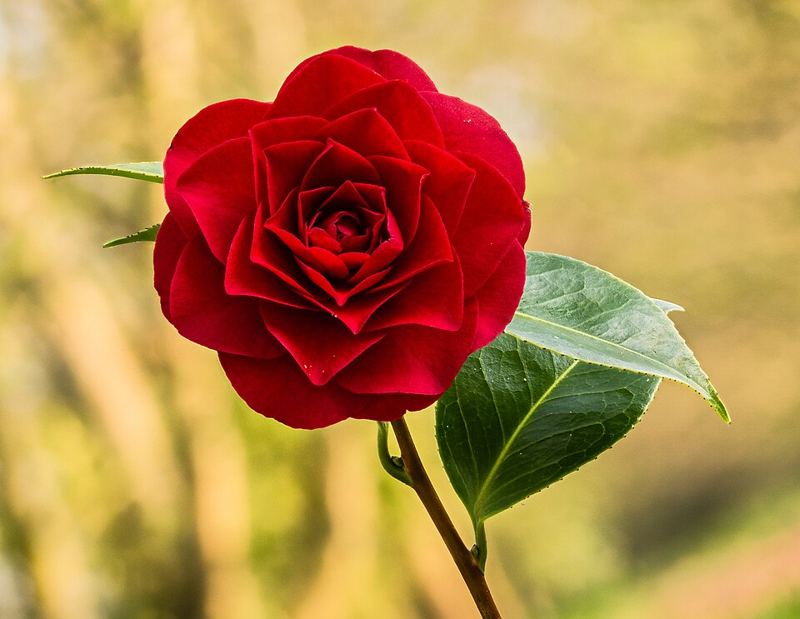 Camellia
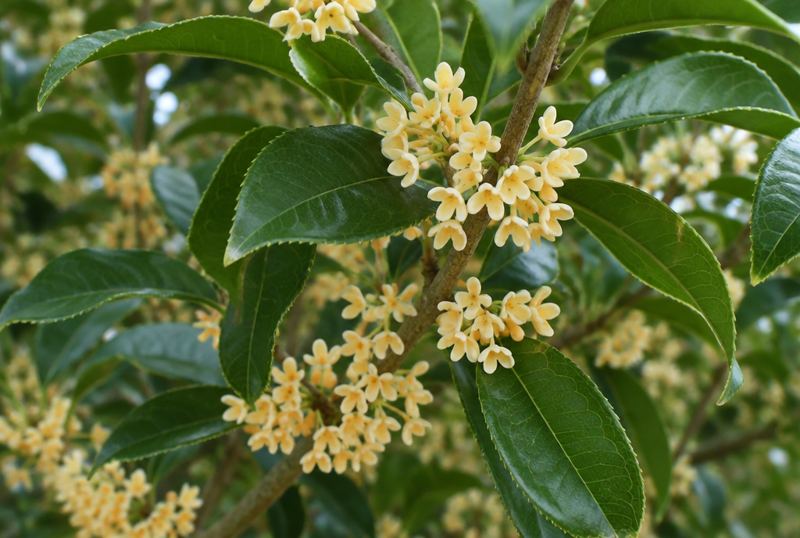 Osmanthus