

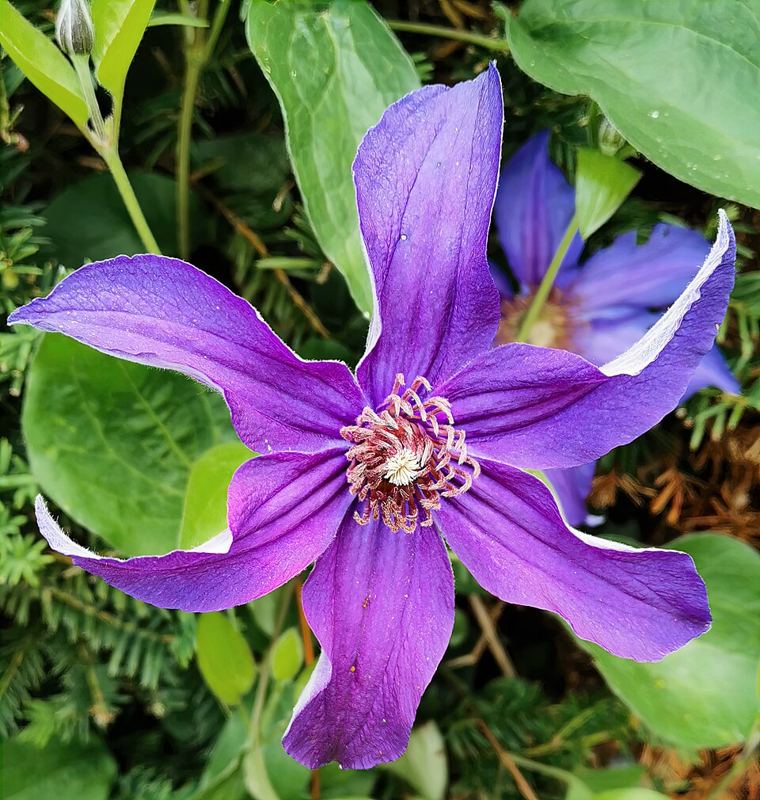
Clematis gets its best flowers with its top in full sun and its roots in cool shade, and it is pruned by group, not by calendar. Clemson describes clematis as mostly woody, deciduous vines with great variety in flower form, color, bloom season and height, and says they need at least 6 hours of sun to flower best. Plant the crown one to two inches below the soil in well-drained soil, mulch the roots, and find out which of the three pruning groups your plant belongs to before you cut. ASPCA lists clematis as toxic to dogs, cats and horses.
- Origin
- Asia
- Sun
- At least 6 hours (Clemson); roots shaded and cool
- Soil
- Well-drained; compost or leaf mold to hold moisture
- Planting depth
- Crown 1–2 in. below soil level
- Mulch
- 2–4 in. layer, 4–6 in. from the stem (Illinois)
- Pruning
- By group: after bloom, or Feb–March
- Pets
- Toxic to dogs, cats, horses (ASPCA)
Sun and soil
Sun
Soil
Mulch
Support
How to plant clematis
- Pick the spot carefully. Chicago Botanic Garden says clematis do not like their roots disturbed and do not transplant well, so choose the site before you dig.
- Prepare well-drained soil. Add compost or leaf mold to help hold moisture (Chicago Botanic Garden).
- Set the plant deep. Illinois Extension suggests setting the plant so the first two sets of leaf nodes are underground. Chicago Botanic Garden says one to two inches below the soil level.
- Mulch the roots. Apply 2 to 4 inches of mulch, kept 4 to 6 inches from the stem (Illinois Extension), so the roots stay cool and moist.
The three pruning groups
Pruning is where most clematis questions come from. Clemson sorts clematis by when they bloom, and the right cut depends on the group.
| Group | Blooms | What to do | Source |
|---|---|---|---|
| Group 1 | Early spring, generally April and May, from buds produced the previous year | Prune after bloom. In spring remove only dead wood. | Clemson, Illinois Extension |
| Group 2 | — | Prune in February or March | Clemson |
| Group 3 | — | Cut each stem to about 2 to 3 feet in February or March | Clemson |
If you do not know the group, check the plant tag or the cultivar name first. Group 1 blooms from buds produced the previous year (Clemson), so a hard cut in February or March would remove them.
For the full cut-by-cut breakdown, including how to tell your group and what to do if you cannot, see our clematis pruning guide.
Feeding
The sources differ. Illinois Extension suggests a balanced fertilizer once a year, after first bloom for groups 1 and 2 and after pruning in spring for group 3. Chicago Botanic Garden says fertilizing clematis is not necessary.
Clematis wilt
Are clematis safe for pets?
ASPCA lists clematis as toxic to dogs, toxic to cats and toxic to horses. The toxic principle it names is an irritant. Keep vines where pets cannot chew them, or choose another vine for a pet area.
Grow these next
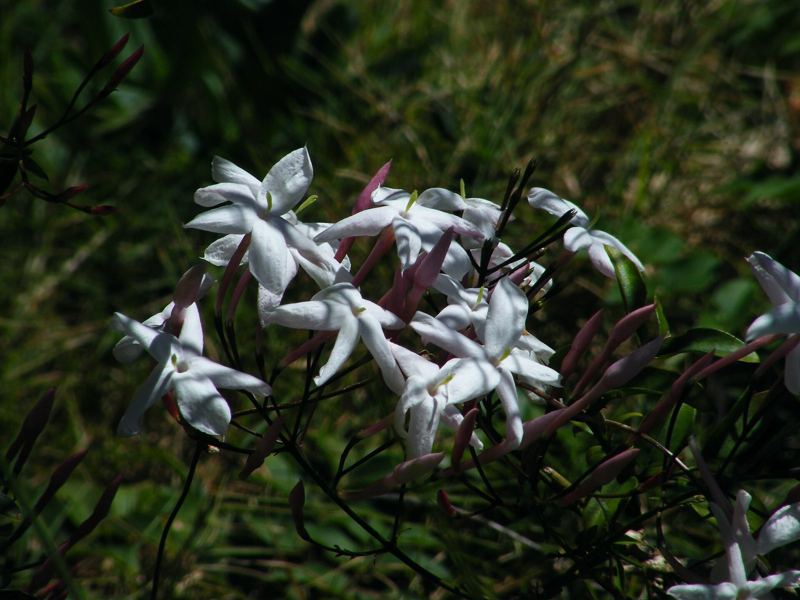
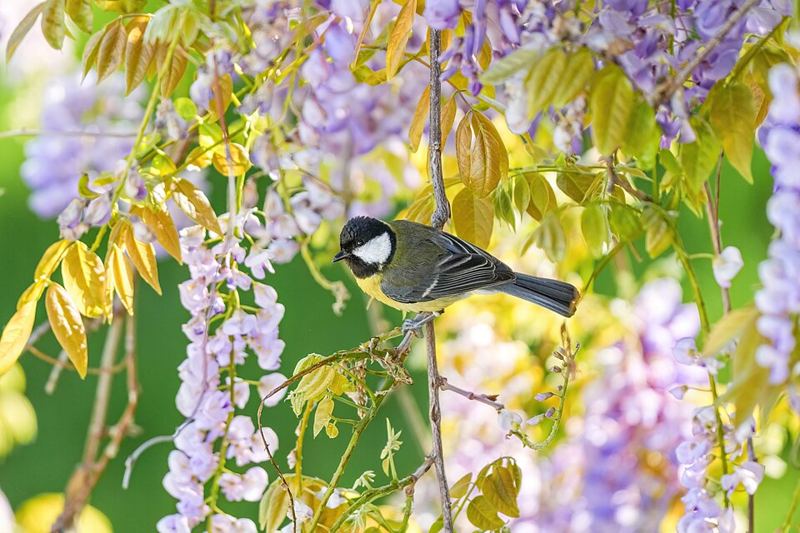
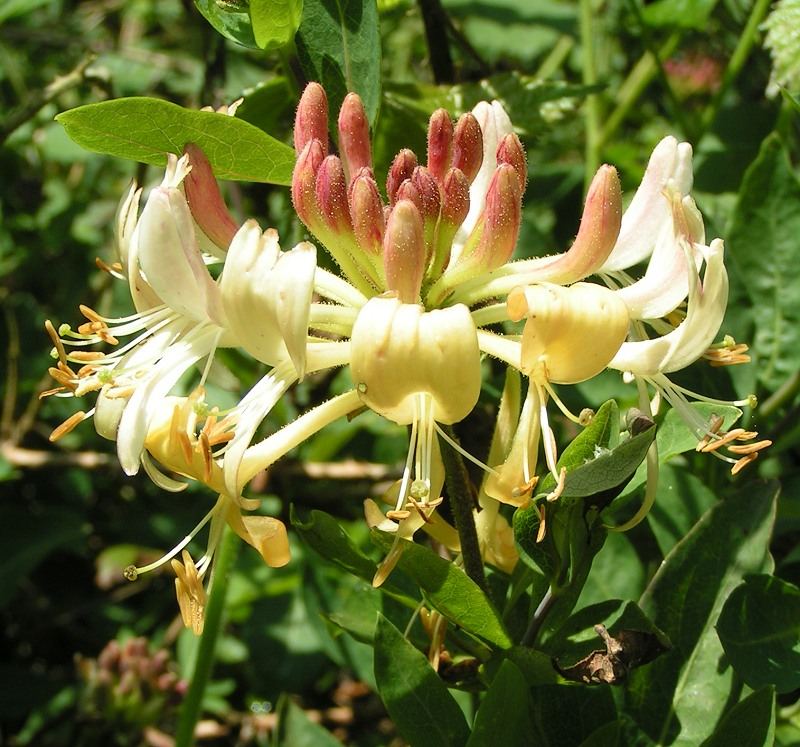
If you want a scented partner for a warm wall, jasmine covers true jasmine and how to tell it from star jasmine. Wisteria and honeysuckle are the other climbers in this section, and each comes with its own native-or-invasive question.
Frequently asked questions
How much sun does clematis need?
Clemson says clematis need at least 6 hours of sun to flower best. Chicago Botanic Garden says to site it so the top of the plant receives full sun and the roots are shaded and cool.
How deep do you plant clematis?
Illinois Extension suggests setting the plant so the first two sets of leaf nodes are underground. Chicago Botanic Garden says the crown is planted one to two inches below the soil level.
When do you prune clematis?
It depends on the group. Clemson says group 1 blooms early on last year's growth and is pruned after bloom, group 2 is pruned in February or March, and group 3 is cut to about 2 to 3 feet in February or March.
Do you need to fertilize clematis?
The sources differ. Illinois Extension suggests a balanced fertilizer once a year, after first bloom for groups 1 and 2 and after spring pruning for group 3. Chicago Botanic Garden says fertilizing clematis is not necessary.
Is clematis toxic to pets?
ASPCA lists clematis as toxic to dogs, cats and horses, with an irritant as the toxic principle.
Sources
- Clematis, Clemson Home & Garden Information Center
- Clematis, University of Illinois Extension
- Clematis (Home, Kitchen and Master Gardener guide), University of Illinois Extension
- Caring for Clematis, Chicago Botanic Garden
- Clematis, ASPCA Animal Poison Control
 Jasmine
 Wisteria
 Honeysuckle