

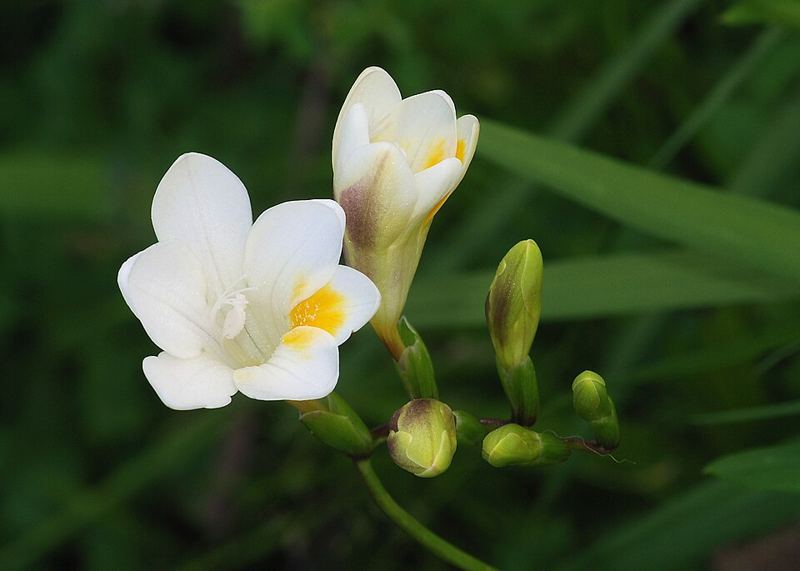
Freesia is a corm-grown flower that wants mild, frost-free winters, cool nights and well-drained soil, and it does best planted about 1 inch deep with the pointed end up. NC State says freesia is hardy in zones 9 to 10, grows in full sun to partial shade, and prefers days of 60 to 70°F with nights between 40 and 55°F. Where winters are colder, NC State says the corms are lifted and stored over winter.
- USDA zones
- Hardy in 9–10; mild, frost-free climates
- Sun
- Full sun to partial shade
- Origin
- Africa
- Container friendly
- Yes
- Soil
- Moist, well drained, organic rich, neutral pH
- Planting depth
- About 1 in, pointed end up
- Spacing
- 1–2 in apart
- Temperature
- Days 60–70°F, nights 40–55°F
What freesia looks like
NC State describes freesia as having an erect, leafless, wiry stem that grows 1 to 2 feet tall, carrying funnel-shaped flowers.
Where freesia grows
NC State says freesia is hardy in USDA zones 9 to 10 and suits mild, frost-free climates. It lists the best temperatures as daytime 60 to 70°F (16 to 21°C) and nighttime 40 to 55°F (4 to 13°C). That is a narrow, cool window. A site with hot nights is outside what NC State describes as best.
Planting freesia corms
NC State says to plant about 1 inch deep with the pointed end up, spaced about 1 to 2 inches apart. It says the soil should be moist, well drained and rich in organic matter, at a neutral pH, in full sun to partial shade. NC State also says that if corms are planted in succession you will enjoy a longer flowering season.
- Choose a site. Full sun to partial shade, in moist, well-drained, organic-rich soil with neutral pH (NC State).
- Plant the corm. About 1 inch deep, pointed end up, 1 to 2 inches apart (NC State).
- Stagger the planting. Plant in succession to lengthen the flowering season (NC State).
- Feed young plants. Once plants are about 6 inches tall, give a liquid fertilizer every 2 weeks (NC State).
Freesia care
Sun
Soil
Feeding
Temperature
Freesia in pots
NC State says freesias have a long tap root and need a deep pot. Fill it with an organic-rich potting mix and add coarse sand or crushed rock for good drainage. Drainage is the point: the same profile asks for well-drained soil in the ground.
Winter and replanting
NC State says that for overwintering, the corms need to be lifted from the soil and stored to protect them from cold temperatures. It also says the corms may be replanted each spring from the ones you harvested, or fresh corms may be bought each year. In zones 9 to 10 the plant is considered hardy, so lifting is the answer for gardens colder than that.
Common freesia problems
NC State’s care advice leans on drainage: well-drained soil in beds and coarse sand or crushed rock in pots.
Grow these next
Freesia is a corm, like gladiolus, and the two share the lift-and-store routine for cold winters. For spring color from bulbs planted in fall, see the tulip guide, and for a rhizome that is far more cold tolerant, the iris guide.
Frequently asked questions
What zones can freesia grow in?
NC State says freesia is hardy in zones 9 to 10, in mild, frost-free climates. In colder areas the corms are lifted and stored over winter.
How deep do you plant freesia corms?
NC State says about 1 inch deep with the pointed end up, and about 1 to 2 inches apart.
How much sun does freesia need?
NC State says full sun to partial shade, in moist, well-drained, organic-rich soil with a neutral pH.
Can you grow freesia in a pot?
Yes. NC State says freesias have a long tap root and need a deep pot, filled with an organic-rich potting mix plus coarse sand or crushed rock for drainage.
Do you have to dig up freesia corms?
In cold areas, yes. NC State says that for overwintering the corms need to be lifted from the soil and stored to protect them from cold, and that they can be replanted each spring or fresh corms bought each year.
Sources
- Freesia, NC State Extension Plant Toolbox
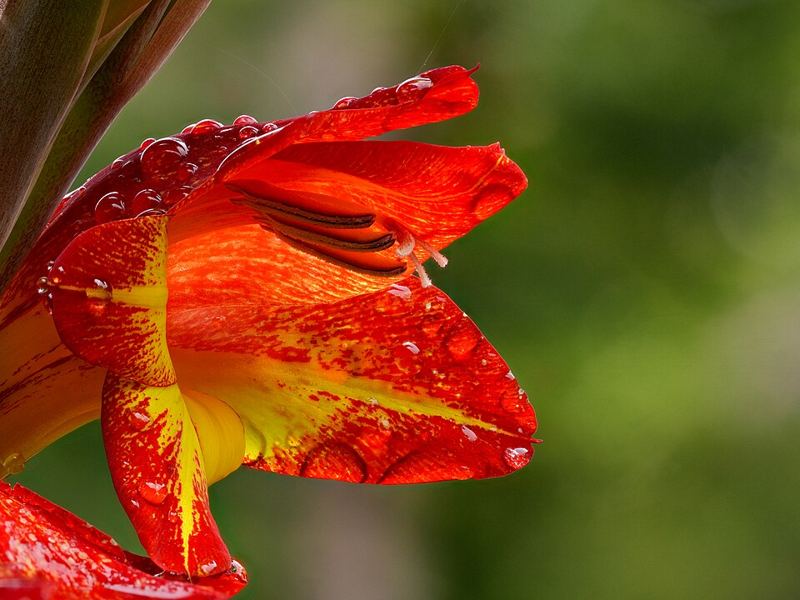 Gladiolus
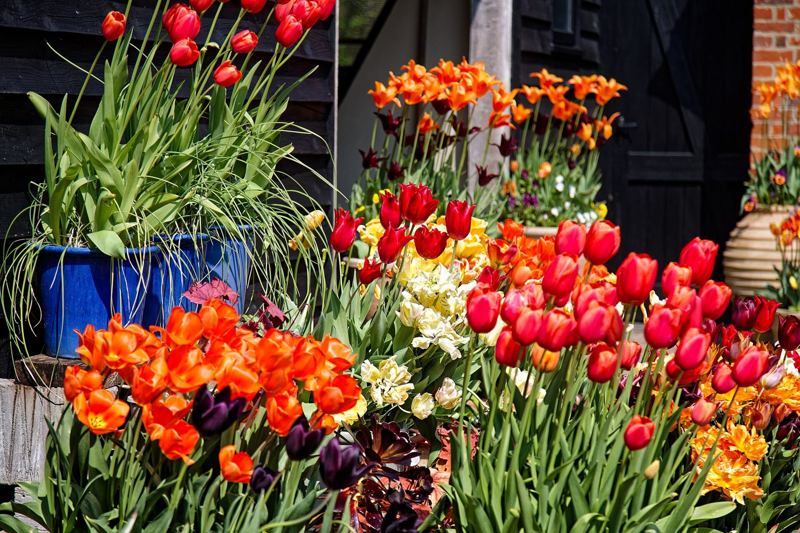 Tulip
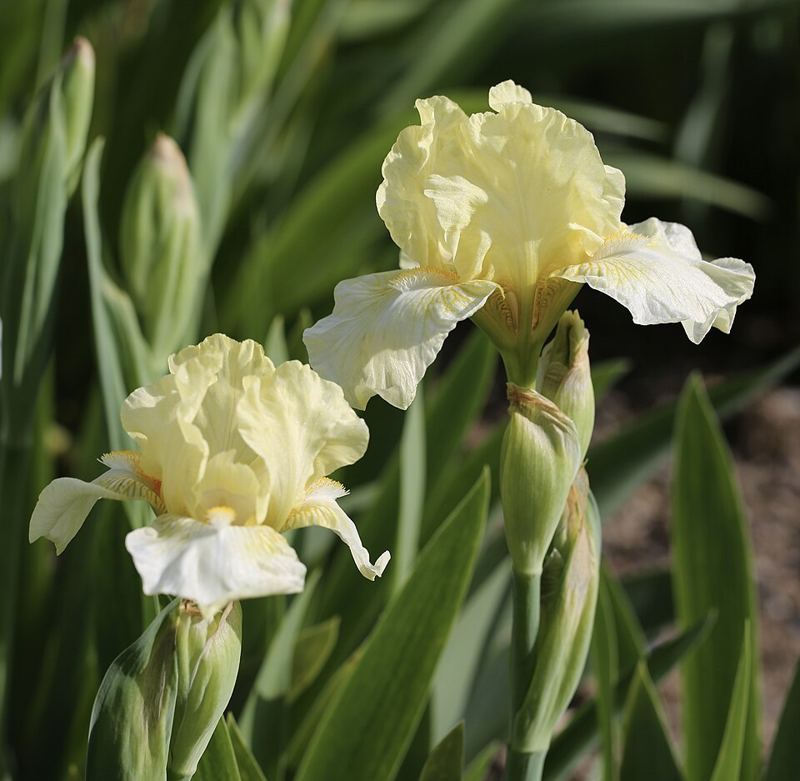 Iris