

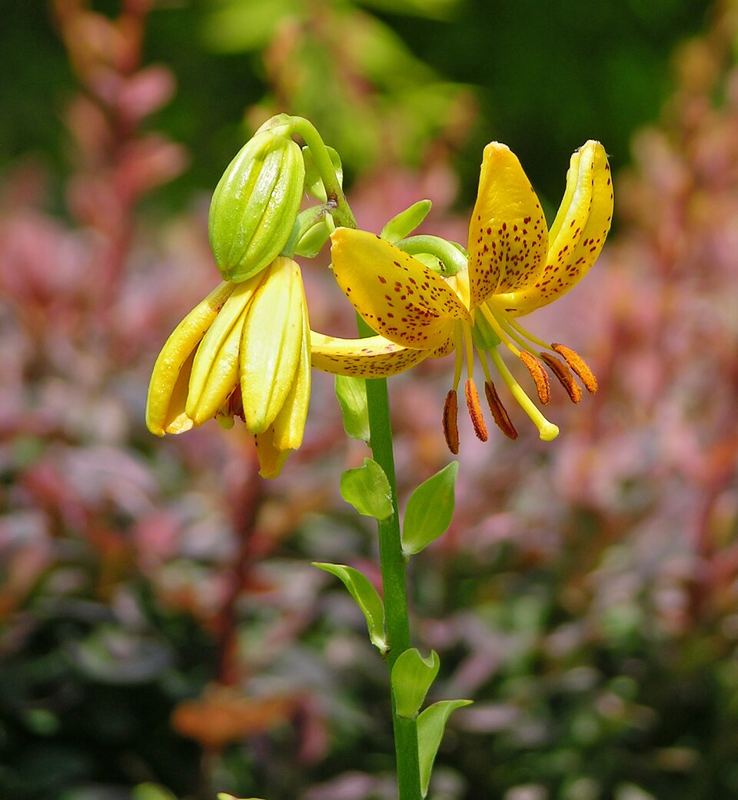
Plant true lily bulbs in early fall, about three times their diameter deep (typically 6 to 8 inches), in well-drained, fertile soil, with sun on the leaves and shade on the roots. Iowa State says true lilies belong to the genus Lilium, perennial bulbs known for showy summer flowers, and NC State says to expect blooms from June to August. Before you plant, read the note on cats below.
- Sun
- Full to afternoon sun on leaves; shade for roots
- Lifecycle
- Perennial
- Origin
- Asia
- Container friendly
- Yes
- Soil
- Well drained, fertile; mulch to keep roots cool
- Planting depth
- 3× bulb diameter, about 6–8 in
- Spacing
- At least 1 ft apart (Illinois)
- Bloom time
- June to August (NC State)
- Best planting time
- Early fall
What a true lily is
Iowa State says true lilies are the genus Lilium. This guide is about those: Asiatic, Oriental and other garden lilies. Illinois Extension says Asiatics are fairly easy to grow, with the one requirement of a well-drained bed, and that they flower in early summer. The photo at the top of this page is a spotted lily in the same genus. Illinois Extension also mentions dwarf hybrids called Pixies, which stand 18 inches or less.
Sun, soil and water
Sun. NC State says lilies prefer a location with full sun to afternoon sun for the leaves and shade for the roots.
Soil. NC State says well-drained, fertile soil, with mulch to keep the root zone cool.
Water. NC State says overly moist soil can cause bulb rot, but the soil should not be allowed to dry out completely.
When and how deep to plant
Iowa State says early fall is an excellent time to plant Asiatic, Oriental and other garden lilies, and that container-grown lilies can also be planted in spring and summer. For depth, Iowa State says to plant the bulb at a depth equal to three times its diameter, typically about 6 to 8 inches. Illinois Extension agrees: a recommended depth is 6 to 8 inches, with plants spaced at least one foot apart. The two figures line up for a bulb about 2 to 2.7 inches across, which is our arithmetic.
| Zones | January | February | March | April | May | June | July | August | September | October | November | December |
|---|---|---|---|---|---|---|---|---|---|---|---|---|
| Zone Bulbs: plant bulbs Sep–Oct | September: plant bulbs | October: plant bulbs | ||||||||||
| Zone Container-grown plants: plant bulbs Apr–Aug | April: plant bulbs | May: plant bulbs | June: plant bulbs | July: plant bulbs | August: plant bulbs | |||||||
| Zone Bloom: bloom Jun–Aug | June: bloom | July: bloom | August: bloom |
- Plant bulbs
- Bloom
Planting steps
- Pick a site that drains. Well-drained, fertile soil, with sun on the leaves (NC State). Illinois Extension says the one requirement for Asiatics is a well-drained bed.
- Plant in early fall. Iowa State says this is the best time for bulbs.
- Set the bulb at three times its diameter. About 6 to 8 inches deep, at least a foot apart (Iowa State, Illinois Extension).
- Mulch. NC State says mulch keeps the root zone cool.
- Water, but not constantly. Never let the soil dry out completely, and avoid soil so wet that the bulbs rot (NC State).
Care after bloom
NC State says to deadhead blooms to reduce the energy spent making seeds, and to cut the stems back after bloom and once they begin to turn yellow.
Winter, dividing and storing
NC State says lilies overwinter well without being removed from the ground for storage. For dividing, Iowa State says early fall is an excellent time to dig and divide garden lilies: carefully dig up the clump, separate the bulbs and cut off the stems just above the bulbs, then replant. Illinois Extension gives a different time for crowded Asiatics: in August, before the leaves yellow, dig the bulbs, divide and replant them, or store them in a cool, dry place until spring.
Lilies in pots
NC State says lilies can be grown in a container but will be somewhat smaller. Iowa State says to plant container-grown lilies at the same depth as in the pot. Because lilies are toxic to cats, keep a potted lily out of a cat’s reach.
Common lily problems
Lily types named in our sources
| Variety | Best for | Height | Bloom | Notes |
|---|---|---|---|---|
| Asiatic lilies | Easy beds | — | Early summer | Need a well-drained bed (Illinois Extension) |
| Pixie dwarf hybrids | Small spaces | 18 in or less | — | Illinois Extension |
Grow these next
The calla lily is a different plant, grown from rhizomes; our calla lily guide covers it. For another fall-planted bulb, see the tulip guide, and for a summer bulb that is dug in cold climates, dahlia. The fall bulb planting guide shows where lilies fit in a fall to-do list.
Frequently asked questions
Are lilies toxic to cats?
Yes. Iowa State says almost all lilies are considered toxic to cats, especially the Easter lily. The ASPCA's Easter lily page notes that cats are the only species known to be affected. Keep lilies away from cats.
When should you plant lily bulbs?
Iowa State says early fall is an excellent time to plant Asiatic, Oriental and other garden lilies. Container-grown lilies can also be planted in spring and summer.
How deep do you plant lily bulbs?
Iowa State says three times the bulb's diameter, typically about 6 to 8 inches deep. Illinois Extension also recommends 6 to 8 inches, with plants at least a foot apart.
How much sun do lilies need?
NC State says full sun to afternoon sun for the leaves and shade for the roots, with mulch to keep the root zone cool.
Do lilies come back every year?
Yes. NC State says lilies are bulbous geophytes that overwinter well without being removed from the ground for storage.
Sources
- Yard and Garden: Planting Lilies, Iowa State University Extension
- When Is the Best Time to Plant Lilies?, Iowa State University Extension, Yard and Garden
- Growing Lilies in Iowa, Iowa State University Extension, Yard and Garden
- Plant of the Week: Asiatic Lilies, University of Illinois Extension
- Lilium (lily), NC State Extension Plant Toolbox
- Easter Lily, ASPCA Animal Poison Control
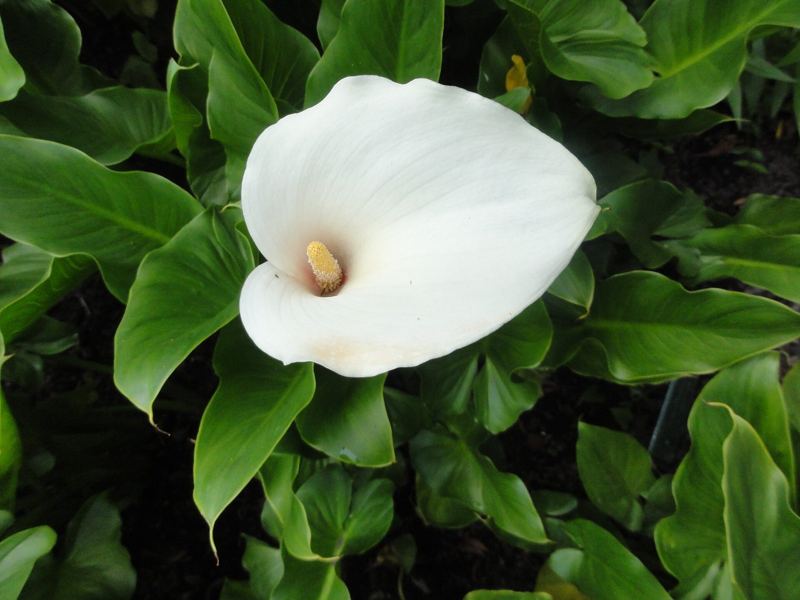 Calla Lily
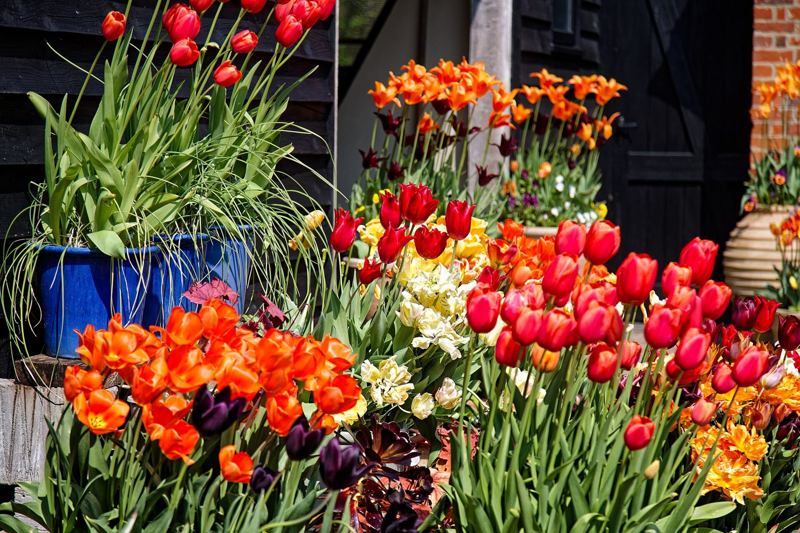 Tulip
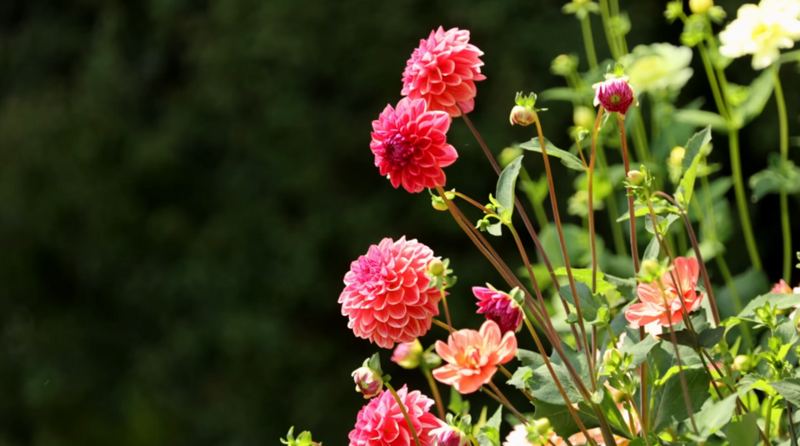 Dahlia