

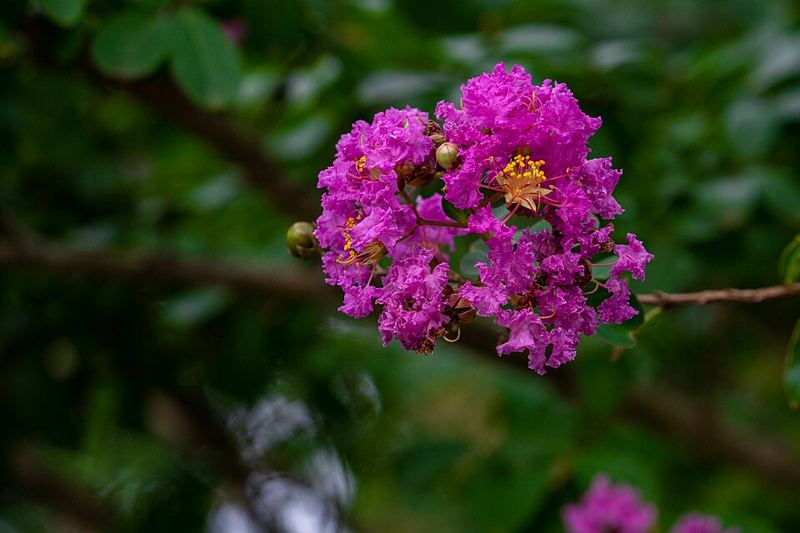
Crape myrtle is a summer-blooming deciduous shrub or small tree that wants full sun and good drainage, grows in roughly USDA zones 7 to 9, and should be pruned lightly in late winter, never topped. NC State describes it as grown for crepe-paper flowers, peeling bark and fall color, and says it resists deer, drought and pollution. Its size ranges widely, from about 6 feet to 30 feet by cultivar, so choosing the right one matters more than any pruning. The ASPCA lists crape myrtle as non-toxic to dogs, cats and horses.
- USDA zones
- 7–9 (UMD Extension); 6b–9 (Virginia Tech)
- Sun
- Full sun
- Origin
- Asia
- Soil
- Good drainage; sand, loam or clay
- Soil pH
- 4.5–7.3 (Virginia Tech)
- Size
- Shrubs to about 15 ft; tree forms 25–30 ft
- Bloom time
- Early or midsummer into early autumn
- Prune
- Late winter or early spring; never top
- Pets
- Non-toxic to dogs, cats and horses (ASPCA)
Zones and cold
UMD Extension says crape myrtle grows in USDA zones 7 to 9. Virginia Tech’s profile gives zone 6b (6a) to 9. Both NC State and Virginia Tech say that in zones 5 to 6 stems or the trunk may die back or be injured in winter, especially top growth, and that cold-hardy cultivars are available. NC State says to place it in a sheltered location protected from winter winds and to mulch the soil to protect the roots.
Sun and soil
NC State and UF/IFAS say full sun; Virginia Tech says partial shade to full sun. Virginia Tech says good drainage is required, and that it tolerates sandy, loam or clay soils with a pH range of 4.5 to 7.3. For water, Virginia Tech says moist to dry once established, and NC State says it resists drought.
Size: pick for the space
Virginia Tech says crape myrtles come as shrubs to about 15 feet and tree forms from 25 to 30 feet, and to choose a cultivar that fits the space. UF/IFAS says most tree types grow to 20 to 25 feet tall and that dwarf types are available. NC State gives a species range of 6 to 30 feet. Matching the cultivar to the space matters because the sources discourage heavy pruning to control size.
Pruning, and why not to top
Virginia Tech says to prune in late winter or early spring before new growth and to remove dead, broken or crossing wood. It says topping, or major pruning of the main branches, is strongly discouraged. NC State says severe pruning or topping should not be needed to control the plant’s size. Virginia Tech adds a pest reason: topping increases the susceptibility of succulent shoots to pest problems, especially aphids. Our pruning guide covers the cuts in detail.
- Choose the right size at purchase. Dwarf, shrub and tree forms differ (Virginia Tech, UF/IFAS).
- Late winter or early spring: prune lightly. Before new growth, remove dead, broken or crossing wood (Virginia Tech).
- Do not top. Topping main branches is strongly discouraged (Virginia Tech, NC State).
- Skip routine fertilizer. Virginia Tech says avoid it unless a soil test shows need, because excess increases suckering and cuts flowering.
When crape myrtle blooms
NC State says common crape myrtle blooms from July to September with numerous showy flowers. UMD Extension says flowering starts in early to midsummer and runs into early autumn depending on the cultivar. Flower colors range from white to true red and various shades of pink and purple (UMD Extension), over a hundred cultivars in all. To see how it fits with your other summer color, check our bloom calendar.
Propagation
NC State says to propagate by seed or stem cuttings.
Choosing a cultivar
| Variety | Best for | Size | Flower | Notes |
|---|---|---|---|---|
| Dwarf types | — | Dwarf (UF/IFAS) | White to red, pink or purple (UMD Extension) | Choose to fit the space (Virginia Tech) |
| Shrub forms | — | To about 15 ft (Virginia Tech) | Same color range | Choose to fit the space (Virginia Tech) |
| Tree forms | — | 25–30 ft (Virginia Tech); 20–25 ft (UF/IFAS) | Same color range | Avoid topping |
| Mildew-resistant cultivars | — | Varies | Varies | Available (Virginia Tech) |
Common crape myrtle problems
Grow these next
For a tree with a very different shape and season, see the Japanese maple guide. Our magnolia guide covers a flowering tree whose bloom time varies by species, and the kousa dogwood guide one that blooms in late spring.
Frequently asked questions
How much sun does crape myrtle need?
NC State says it requires full sun and moist, well-drained soil. Virginia Tech says partial shade to full sun.
What zones does crape myrtle grow in?
UMD Extension says USDA zones 7 to 9. Virginia Tech gives zone 6b (6a) to 9. NC State says in zones 5 to 6 the tree or shrub is susceptible to winter injury, especially to top growth.
When should you prune crape myrtle?
Virginia Tech says to prune in late winter or early spring before new growth, and to remove dead, broken or crossing wood. Virginia Tech and NC State both discourage topping, sometimes called crape murder.
When does crape myrtle bloom?
NC State says common crape myrtle blooms from July to September. UMD Extension says bloom starts in early to midsummer and runs into early autumn, depending on the cultivar.
Is crape myrtle safe for pets?
The ASPCA lists crape myrtle as non-toxic to dogs, cats and horses.
Sources
- Crape Myrtle (Lagerstroemia indica), NC State Extension Plant Toolbox
- Crapemyrtle: Pruning (430-451), Virginia Cooperative Extension
- Crape Myrtle Profile (2901-1040), Virginia Cooperative Extension
- Crapemyrtle: Identify and Manage Problems, University of Maryland Extension
- Lagerstroemia indica (Southern Trees, ST342), UF/IFAS Extension (EDIS)
- Crape Myrtle, ASPCA Animal Poison Control
 Japanese Maple
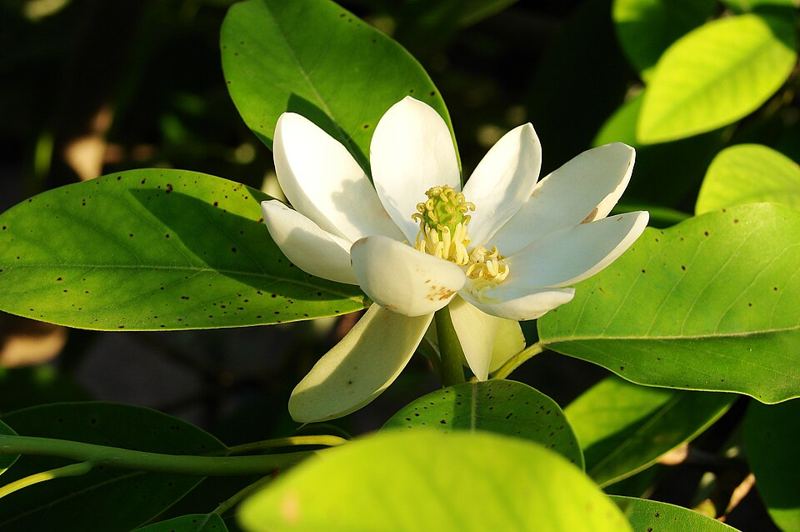 Magnolia
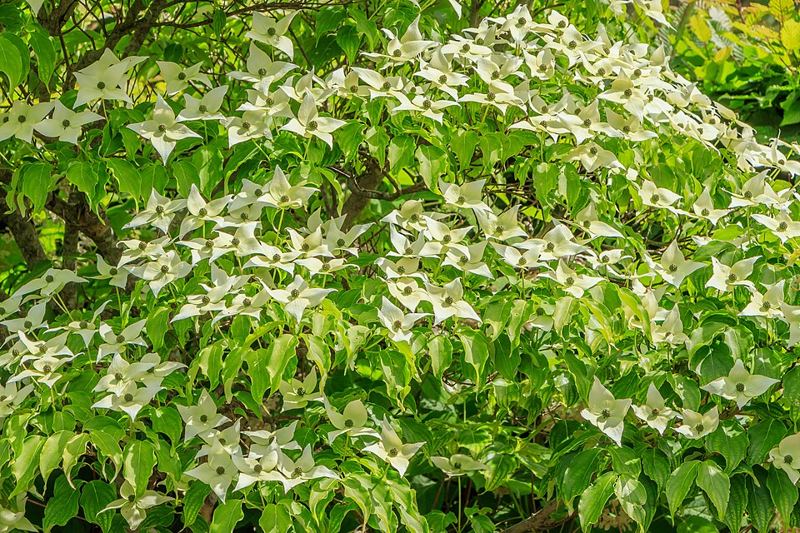 Kousa Dogwood