

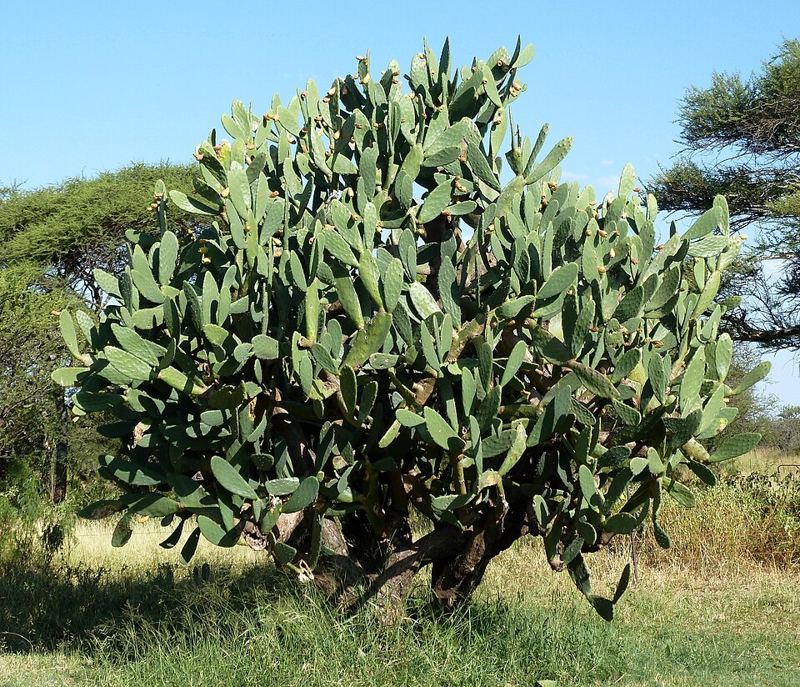
Prickly pear (Opuntia) is a flat-padded cactus that wants full sun, poor sandy soil and almost no care, and it is hardy much farther north than most people expect. NC State says it is heat and drought tolerant and thrives in hardiness zones 3b to 11b. UF/IFAS describes Opuntia as a genus of evergreen cacti with flat pads, many species of which have edible pads and fruits. Plan for the glochids, the tiny barbed hairs that are the real hazard of the plant.
- USDA zones
- 3b–11b (NC State)
- Sun
- Full sun; no shade
- Water
- Drought tolerant once established
- Origin
- The Americas
- Container friendly
- Yes
- Soil
- Poor, sandy, well drained
- Size
- 6 in to 20 ft by species
- Bloom
- Late spring to early summer
Sun and soil
UF/IFAS and NC State both say full sun. NC State says the eastern prickly pear is intolerant of shade and of wet, poorly drained soils. UF/IFAS says it does well in poor, sandy, well-drained soil, and that rich, moist soil makes growth soft and pest-prone. NC State says it does well in sandy or rocky soils and on slopes, so a dry slope that nothing else wants is a fair spot.
Water
Once established, prickly pear is drought and salt tolerant (UF/IFAS). The risk is excess: NC State says wet or soggy soils can result in root rot. Do not plant it with thirsty neighbors.
How big will it get?
Size depends on the species. NC State gives a range for the group of 3 to 20 feet tall and 3 to 15 feet wide, but says the eastern low prickly pear (Opuntia humifusa) is only 6 to 12 inches tall and 1 to 1.5 feet wide. Look up the species before you plant, because a low groundcover and a shrub-sized plant are very different commitments.
Spines and glochids
Not every prickly pear has big spines. NC State says Opuntia humifusa has no spines on its pads, and O. mesacantha has a few long, pale spines up to 1 inch long. But UF/IFAS says both the pads and the fruit have glochids, tiny hair-like barbed spines that easily stick to skin, whether or not the pads have spines. NC State says to wear gloves when handling.
Flowers and fruit
NC State says the plant flowers in late spring to early summer on the pads, followed by edible red-purple fruit. UF/IFAS says the plant blooms over several weeks, although each flower lasts one day.
Prickly pear in pots
NC State says that as a houseplant, prickly pear needs well-drained soil, preferably cactus mix, and plenty of sun. Our cactus care guide covers general pot rules for desert-type cacti.
Common prickly pear problems
Pair it with other desert plants
Prickly pear works beside agave, which has the same full-sun, sharp-drainage needs. For general succulent rules see our succulent care guide, and for the rest of the group the desert plants collection.
Frequently asked questions
How cold-hardy is prickly pear?
NC State says prickly pear is heat and drought tolerant and thrives in hardiness zones 3b to 11b. That is a range across the genus, so check the species you buy.
How big does prickly pear get?
It depends on the species. NC State gives 3 to 20 feet tall and 3 to 15 feet wide for the group, while the eastern low prickly pear (Opuntia humifusa) is 6 to 12 inches tall and 1 to 1.5 feet wide.
What soil does prickly pear need?
Poor, sandy, well-drained soil. UF/IFAS says rich, moist soil makes growth soft and pest-prone, and NC State says wet or soggy soil can result in root rot.
When does prickly pear flower?
Late spring to early summer, followed by edible red-purple fruit (NC State). UF/IFAS says the plant blooms over several weeks, although each flower lasts one day.
How do I handle prickly pear safely?
UF/IFAS says pads and fruit have glochids, tiny hair-like barbed spines that easily stick to skin, whether or not the pads have larger spines. NC State advises wearing gloves.
Sources
- Prickly Pear, UF/IFAS Gardening Solutions
- Opuntia (prickly pear cactus), NC State Extension Plant Toolbox
- Opuntia humifusa (low prickly pear), NC State Extension Plant Toolbox
- Prickly Pear (Opuntia species) (FP447), UF/IFAS EDIS
 Succulents
 Cactus
 Agave