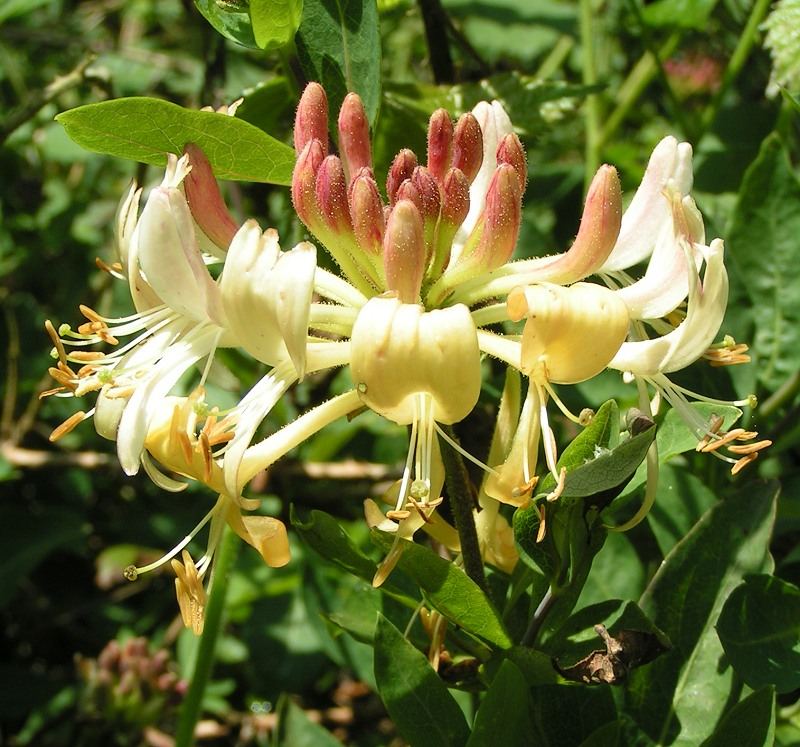
Honeysuckle is a fast, fragrant twining vine, and the first thing to settle is which honeysuckle you are planting. Illinois Extension describes honeysuckle vines as vigorous, twining vines growing 10 to 20 feet tall, listed for zones 3 to 8, with fragrant flowers in June and July that attract butterflies and hummingbirds. But NC State says Japanese honeysuckle (Lonicera japonica) is an invasive species, and Illinois Extension says not to plant it and to choose natives or interspecific hybrids instead.
- USDA zones
- 3–8
- Sun
- Full sun preferred; tolerates shade
- Origin
- Asia
- Size
- 10–20 ft tall, twining (Illinois Extension)
- Zones
- 3–8 (Illinois Extension)
- Bloom time
- Fragrant flowers, June–July
- Pruning
- Heavy pruning in late winter
- Japanese honeysuckle
- Invasive; do not plant (NC State, Illinois)
Japanese honeysuckle is the one to avoid
If you inherited a honeysuckle with a tangled, rampant habit, check what it is before you decide whether to keep it. The sources do not recommend growing Japanese honeysuckle, and say to replace it with a native or an interspecific hybrid.
Penn State Extension adds that the invasive honeysuckles were introduced from Asia, mostly China and Japan, and that the nutritional value of invasive shrub honeysuckle fruit is far lower than that of native plants. Its note on fruit is about the shrub honeysuckles, which are a separate group from the vines, but the native-or-invasive question is the same.
How to tell Japanese honeysuckle from a native
Illinois Extension gives two clues you can check on any vine with flowers or berries.
| Feature | Japanese honeysuckle | Native honeysuckle |
|---|---|---|
| Flowers | Borne in the leaf axils | At the stem tips |
| Berries | Purple-black | Red or orange |
Penn State Extension gives a second test for the shrub honeysuckles. Native species do not have a hollow stem pith, as they are all solid, while the stems of all species in the invasive complex have a hollow center. Cut a small twig and look at the middle.
Illinois Extension adds that on the native types the leaves just below the flowers are fused or united to form a collar around the stem. If your vine has flowers in the leaf axils and purple-black berries, it matches the Japanese description.
A native vine to plant instead
Penn State Extension says there are three very nice vining species that would be welcome additions to gardens across Pennsylvania, one native, one naturalized and one non-native but not invasive. For a native vine, NC State describes trumpet honeysuckle (Lonicera sempervirens), which is native to the Southeast. It grows in medium-moisture, well-drained, neutral to acidic soil in full sun, and it will grow in some shade, but NC State says best flowering is in full sun.
Sun and growing conditions
Sun
Zones
Size and support
Soil
Flowers
Pruning
Illinois Extension says all honeysuckles benefit from heavy pruning in late winter. The goal is to keep them from becoming overgrown and tangled, and to maintain their foliage and flowering quality. Pruning is also the main way to keep a vigorous vine within its space.
NC State gives different timing for trumpet honeysuckle. It says the plant flowers on new growth, so avoid pruning until after flowering. The two sources are not describing the same plants, and Illinois Extension is writing about honeysuckles as a group. If you are unsure which one you have, wait until the vine has flowered before a hard cut. Our honeysuckle pruning guide compares the sources type by type.
Propagating honeysuckle
NC State Plant Toolbox lists layering, seed and stem cuttings as propagation strategies for trumpet honeysuckle. Layering means rooting a stem while it is still attached to the parent plant. Confirm that a vine is not Japanese honeysuckle before you propagate it.
Honeysuckle and its relatives
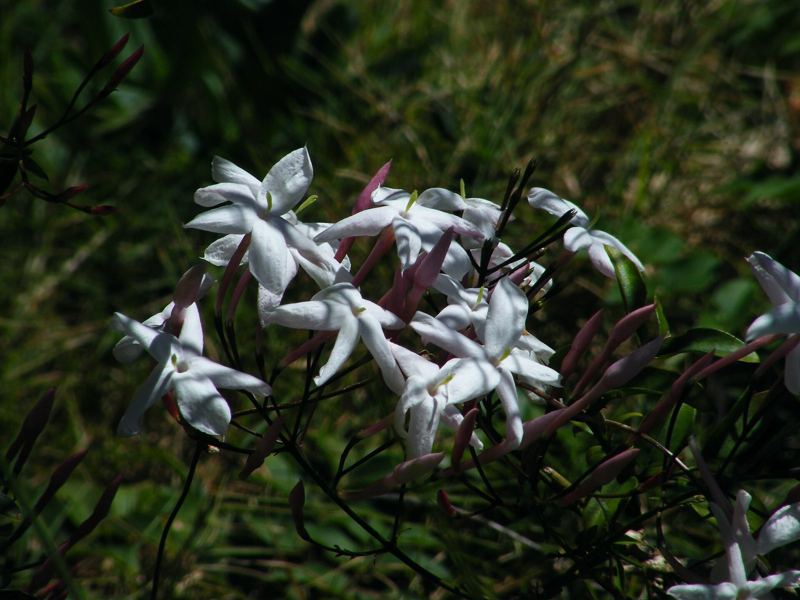
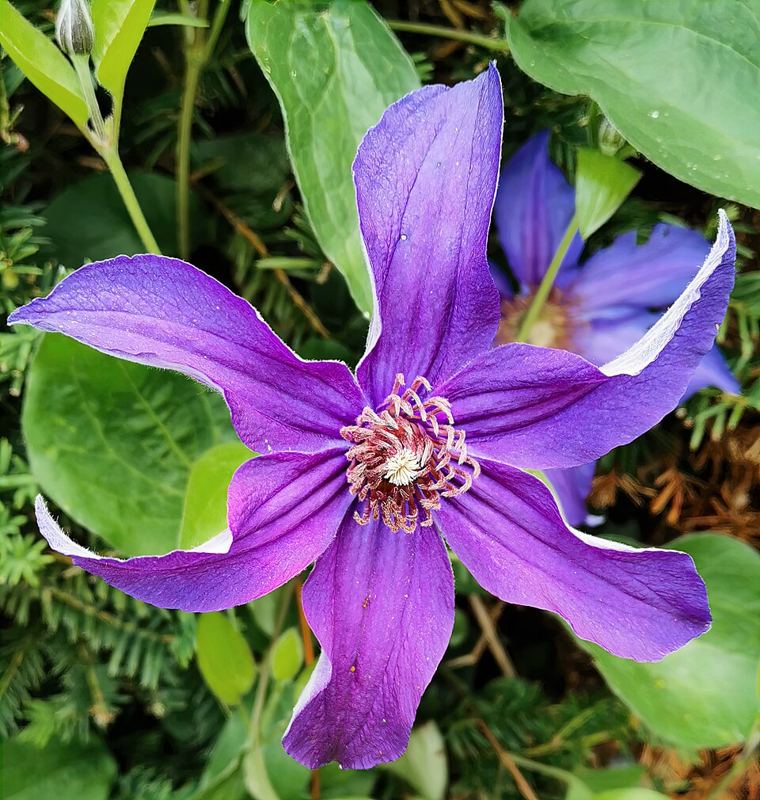
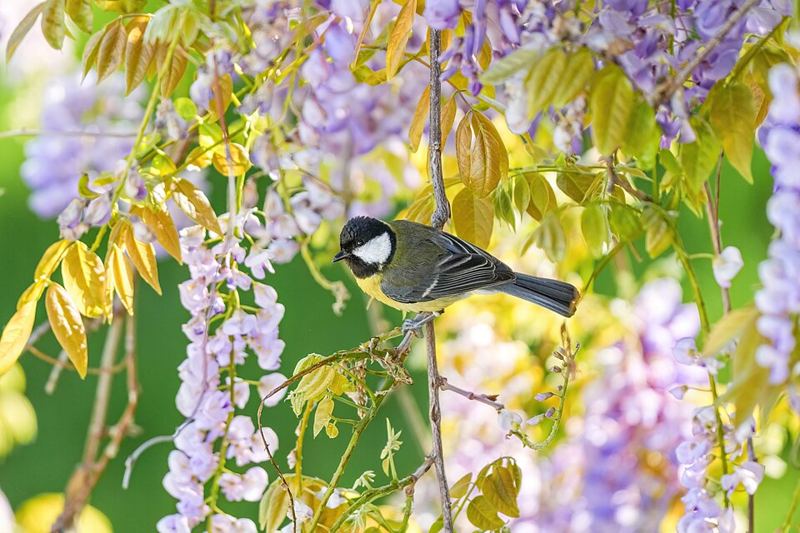
For other fragrant climbers, jasmine is the warm-wall option, with a clear note on which “jasmine” is a true jasmine. Clematis and wisteria are the section’s other classic trellis plants. Wisteria raises the same native-or-invasive question, since NC State treats the Asian wisterias as invasive and American wisteria as the less aggressive choice.
Frequently asked questions
Is honeysuckle invasive?
Japanese honeysuckle (Lonicera japonica) is. NC State says it is an invasive species in North Carolina and can displace native species by outcompeting plants for light, space, water and nutrients. Illinois Extension says it should not be planted and recommends natives or interspecific hybrids.
How do you tell Japanese honeysuckle from a native honeysuckle?
Illinois Extension says Japanese honeysuckle bears flowers in the leaf axils, followed by purple-black berries. Native honeysuckles have flowers at the stem tips and red or orange berries, and the leaves below the flowers are fused into a collar around the stem.
How big do honeysuckle vines get?
Illinois Extension describes honeysuckle vines as vigorous, twining vines growing 10 to 20 feet tall.
How much sun does honeysuckle need?
Illinois Extension says honeysuckles prefer full sun locations but will tolerate shaded sites.
When do you prune honeysuckle?
Illinois Extension says all honeysuckles benefit from heavy pruning in late winter to keep them from becoming overgrown and tangled and to maintain foliage and flowering quality. For trumpet honeysuckle (Lonicera sempervirens), NC State says it flowers on new growth, so avoid pruning until after flowering. The two sources differ, so check which honeysuckle you have.
How do you tell a native shrub honeysuckle from an invasive one?
Penn State Extension says native honeysuckles have solid stem pith, while the stems of all species in the invasive complex have a hollow center. This applies to the shrub honeysuckles, and you can check it by cutting a stem.
Are there honeysuckle vines that are safe to plant?
Penn State Extension says there are three very nice vining species that would be welcome additions to gardens across Pennsylvania: one native, one naturalized and one non-native but not invasive. NC State describes trumpet honeysuckle (Lonicera sempervirens), which is native to the southeastern United States.
How do you propagate honeysuckle?
NC State Plant Toolbox lists layering, seed and stem cuttings as propagation strategies for trumpet honeysuckle.
Sources
- Honeysuckle, University of Illinois Extension
- Lonicera japonica (Japanese honeysuckle), NC State Extension Plant Toolbox
- Lonicera sempervirens (trumpet honeysuckle), NC State Extension Plant Toolbox
- Honeysuckle Species in Pennsylvania, Penn State Extension
- Shrub Honeysuckles, Penn State Extension
 Jasmine
 Clematis
 Wisteria