

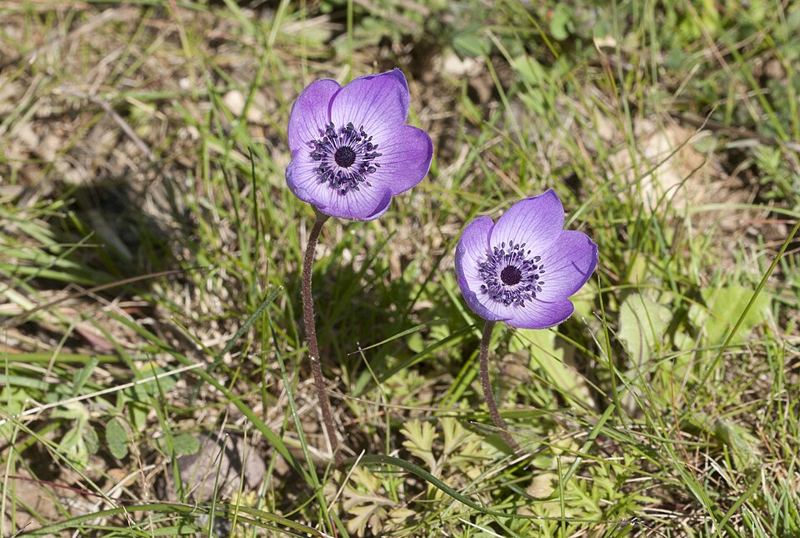
Anemones, or windflowers, grow best in fertile, well-drained soil that stays moist, with the right light for the type you buy. NC State says the genus has about 109 species in the buttercup family, with cup-shaped flowers in red, pink, blue, yellow, purple and white. Tuberous types are planted in fall after a four-hour soak.
- Origin
- Middle East
- Container friendly
- Yes
- Sun
- Tuberous: full sun to dappled shade; hybrids: part shade in the South
- Soil
- Fertile, moist but well drained
- Planting
- Tubers in fall, soaked 4 hours
- Depth and spacing
- 1–2 in deep, 2–4 in apart
- Size
- 1–4 ft tall, about 8 in wide
- Bloom time
- Spring, summer or fall by species
Know your type
“Anemone” covers a lot of plants. NC State says the poppy anemone (Anemone coronaria) blooms in spring, with 2.5-inch daisy-like flowers in blue, red or white with black centers, on 12-inch stems. It names the ‘De Caen’ series as a poppy anemone group with single flowers in a rainbow of colors. The hybrid windflowers (Anemone x hybrida) are a different plant with different needs, covered below.
Planting tubers
NC State says that for most windflowers, you soak tubers for 4 hours in the fall before planting. Plant them 1 to 2 inches deep and 2 to 4 inches apart. The plant grows 1 to 4 feet tall and about 8 inches wide from a tuber. Our fall bulb planting guide puts the other fall jobs in order.
Sun and soil
NC State says tuberous windflowers like full sun to partial or dappled shade, while hybrid anemones prefer part shade in the South to protect the foliage. For soil, it says fertile, well-drained ground, and not wet ground: root rot can occur in too-wet soils. It also says windflowers prefer moist but well-drained, fertile soils that are not allowed to dry out.
Water
Keep hybrid windflowers moist but not waterlogged (NC State). For tuberous types, NC State says moisture matters in fall and spring.
Bloom
Bloom time depends on the species: spring, summer or fall (NC State). That makes anemones a useful way to extend the garden’s color through the year, and our bloom calendar shows what flowers around them.
Anemones in pots and cold climates
NC State says anemones are suitable for pots. In colder regions, poppy anemones can be used as annuals, or the tubers can be stored.
Common anemone problems
Grow these next
Anemone tubers are a fall-planted counterpart to tulip bulbs, and the summer-flowering calla lily goes in the other half of the year.
Frequently asked questions
When should I plant anemone tubers?
NC State says to plant tuberous windflowers in the fall, after soaking the tubers for 4 hours. It gives a depth of 1 to 2 inches and a spacing of 2 to 4 inches apart.
Do anemones like sun or shade?
It depends on the type. NC State says tuberous types take full sun to partial or dappled shade, and that hybrid anemones like part shade in the South to protect the foliage.
When do anemones bloom?
NC State says that depending on the species, anemones bloom in spring, summer or fall. The poppy anemone blooms in spring, with daisy-like flowers about 2.5 inches across on 12-inch stems.
Can I grow anemones in pots?
Yes. NC State says anemones are suitable for pots, and that in colder regions poppy anemones can be used as annuals or the tubers can be stored.
What kind of soil do anemones want?
Fertile, well-drained soil. NC State says windflowers prefer moist but well-drained, fertile soils that are not allowed to dry out, and says not to plant in wet ground because root rot can occur.
Sources
- Anemone (windflower), NC State Extension Plant Toolbox
- Anemone x hybrida (Japanese anemone), NC State Extension Plant Toolbox
- Anemone coronaria (poppy anemone), NC State Extension Plant Toolbox
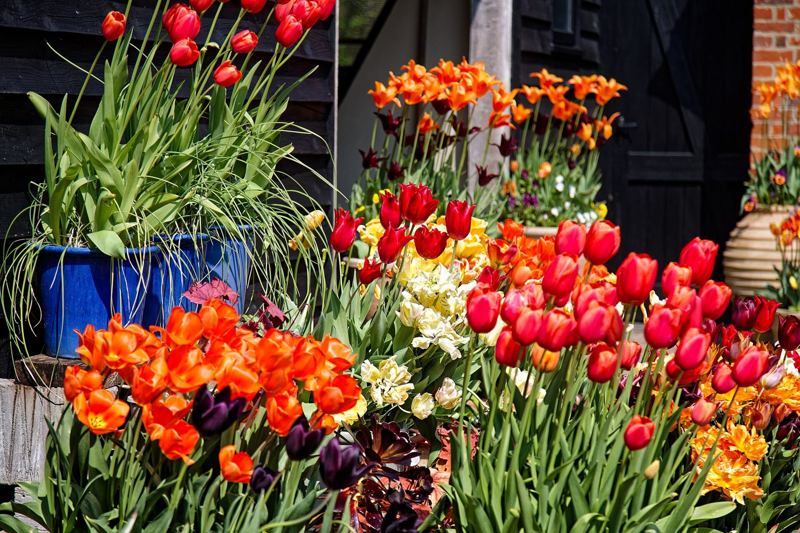 Tulip
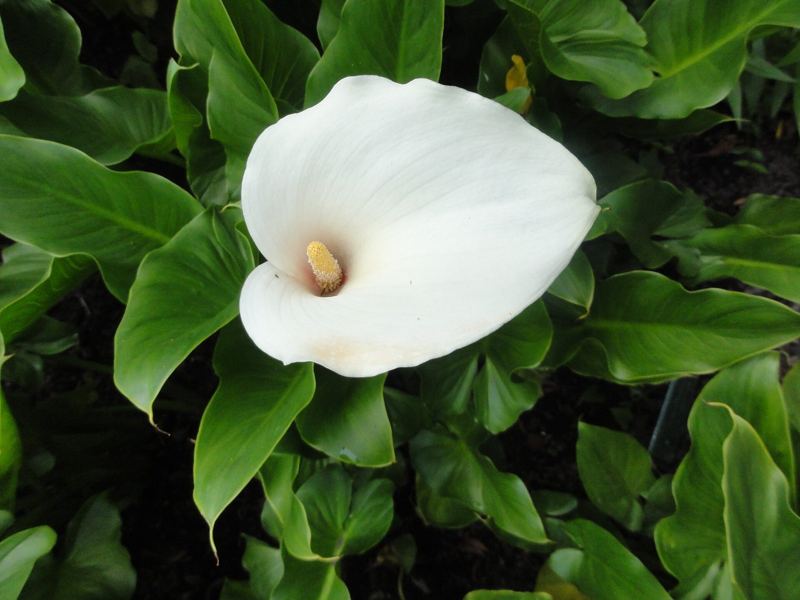 Calla Lily