

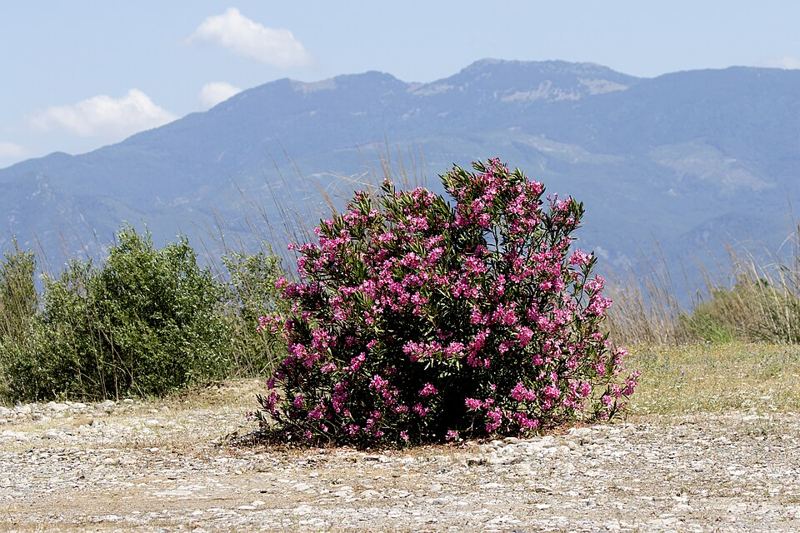
Oleander (Nerium oleander) is a fast-growing evergreen shrub for full sun, heat and poor, dry soil, hardy in about USDA zones 8b or 9a through 10 or 11 depending on the source. It also needs a clear safety note: the ASPCA lists oleander as toxic to dogs, cats and horses, and UF/IFAS says all parts of the plant are toxic if ingested. Read that before you plant it anywhere animals or children roam.
- USDA zones
- 8b–10 (Clemson); 9a–11 (UF/IFAS)
- Sun
- Full sun; few flowers in shade
- Water
- Very drought tolerant once established
- Origin
- Mediterranean
- Soil
- Wide range, pH 5.0 to above 8.3; good drainage
- Size
- 5–19.5 ft tall, 6–10 ft wide (NC State)
- Bloom time
- Early summer to mid-autumn (Clemson)
- Prune
- Early spring
- Pets
- Toxic to dogs, cats and horses (ASPCA)
Zones and cold
The two southern extension sources disagree on the range, so treat the edges with caution.
Clemson
UF/IFAS
NC State
NC State describes oleander as a rapidly growing, rounded, broadleaf evergreen shrub. If your winters regularly dip to freezing, this is a plant to look at carefully before you buy.
Sun and site
UF/IFAS says full sun is necessary for best flowering and for development of a full, fountain-shaped crown. In shade it will grow lanky and produce few flowers. NC State is a little gentler and says oleander prefers full sun to partial shade and well-drained, fertile soil.
Soil and water
UF/IFAS says oleander is tolerant of a wide range of soil types, grows well in sandy dry areas, and adapts to a pH range of 5.0 to more than 8.3. Once established it is very drought tolerant, but moist soil or irrigation stimulates growth (UF/IFAS). Clemson agrees that oleanders are very heat and drought tolerant once established. UF/IFAS also says established plants usually need no fertilizer because the species has low fertility requirements.
Size and spacing
NC State says oleander grows 5 to 19.5 feet tall and 6 to 10 feet wide. UF/IFAS gives 10 to 18 feet in height and 10 to 15 feet of spread for the standard shrub, and says that planted on five to seven-foot centers, a row of oleander makes a nice screen. For smaller spaces UF/IFAS names dwarf cultivars such as ‘Petite Pink’ and ‘Petite Salmon’, reaching about 4 feet in height and working well without pruning.
Pruning
Clemson says that since oleanders bloom in summer on new growth, prune them in early spring. NC State says to refrain from pruning after early fall, to avoid removing next year’s flower buds. UF/IFAS says suckers at the base should be pulled while they are young and succulent. See our oleander pruning guide for the cut-back options and the fall disagreement.
- Early spring: prune. Oleander blooms on new growth, so prune before growth starts (Clemson).
- While young: pull suckers. Basal suckers come away easily when young and succulent (UF/IFAS).
- Early fall onward: stop. Do not prune after early fall, so you keep next year’s buds (NC State).
Flowers and varieties
Clemson says oleanders flower from early summer until mid-autumn, with large clusters of 2-inch single or double blossoms. NC State puts bloom from late spring to late summer, in colors from pink to peach to white. UF/IFAS says the double-flowered oleanders are the ones that tend to be fragrant. Propagate by seed or stem cuttings (NC State).
| Variety | Best for | Size | Flower | Notes |
|---|---|---|---|---|
| Standard oleander | Screens and large hedges | 10–18 ft tall, 10–15 ft wide (UF/IFAS) | Single or double, pink, peach or white (NC State) | Plant on 5–7 ft centers for a screen |
| 'Petite Pink' | Small spaces | About 4 ft tall | Pink | Works without pruning (UF/IFAS) |
| 'Petite Salmon' | Small spaces | About 4 ft tall | Salmon | Works without pruning (UF/IFAS) |
| Double-flowered types | Fragrance | — | Double | Tend to be the fragrant ones (UF/IFAS) |
Common oleander problems
Grow these next
Oleander shares the sun-and-drainage logic of the lavender guide, another shrub that wants a bright, dry site. If you are weighing shrubs for a pet-friendly garden, our camellia guide and rosemary guide cover two the ASPCA lists as non-toxic to dogs, cats and horses.
Frequently asked questions
Is oleander toxic to pets?
Yes. The ASPCA lists oleander as toxic to dogs, cats and horses, with cardiac glycosides as the toxic principle, and gives drooling, abdominal pain, diarrhea, colic, depression and death as clinical signs. UF/IFAS says all parts of the plant are toxic if ingested.
What zones does oleander grow in?
Clemson says oleanders are typically listed for USDA zones 8b to 10. UF/IFAS says they can be found in zones 9A through 11. NC State says oleander is intolerant of temperatures at or below 32°F and may be damaged by cold winters.
How much sun does oleander need?
UF/IFAS says full sun is necessary for best flowering and for a full, fountain-shaped crown, and that in shade oleander grows lanky and produces few flowers. NC State says it prefers full sun to partial shade.
When should you prune oleander?
Clemson says that since oleanders bloom in summer on new growth, prune them in early spring. NC State says to refrain from pruning after early fall to avoid removing next year's flower buds.
Does oleander need fertilizer?
UF/IFAS says oleander typically has low fertility requirements and that established plants usually do not need fertilizer.
Sources
- Oleander, Clemson Cooperative Extension, Home and Garden Information Center
- Oleander, UF/IFAS Gardening Solutions
- Nerium oleander (Southern Shrubs, ST412), UF/IFAS Extension (EDIS)
- Key pests of oleander (EP574), UF/IFAS Extension (EDIS)
- Nerium oleander (Oleander), NC State Extension Plant Toolbox
- Oleander, ASPCA Animal Poison Control
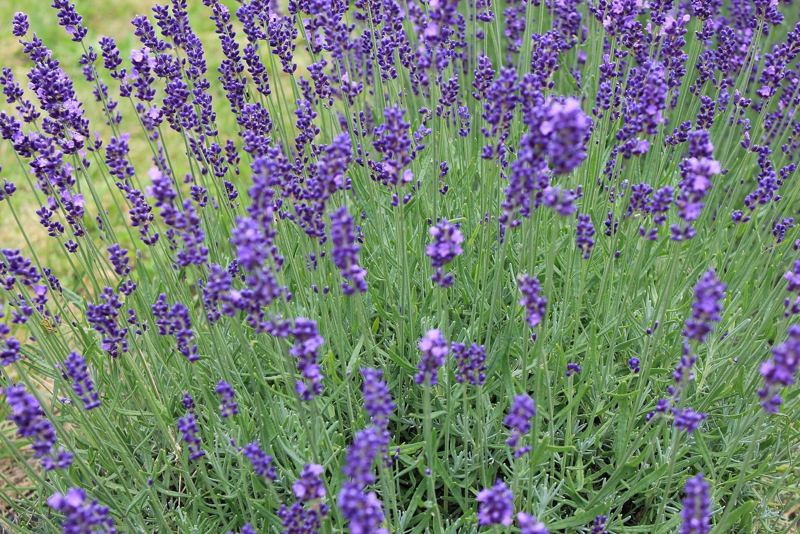 Lavender
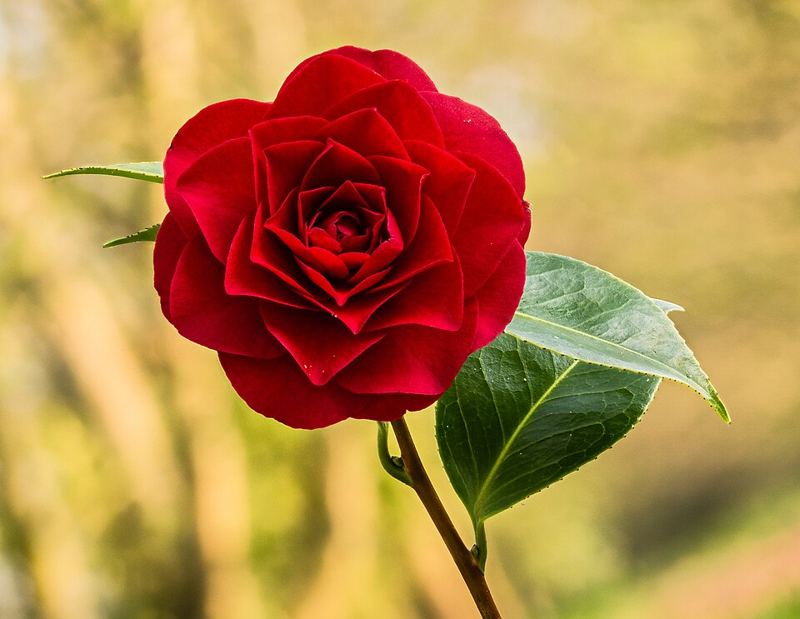 Camellia
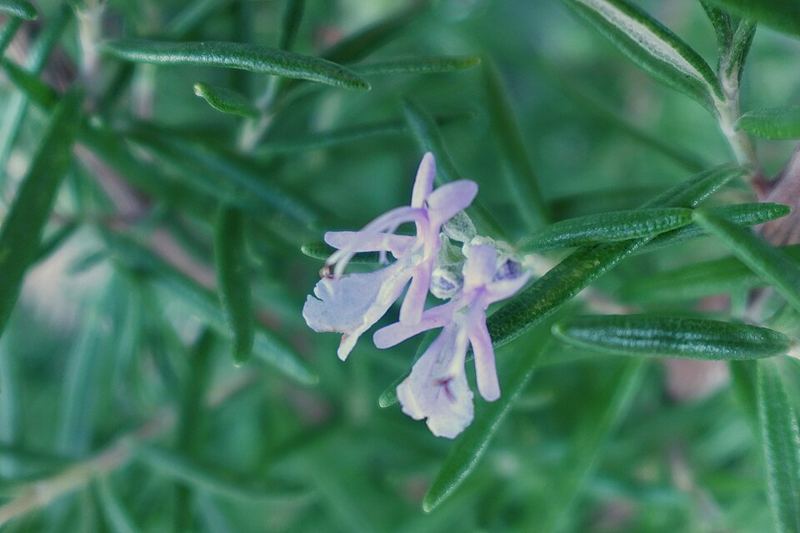 Rosemary