

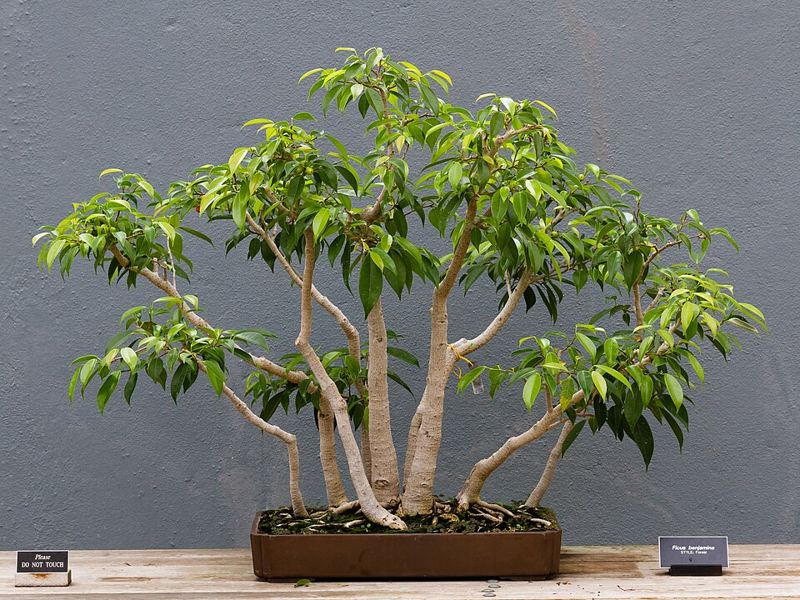
A ficus bonsai wants bright, indirect light, warm and draft-free air between 65 and 80°F, a moist but well-drained bonsai mix, and a repot every 2 to 3 years. NC State describes ‘Golden Gate’ ficus as a broadleaf tropical cultivar related to the Chinese banyan tree and frequently grown as a bonsai. It is a tropical tree, so winter is about indoor comfort rather than cold protection: Chicago Botanic Garden says to avoid hot, dry forced air and to add humidity.
- Water
- Moist, never wet or soggy
- Origin
- Asia
- Container friendly
- Yes
- Light
- Bright, indirect; low light makes it leggy (NC State)
- Temperature
- 65–80°F, no drafts or sudden changes
- Soil
- Moist, well-drained bonsai mix, pH 6–6.5
- Repotting
- Every 2–3 years
- Pruning
- Late summer and fall (NC State)
- Pets
- Mildly toxic to humans and pets (NC State)
What kind of ficus is it?
NC State profiles two bonsai cultivars of Ficus microcarpa. ‘Golden Gate’ is a broadleaf tropical cultivar related to the Chinese banyan. ‘Ginseng’ has thick, bulbous roots, and NC State says it is commonly mislabeled as Ficus retusa, a species that refers to another plant not used in bonsai.
Light and temperature
NC State says a ficus bonsai prefers bright, indirect light, and that low light results in a leggy plant. Chicago Botanic Garden’s guide to bonsai gifts says most prefer bright light and high humidity levels.
NC State gives a temperature range of 65 to 80°F and says to avoid drafts and sudden temperature changes.
Soil and water
NC State says to grow it in a moist, well-drained bonsai mix with some added sand, pebbles and crushed granite, at a pH between 6 and 6.5. It says the tree thrives in moist conditions but to avoid wet or soggy soil.
The water risks run both ways. NC State says overwatering causes root rot, yellowing and leaf drop, and underwatering makes the leaves brittle so that they fall off.
Repotting, pruning and shaping
NC State says to repot every 2 to 3 years without over-pruning the roots. Pruning and training maintain the shape, and NC State says the tree is best pruned in late summer and fall.
- Repot every 2 to 3 years. Do not over-prune the roots (NC State).
- Use a bonsai mix. Moist and well drained, with added sand, pebbles and crushed granite, at pH 6 to 6.5 (NC State).
- Prune in late summer and fall. NC State says this is when the tree is best pruned.
- Keep it warm and out of drafts. 65 to 80°F, without sudden changes (NC State).
Winter indoors
Chicago Botanic Garden says tropical bonsai should never be subject to hot, dry forced air or radiant heating, and that because of the dry nature of indoor heating, supplemental humidity should be provided. It also says to reduce feeding as tropical trees go indoors for winter. This is general guidance for tropical bonsai kept indoors.
A ficus bonsai through the year
| Time | What to do | Source |
|---|---|---|
| All year | Bright, indirect light; 65–80°F; no drafts | NC State |
| Late summer and fall | Prune and train | NC State |
| Every 2–3 years | Repot, without over-pruning roots | NC State |
| Going indoors for winter | Reduce feeding; add humidity; avoid forced air | Chicago Botanic Garden |
Which ficus bonsai
| Variety | Best for | Habit | Type | Notes |
|---|---|---|---|---|
| 'Golden Gate' | Frequently grown as bonsai | — | Broadleaf tropical | Related to the Chinese banyan (NC State) |
| 'Ginseng' | Thick, bulbous roots | — | Bonsai cultivar | Often mislabeled as Ficus retusa (NC State) |
Pests and problems
Pets
NC State Extension says Ficus microcarpa is mildly toxic to humans and pets.
Grow these next
A ficus is the tender member of the group, so read it alongside the hardy trees. The juniper bonsai guide covers an evergreen that stays outdoors, the Chinese elm bonsai guide covers a tree with spring repotting, and the trident maple guide covers a maple used in bonsai. See everything in our bonsai section.
Frequently asked questions
How much light does a ficus bonsai need?
NC State says bright, indirect light, and that low light results in a leggy plant. Chicago Botanic Garden's guide to bonsai gifts says most prefer bright light and high humidity levels.
What temperature does a ficus bonsai want?
NC State says warm temperatures between 65 and 80°F, with drafts and sudden temperature changes avoided.
How often should I repot a ficus bonsai?
NC State says every 2 to 3 years, without over-pruning the roots.
Why is my ficus bonsai dropping leaves?
NC State says overwatering causes root rot, yellowing and leaf drop, and underwatering makes the leaves brittle so that they fall off.
Is ficus bonsai toxic to pets?
NC State Extension says Ficus microcarpa is mildly toxic to humans and pets.
Sources
- Ficus microcarpa 'Golden Gate', NC State Extension Plant Toolbox
- Ficus microcarpa 'Ginseng', NC State Extension Plant Toolbox
- The Gift of Bonsai, Chicago Botanic Garden
- Overwintering Your Bonsai, Chicago Botanic Garden
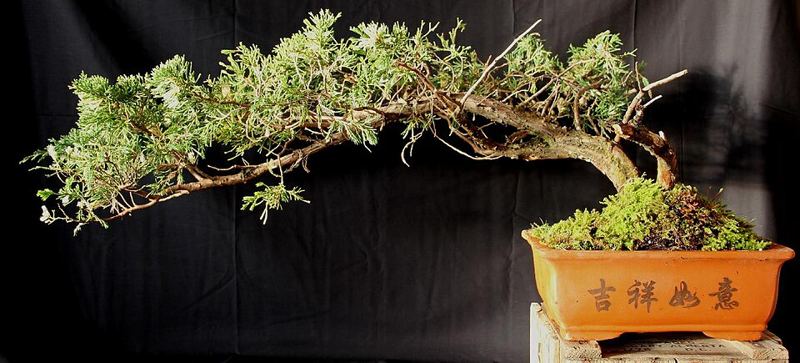 Juniper
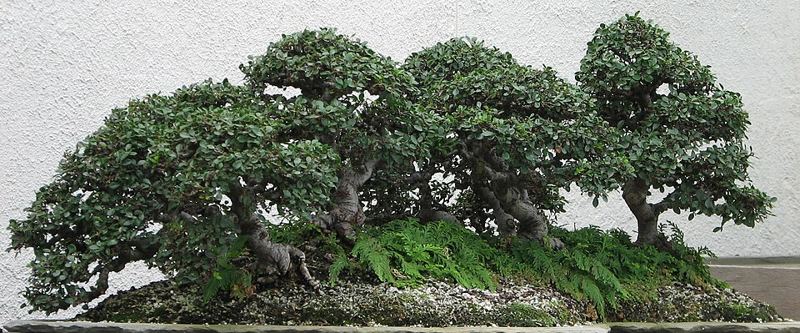 Chinese Elm
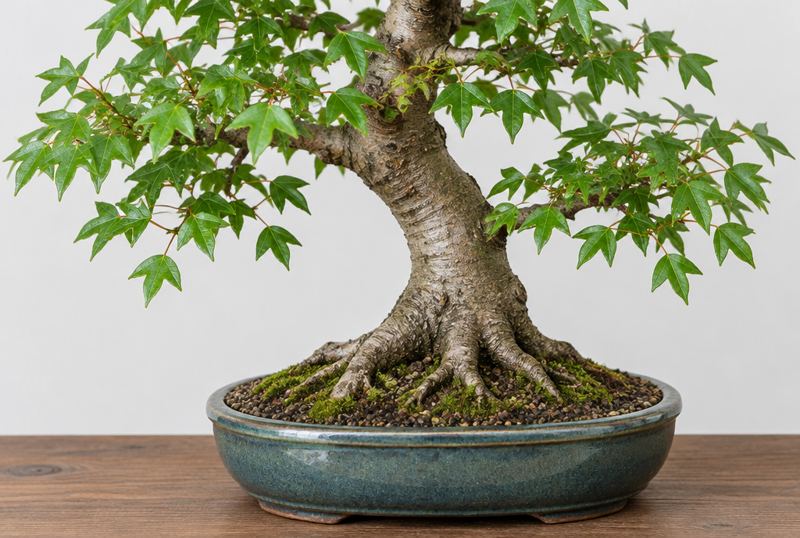 Trident Maple