

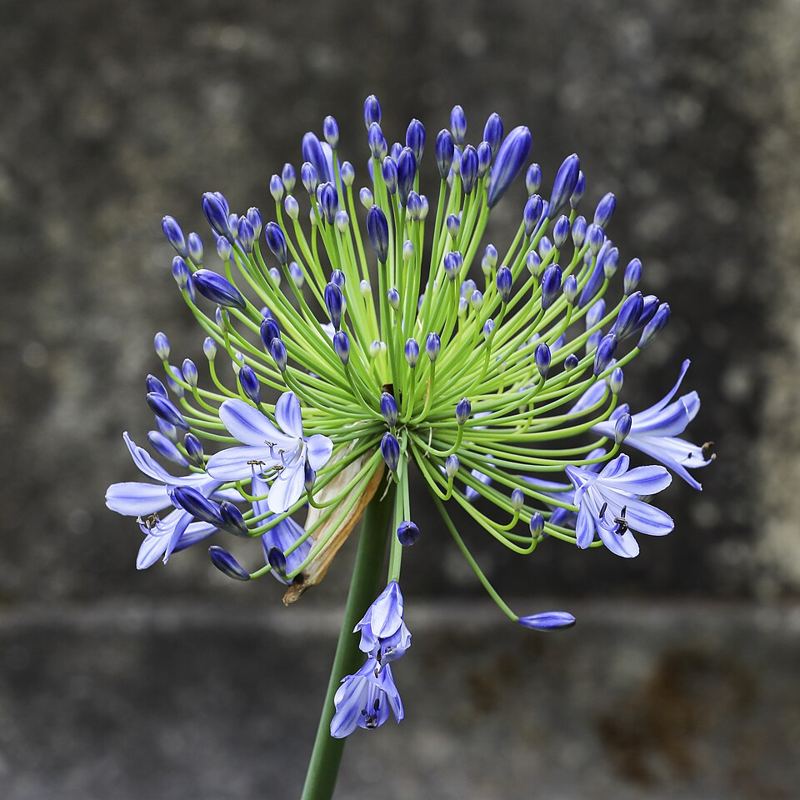
Agapanthus blooms best in six to eight hours of direct sun, in well-drained soil, with light feeding and not too much water. It is an upright, clump-forming perennial with strap-like leaves and big clusters of blue, purple or white funnel-shaped flowers on long stalks in summer (NC State, UF/IFAS). UF/IFAS says it grows best in zones 9 to 11, so in colder areas it is a pot plant that comes in for winter.
- USDA zones
- 9–11 (UF/IFAS)
- Sun
- Full sun to part shade; 6–8 hours for most blooms
- Lifecycle
- Perennial
- Origin
- Africa
- Container friendly
- Yes
- Water
- Light, spring to fall; overwatering cuts flowers
- Size
- About 2–4 ft tall (UF/IFAS)
- Spacing
- 8 in (NC State) to 18–24 in (UF/IFAS)
- Bloom time
- Summer; into fall where frost-free
Sun and soil
UF/IFAS says agapanthus does best in full sun to partial shade, and that bloom quantity is decreased when it does not receive at least 6 to 8 hours of direct sun daily. For soil, NC State says it prefers sandy-loam, well-drained soil, and UF/IFAS says it tolerates a variety of conditions, including clay and occasionally wet, slightly alkaline or acidic soil, while preferring moist, well-drained, organic soil.
Planting and spacing
NC State says to plant rhizomes 1 inch deep and 8 inches apart. UF/IFAS gives a wider figure: about 18 to 24 inches apart for a thick groundcover effect, with mature height around 2 to 4 feet. The two may be describing different cultivars or uses. UF/IFAS adds that many cultivars vary in flower color and shape, and that dwarf forms exist.
Water and feeding
UF/IFAS says to water lightly from spring through fall, and that in Florida plants should not be watered during their dormant period. Overwatering and overfertilization decrease flowering and the overall appearance of the plant. Clemson says to fertilize twice a year, after blooming or in early fall, with a low-nitrogen complete fertilizer that includes phosphorus, such as 5-10-15 or 8-8-8.
Bloom
NC State says agapanthus blooms in summer, and into fall in frost-free areas. UF/IFAS describes clusters of large blue, lavender, purple or white funnel-shaped flowers atop long stalks. Check our bloom calendar to see what else flowers alongside it.
Winter
NC State says evergreen types are houseplants in winter where frost occurs, and deciduous types can be stored in a cool, dark place at above-freezing temperatures in areas north of zone 7. Check which kind you have before the first frost, since the two are handled differently.
Agapanthus in containers
NC State says to let plants become rootbound in the pot to bloom best. UF/IFAS says it can also be used in a container or above-ground planter, or as a houseplant. A pot is the usual choice north of zone 9, because it can be carried indoors.
Common agapanthus problems
Grow these next
If you like big summer flowers from bulbs and rhizomes, try calla lily, another plant that is lifted for winter in cold zones. The spring side of the garden belongs to the tulip.
Frequently asked questions
How much sun does agapanthus need?
Full sun to partial shade, but UF/IFAS says bloom quantity decreases when agapanthus does not receive at least 6 to 8 hours of direct sun daily.
What zones can agapanthus grow in?
UF/IFAS says it grows best in USDA hardiness zones 9 to 11. NC State says evergreen types are houseplants in winter where frost occurs, and deciduous types can be stored above freezing north of zone 7.
How far apart should I plant agapanthus?
Our sources differ. NC State says to plant rhizomes 1 inch deep and 8 inches apart. UF/IFAS says about 18 to 24 inches apart for a thick groundcover effect. They may be describing different cultivars or uses.
How do I feed agapanthus?
Clemson says to fertilize twice a year, after blooming or in early fall, with a low-nitrogen complete fertilizer that includes phosphorus, such as 5-10-15 or 8-8-8. UF/IFAS says overfertilizing decreases flowering.
Can agapanthus grow in a pot?
Yes. NC State says to let plants become rootbound in the pot, because they bloom best that way. UF/IFAS says it also works in an above-ground planter or as a houseplant.
Sources
- Agapanthus (agapanthus), NC State Extension Plant Toolbox
- Agapanthus, UF/IFAS Gardening Solutions
- Tips and Tricks for Growing Lily of the Nile, Clemson Home & Garden Information Center
- Agapanthus africanus (FP018), UF/IFAS EDIS
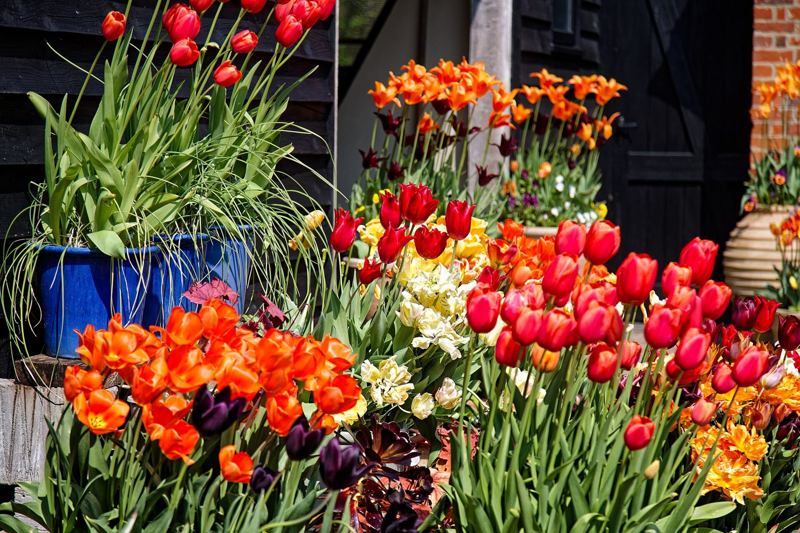 Tulip
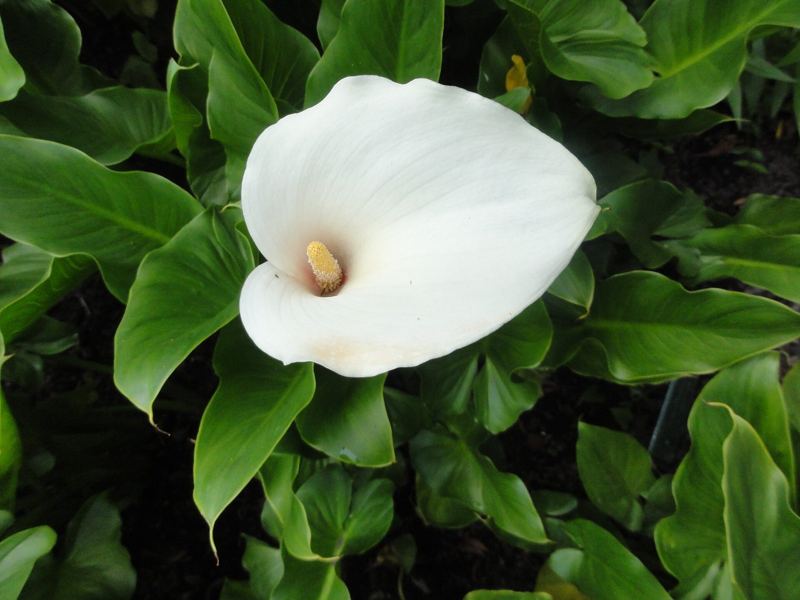 Calla Lily