

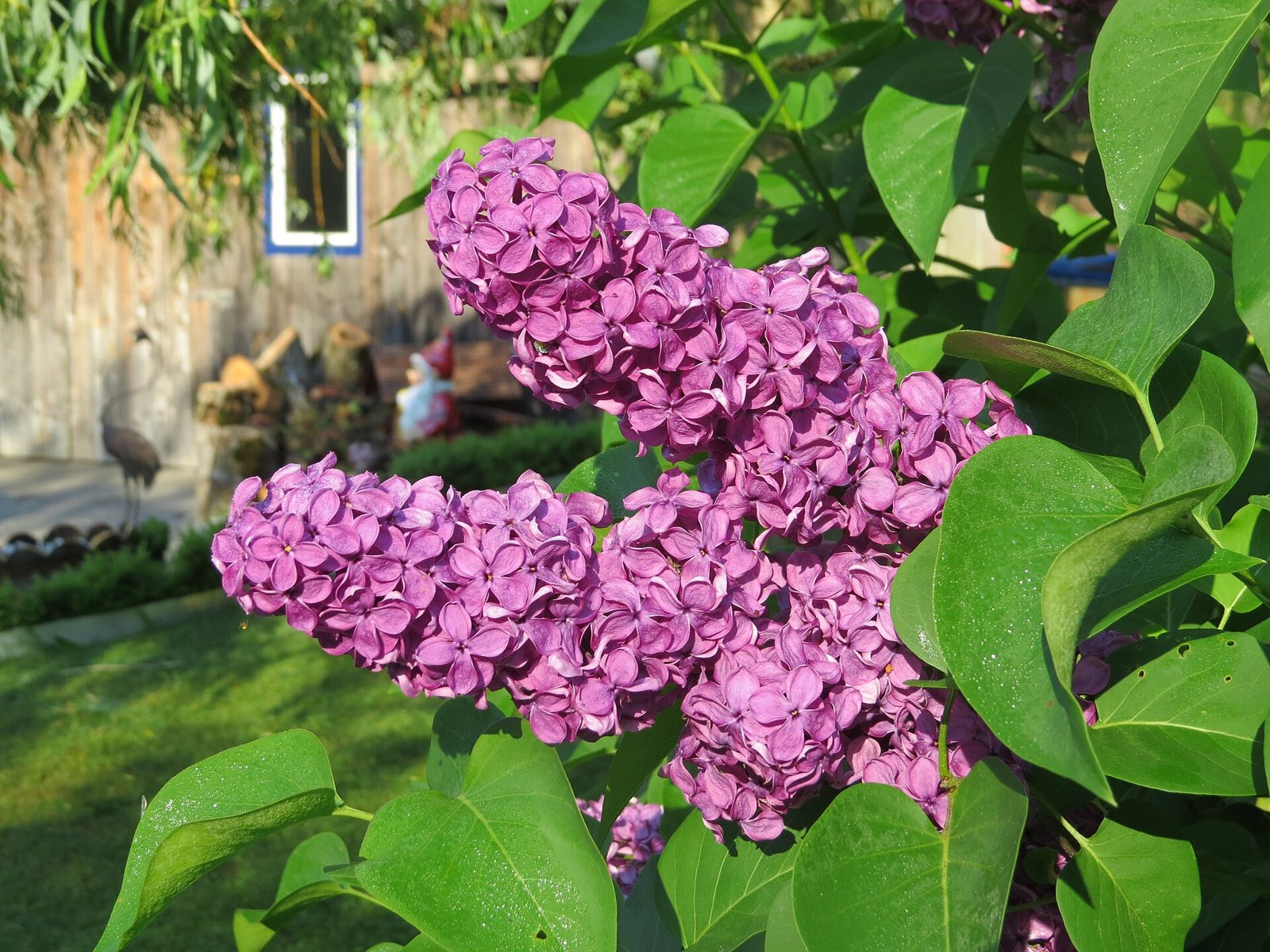
Common lilac (Syringa vulgaris) is a cold-hardy spring shrub: give it at least 4 to 6 hours of sun, well-drained soil and plenty of room, and prune it right after it flowers. Iowa State says lilacs are adapted to USDA zones 3, 4 and 5, and milder areas of zone 2. They offer mainly one season of interest, but Iowa State says their spring flower displays are greatly appreciated after a long, hard winter. Pruning timing matters because Iowa State says lilacs set their flower buds for the following season in mid-summer, not long after the spring blooms fade. Our lilac pruning guide covers the cuts.
- USDA zones
- 3–5, milder parts of zone 2 (Iowa State)
- Sun
- At least 4–6 hours · full sun best (Penn State)
- Origin
- Europe
- Soil
- Well-drained; slightly acidic to alkaline
- Spacing
- 10–15 ft specimen · 5–8 ft hedge
- Height
- 8–16 ft (NC State)
- Bloom
- Late April or early May to mid-June
Sun and soil
Iowa State says lilacs need at least 4 to 6 hours of sunlight a day for best flower production. Penn State says lilacs grow best in full sun and in slightly acidic to alkaline, well-drained soil.
On soil, Iowa State describes lilacs as suckering shrubs that tolerate a wide range of soil conditions but grow best in moist, well-drained soils. NC State says common lilac is tolerant of different soil types but does not do well in soil that is highly acidic or poorly drained.
Spacing and size
Iowa State says to space shrubs between 10 and 15 feet apart for specimen displays and 5 to 8 feet apart for a hedge effect. NC State gives the height of common lilac as 8 to 16 feet.
Bloom time
Iowa State says that, depending on the species, blooms begin in late April and early May and continue through mid-June.
Pruning lilacs
Iowa State says pruning immediately after flowering is the best time to prune lilacs, and helps the lilac produce the most flowers the following spring. Penn State agrees on the reason: flower buds form the summer before they bloom, so pruning branches later in the year will remove future flowers.
Deadheading
Yearly renewal
Every 3 to 5 years
Bloomerang lilacs
Iowa State also notes a late-winter option. Pruning then sacrifices some blooms, but it is much easier to see and remove branches when the plant is dormant. Our forsythia guide covers another shrub where pruning right after flowering is the rule.
Common problems
Penn State says powdery mildew is a frequent problem and that bacterial blight is a blackening of new growth, leaves and buds caused by Pseudomonas syringae. Penn State also says to dip your pruners in an alcohol solution between each cut to avoid spreading infection.
Propagation
Iowa State says lilacs are best propagated by softwood cuttings, taken in late May through early July from the current season’s growth.
A year of lilac care
- Late April to mid-June: bloom. Timing depends on the species (Iowa State).
- Right after flowering: deadhead and prune. Cut at the base of the flower cluster (Iowa State). Remove about one-third of the oldest stems if renewing (Penn State).
- Late May to early July: take cuttings. Softwood cuttings from current-season growth (Iowa State).
- Mid-summer: stop pruning. Flower buds for next spring are being set (Iowa State).
Frequently asked questions
How much sun do lilacs need?
Iowa State says lilacs need at least 4 to 6 hours of sunlight a day for best flower production. Penn State says they grow best in full sun and slightly acidic to alkaline, well-drained soil.
What zones do lilacs grow in?
Iowa State says lilacs are adapted to USDA zones 3, 4 and 5, and milder areas of zone 2.
How far apart should I plant lilacs?
Iowa State says to space shrubs between 10 and 15 feet apart for specimen displays and 5 to 8 feet apart for a hedge effect.
When should I prune lilacs?
Iowa State says immediately after flowering is the best time and helps the lilac produce the most flowers the following spring. Penn State says flower buds form the summer before they bloom, so pruning branches later in the year removes future flowers.
What are the common lilac problems?
Penn State says powdery mildew is a frequent problem, and that bacterial blight, caused by Pseudomonas syringae, blackens new growth, leaves and buds.
Sources
- Growing Lilacs in the Home Garden, Iowa State University Extension and Outreach
- Lilac Care, Penn State Extension
- Syringa vulgaris, NC State Extension Plant Toolbox
- Syringa Bloomerang Group, NC State Extension Plant Toolbox
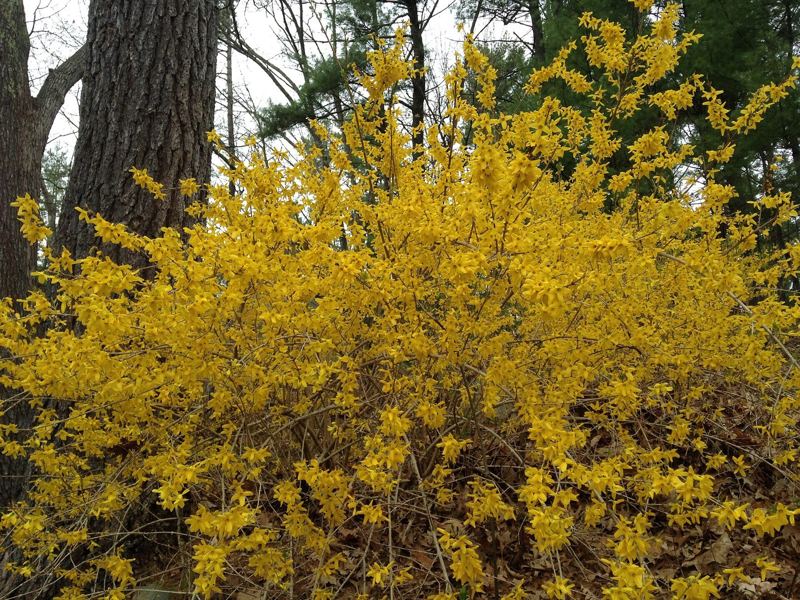 Forsythia
 Hydrangea
 Azalea