

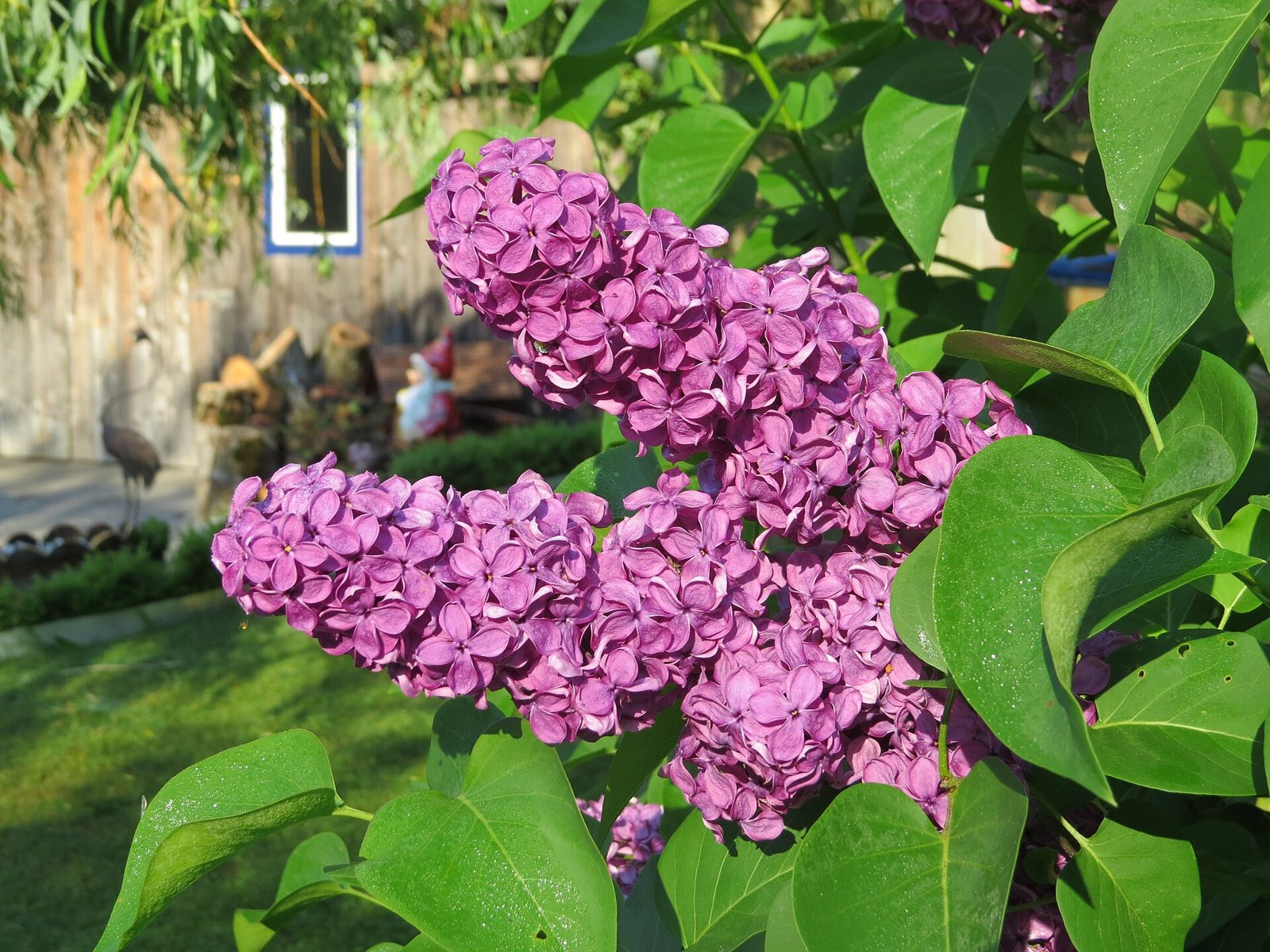
Prune lilacs immediately after they flower: Iowa State says that is the best time and helps the lilac produce the most flowers the following spring. The reason is bud timing. Iowa State says lilacs set their flower buds for the following season in mid-summer, not long after the spring blooms fade, and Penn State says that pruning branches later in the year will remove future flowers. This guide sits under our lilac care guide.
Timing: why right after bloom
Right after flowering
Later in the year
Late winter
Late winter is the trade-off option: you lose some flowers, but you can see the branch structure.
Deadheading
Iowa State says that when deadheading lilacs, you should make the pruning cut at the base of the flower cluster and just above the uppermost leaves. It adds that lilacs that are promptly deadheaded after flowering often bloom more heavily the following season than those that are not.
How much to remove
Every year (Penn State)
Every 3 to 5 years (Iowa State)
The two sources give different cycles: a steady one-third each year, or a larger cut every 3 to 5 years. Either keeps the focus on the oldest wood.
- Deadhead right after the bloom fades. Cut at the base of the flower cluster, above the uppermost leaves (Iowa State).
- Pick out the oldest stems. They are the targets for renewal (Penn State, Iowa State).
- Remove about one-third of the oldest stems. Penn State’s yearly rule.
- Or take the oldest, largest branches to 6 to 8 inches. Iowa State’s 3-to-5-year option.
- Dip pruners in alcohol between cuts. Penn State says this avoids spreading infection.
Bloomerang lilacs
NC State says Bloomerang lilacs bloom on both old and new wood. If pruning is necessary, NC State says to do so immediately after the first bloom in early spring.
Mistakes to avoid
For sun, spacing and problems like powdery mildew, see the lilac care guide. The same rule applies to forsythia.
Frequently asked questions
When is the best time to prune lilacs?
Iowa State says immediately after flowering is the best time and helps the lilac produce the most flowers the following spring.
What happens if I prune lilacs in late winter?
Iowa State says some blooms will be sacrificed, but it is much easier to see and remove the branches when the plant is dormant and without leaves.
How do I deadhead a lilac?
Iowa State says to make the pruning cut at the base of the flower cluster and just above the uppermost leaves. Lilacs that are promptly deadheaded often bloom more heavily the following season.
How do I renovate an overgrown lilac?
Penn State says removing one-third of the oldest stems each year prevents a tall, leggy plant. Iowa State says removing the oldest and largest branches within 6 to 8 inches of the base every 3 to 5 years reduces the shrub's size and promotes new growth.
Are Bloomerang lilacs pruned differently?
NC State says Bloomerang lilacs bloom on both old and new wood. If pruning is necessary, do it immediately after the first bloom in early spring.
Sources
- Growing Lilacs in the Home Garden, Iowa State University Extension and Outreach
- Lilac Care, Penn State Extension
- Syringa Bloomerang Group, NC State Extension Plant Toolbox