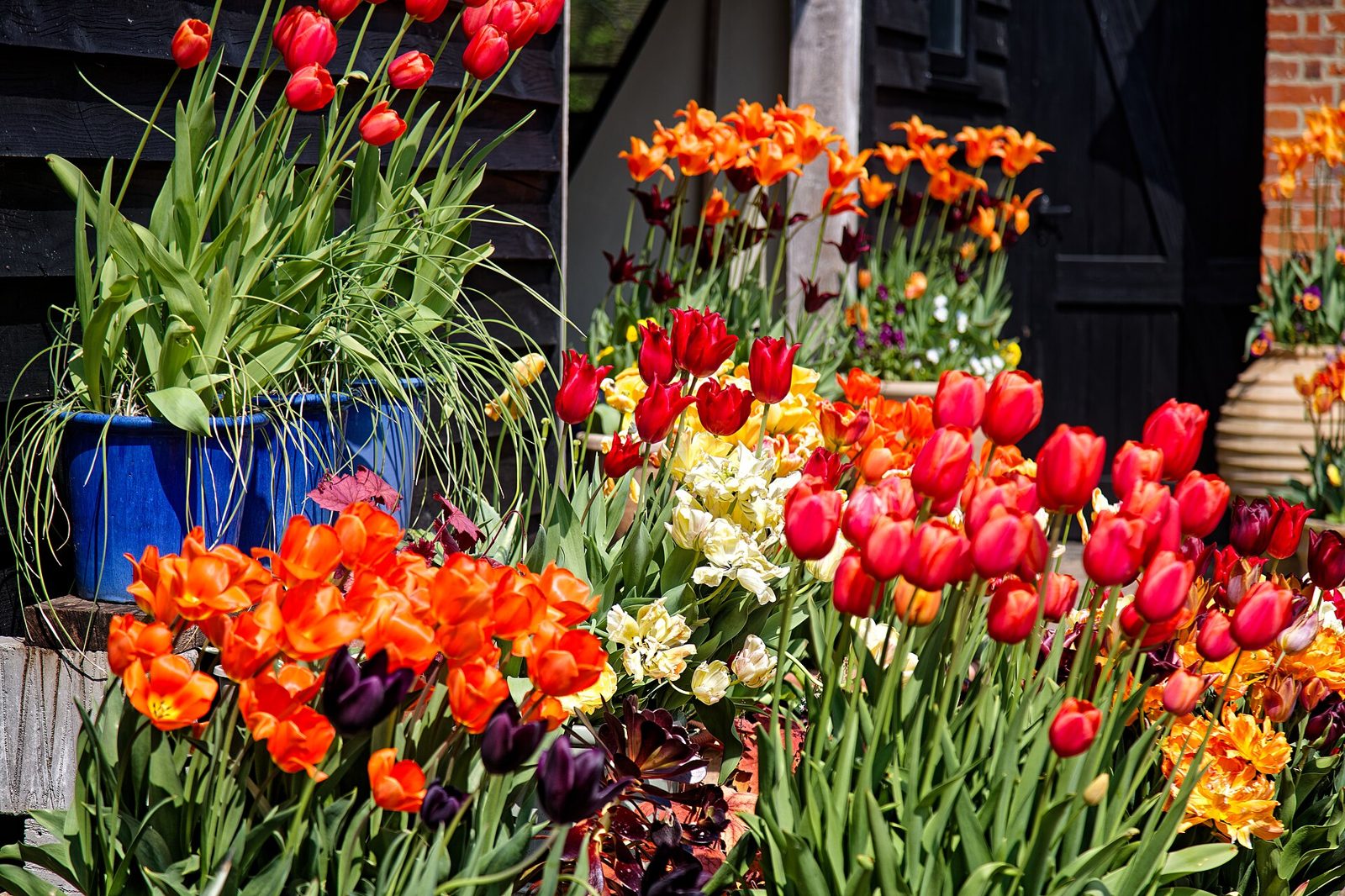
Our catalogue has one clear fall planting, the tulip: put bulbs in before the first frost, once the soil at planting depth stays below 60°F (16°C). Everything else we cover is either a spring planting, a plant to leave unpruned, or a tender plant to bring indoors. That is a short list, and we would rather say so than pad it. This post sorts the fall jobs by plant and says what to hold until spring.
Fall at a glance
| Plant | Fall job | Source |
|---|---|---|
| Tulip | Plant now, soil below 60°F, before first frost | Penn State, Clemson |
| Jasmine | Two answers: spring for semi-tropical species, fall for containerized plants | Clemson |
| Hydrangea | Do not prune; protect buds | Penn State, Clemson |
| Lavender | Do not trim | NC State |
| Japanese maple | No planting season in our sources; late fall to mid-winter is the pruning window | NC State |
| Calla lily | Dig and store in cold zones; plant in spring | Clemson, Penn State |
Tulips: plant now, by the soil thermometer
Penn State says spring-blooming bulbs are planted in the fall, before the first frost, for an early to late spring or early summer bloom. Clemson says to plant daffodils in October or November, but to wait on tulips until the soil at planting depth stays below 60°F. Our sources give month dates only for South Carolina: November to late December in the central and coastal parts, and late December or early January in coastal areas. Plant at three times the bulb depth (NC State), 2.5 to 3 times the bulb height (Penn State) or 6 to 8 inches (Clemson). Our fall bulb planting guide has the full table, and when to plant tulip bulbs goes deeper.
Jasmine: two answers
Clemson says the semi-tropical Jasminum species are best planted in spring after the danger of frost is past. It also says containerized plants are best planted in the fall. The factsheet does not say how the two fit together. Because Clemson ties the semi-tropical species to spring after frost, a gardener in a cold zone has more reason to follow that line. NC State rates common jasmine for zones 7b to 10b. See jasmine in pots if you are north of that.
Hydrangea: protect, do not prune
Hydrangea is where fall planting advice turns into fall restraint. NC State says bigleaf hydrangea blooms on the previous year’s growth, and Penn State says that a cut between autumn and early spring removes all the future flowers. Clemson says not to prune after August 1 and to cover canes with frost blankets before a late cold snap. Oregon State says that if you want to change flower color, fall is the best time to add soil amendments, and Clemson says to test your soil first. Read hydrangea fall care.
Lavender and Japanese maple
NC State says to avoid fall trimming of lavandin because it encourages growth that may not be cold hardy. Penn State describes field lavender as planted in spring after all danger of frost is over, and our sources give no home-garden advice for fall-planting lavender. For Japanese maple, our sources give no planting season, though NC State says late fall to mid-winter is the pruning window if you need one. Ask your local nursery about planting time. Our lavender pruning and Japanese maple pruning guides compare the timing sources.
What to hold until spring
- Calla lilies. Clemson says to plant the rhizomes in spring, after the danger of frost has passed and when daytime temperatures stay above 70°F. In cold zones, Penn State says to dig them once the leaves have died back or after the first frost. See overwintering calla lilies.
- Lavender. Wait for spring planting and spring or post-bloom pruning.
- Semi-tropical jasmines. Clemson says spring, after frost.
Fall jobs for plants in pots
Pots follow the same rules with one twist. Tulips in outdoor pots go in once the soil at planting depth is below 60°F (Clemson). Oregon State says that in colder interiors you can overwinter potted bigleaf hydrangea in an unheated garage to protect the buds. Illinois Extension says lavender can be a perennial that you bring indoors for the winter months, and it gives no indoor conditions. Our lavender container guide covers what the sources do and do not say.
A short fall list, in order
- Check the soil thermometer, then plant tulips before the first frost.
- Leave hydrangea and lavender unpruned.
- Cover hydrangea canes if a cold snap is forecast.
- Dig calla lily rhizomes in cold zones once the leaves die back.
- Bring tender potted plants indoors before the first frost.
Bring tender plants in
Not every fall job is planting. Clemson says to bring bird of paradise indoors when temperatures begin to drop below 60°F. UGA says to bring Christmas cactus indoors just before the threat of freezing temperatures. NC State says the white calla may need to overwinter indoors in zone 7 if unprotected. Our bird of paradise winter guide covers the cold limits.
What our sources do not tell you
They give no tulip planting dates outside South Carolina, no fall planting season for Japanese maple or lavender, and no way to reconcile Clemson’s two jasmine statements. For what flowers in winter, see our post on flowers that bloom in winter, and for the season by month, the bloom calendar.
Frequently asked questions
What is the best flower to plant in fall?
In our catalogue, tulips. Penn State says spring-blooming bulbs go in before the first frost, and Clemson says to wait until the soil at planting depth stays below 60°F.
Should I prune hydrangeas or lavender in fall?
No, for both. Penn State says a hydrangea that blooms on old wood loses its future flowers if cut between autumn and early spring, and NC State says fall trimming encourages lavender growth that may not be cold hardy.
Can I plant jasmine in fall?
Clemson says semi-tropical Jasminum species are best planted in spring after frost, and separately says containerized plants are best planted in fall. The factsheet does not reconcile the two, so we report both.
What should I wait until spring to plant?
Calla lilies, which Clemson says go in after the danger of frost has passed when daytime temperatures stay above 70°F. Our sources give no fall planting advice for lavender or Japanese maple.
Sources
- Spring Flowering Bulbs, Clemson Home & Garden Information Center
- Plant Bulbs in the Fall for a Spring Celebration, Penn State Extension
- Tulipa (tulip), NC State Extension Plant Toolbox
- Why Doesn't My Hydrangea Bloom?, Penn State Extension
- Pruning Hydrangeas, Clemson Cooperative Extension, Home and Garden Information Center
- Hydrangeas Bring Beauty and Variety to Oregon Gardens, Oregon State University Extension
- Lavandula x intermedia (lavandin), NC State Extension Plant Toolbox
- Agritourism Diversification: Lavender Production, Penn State Extension
- Acer palmatum (Japanese maple), NC State Extension Plant Toolbox
- Jasmine, Clemson Home & Garden Information Center
- Calla Lily, Clemson Home & Garden Information Center
- Summer and Fall Blooming Bulbs, Penn State Extension
- Bird of Paradise (HGIC), Clemson Cooperative Extension, Home and Garden Information Center
- Christmas or Thanksgiving Cactus?, University of Georgia Extension (Paulding County)