

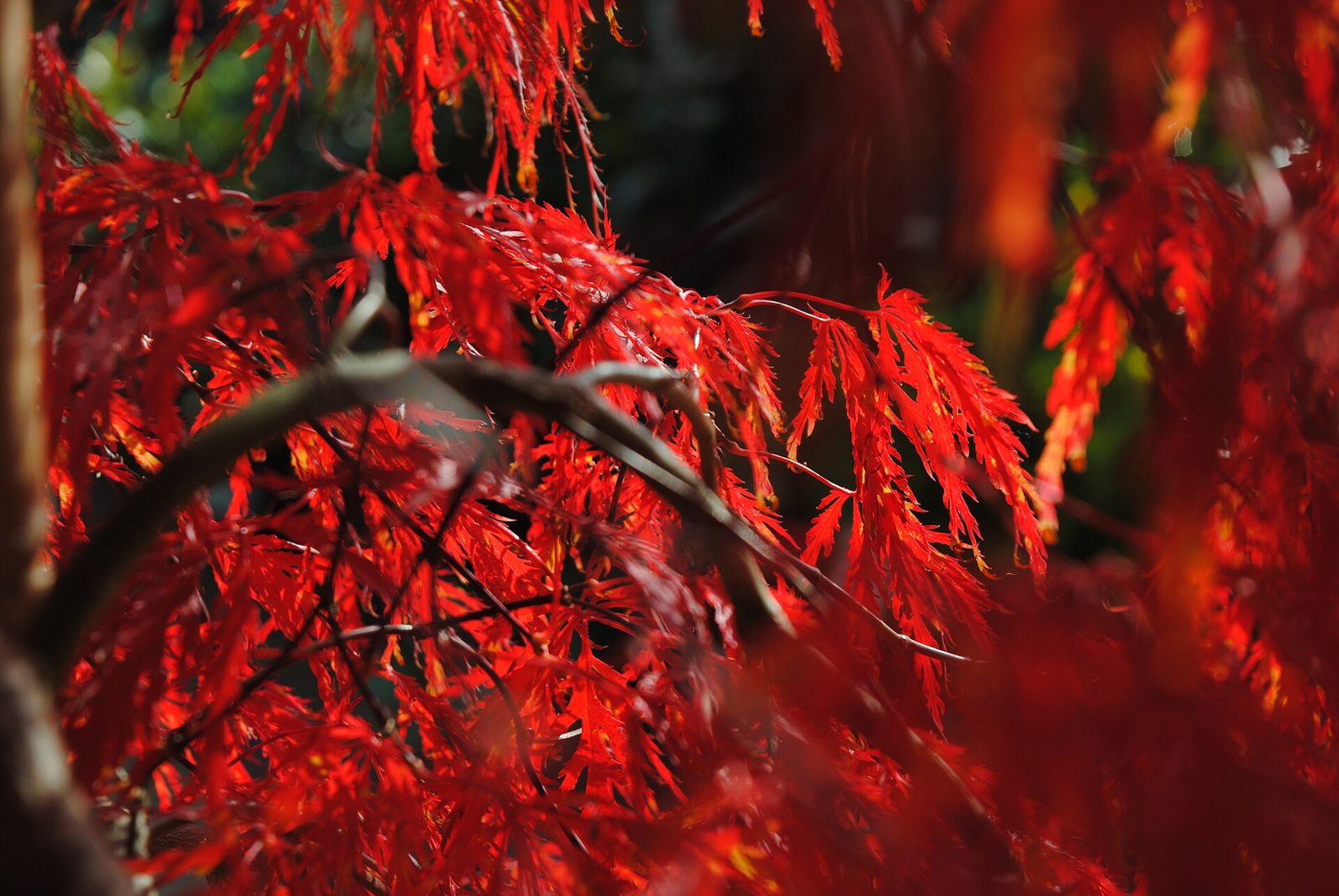
Prune a Japanese maple as little as possible, and if you must, do it from late fall to mid-winter. That is NC State’s advice, and its reason is that spring or summer pruning often results in significant bleeding, meaning sap runs from the cut. Clemson agrees that pruning should be kept to a minimum once the tree is established and says to prune only branches or trunks that rub against each other. This guide belongs to our Japanese maple care guide.
The timing conflict
| Source | Advice | Reason or detail |
|---|---|---|
| NC State (subsp. matsumurae) | Keep to a minimum; if needed, late fall to mid-winter | Spring or summer pruning often results in significant bleeding |
| NC State (Bloodgood) | February, when dormant, to alter the shape | Dormant-season cut |
| Clemson HGIC | Keep to a minimum once established; prune only rubbing branches | No timing given |
Our two sources don’t disagree so much as cover different things. NC State gives the timing: late fall to mid-winter, or February while dormant, and it warns that spring or summer cuts often bleed heavily. Clemson gives the restraint: once a tree is established, prune as little as possible and remove only branches that rub. Neither tells us how much sap loss matters to the tree. The safest reading is to choose the dormant window when you have the choice, and to accept that a spring cut will bleed if an emergency forces one.
Season by season
| When | What to do | Source |
|---|---|---|
| Spring and summer | Avoid: pruning often causes significant bleeding | NC State |
| Late fall to mid-winter | The window for any pruning that is needed | NC State |
| February, while dormant | Shape a Bloodgood if you want to alter it | NC State |
| Any time, once established | Keep pruning to a minimum; only rubbing branches | Clemson |
What “bleeding” means
Bleeding is sap running from a fresh cut. NC State uses the word for spring and summer pruning and says it is often significant. It does not say the tree dies from it, and neither does Clemson. We have no source that describes a rescue for a bleeding cut, so we will not suggest one.
What to prune
Both Clemson and NC State point to a light touch.
- Branches that rub. Clemson says to prune only branches or trunks rubbing against each other.
- Shape. NC State’s Bloodgood page allows pruning in February when dormant to alter the shape if desired.
- Everything else. Leave it. Clemson says once established, keep pruning to a minimum.
How to prune a Japanese maple
- Decide whether you need to prune at all. NC State says pruning is best kept to a minimum. If the tree has a good shape, leave it.
- Look for rubbing branches. Clemson says to prune only branches or trunks rubbing against each other.
- Wait for the dormant season. NC State says late fall to mid-winter. For Bloodgood it names February.
- Make small cuts. Our sources do not give a cut size or technique. A small cut limits what you change, though that is our practical advice, not an extension rule.
Pruning and form
NC State says most Japanese maple cultivars are grafted and can be grown as a single or multi-stemmed small tree. Clemson says to give low spreading, globose selections room for their branches to droop to the ground. If the tree is too big for its spot, our sources do not offer a reduction method. Our pillar guide lists selections and their sizes, including ‘Seiryu’, which NC State says grows 10 to 15 feet high.
Pruning a container tree
Nothing in our sources changes the timing for a Japanese maple in a pot. See Japanese maple in containers for what we found on pots.
What our sources do not tell you
They do not give a pruning size limit, a method for removing a large branch, a way to stop bleeding, or advice for training young trees. They do not say whether the Clemson factsheet’s remarks on spring pruning apply to every cultivar. Where a gap affects an expensive tree, ask a certified arborist.
Frequently asked questions
When is the best time to prune a Japanese maple?
NC State says pruning is best kept to a minimum, and if needed it should be done in late fall to mid-winter. Its Bloodgood page says you can prune in February when the tree is dormant to alter the shape.
Will pruning a Japanese maple in spring hurt it?
NC State says spring or summer pruning often results in significant bleeding, and points to late fall through mid-winter instead. Clemson says to keep pruning to a minimum once a tree is established. Our sources do not say how much sap loss a tree can take.
How much should I prune a Japanese maple?
As little as possible. Clemson says once established, keep pruning to a minimum and prune only branches or trunks rubbing against each other. NC State also says to keep it to a minimum.
Sources
- Acer palmatum subsp. matsumurae, NC State Extension Plant Toolbox
- Acer palmatum 'Bloodgood', NC State Extension Plant Toolbox
- Maple, Clemson Home & Garden Information Center