
A Japanese maple can live in a container, and the main thing to get right is water: our sources describe it as sensitive to drought. Clemson lists container plant and patio tree among the uses for Japanese maple, and NC State says the Bloodgood can be grown in a container or as a specimen in the ground. Beyond that, our sources say little about pots, so this page is short on numbers and honest about it. This guide belongs to our Japanese maple care guide.
Is a container a good idea?
Clemson names containers and patio trees as uses, so the answer is yes. The reasons a pot can make sense come from the tree’s needs: it prefers dappled shade, shelter from wind and late spring frost, and evenly moist, well-drained soil. A pot lets you place it in the right spot and move it when the light changes. That is our reading rather than a point any source makes.
What a potted Japanese maple needs
Light
Water
Shelter
Soil
Which Japanese maples suit pots?
Our sources do not rank cultivars for containers, but they do give sizes for a few.
| Cultivar | Habit | Source |
|---|---|---|
| ‘Bloodgood’ | Can be grown in a container or in the ground | NC State |
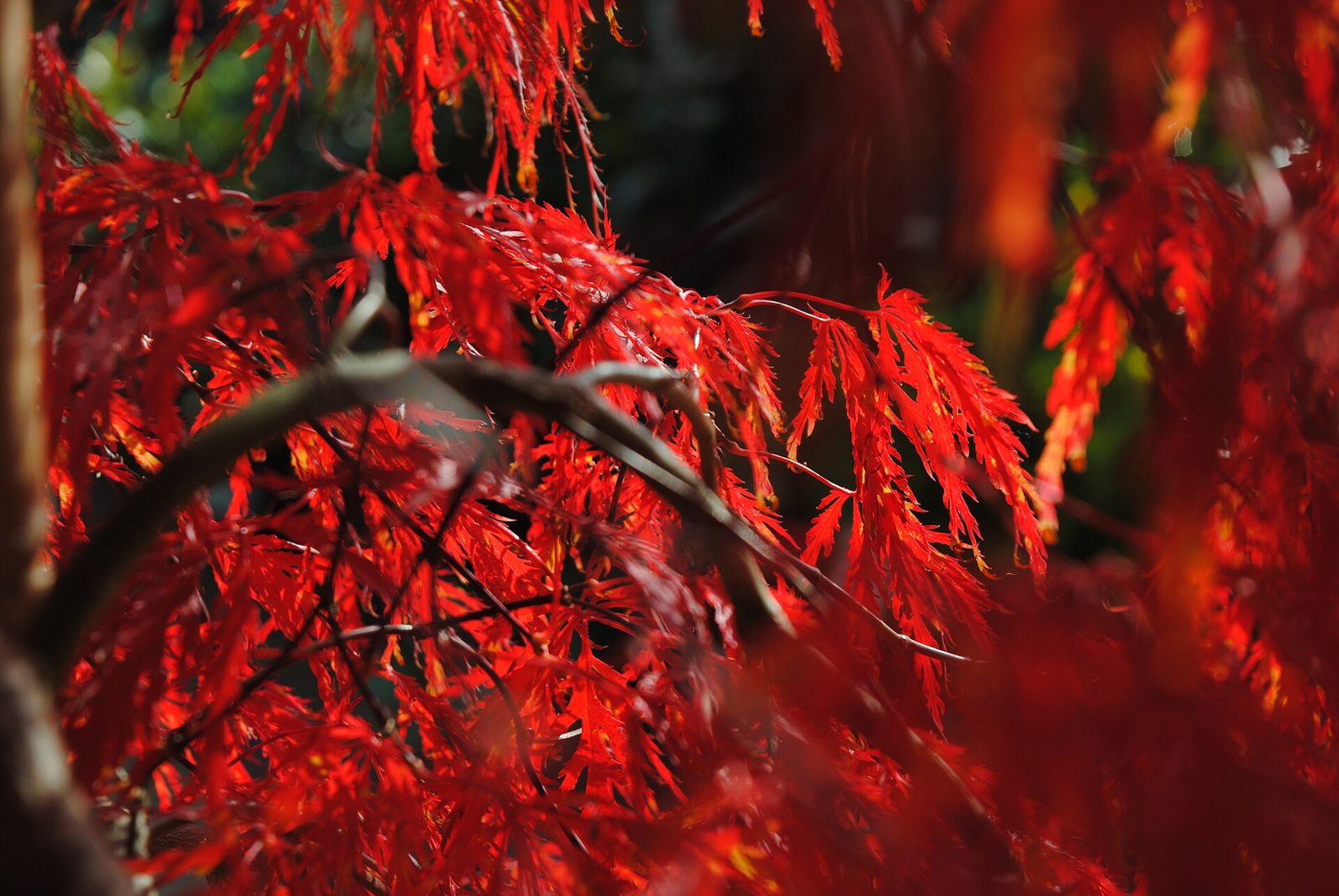
| ‘Crimson Queen’ | Dwarf, lacy, cascading | NC State and Clemson |
| ‘Seiryu’ | Upright lace-leaf, 10 to 15 ft high and 8 to 12 ft wide | NC State |
‘Seiryu’ is the upright lace-leaf form and the tallest of the three; NC State’s numbers describe it in the ground, not in a pot. Our sources do not say how a container limits its size.
Choosing and buying
NC State says most cultivars are grafted and can be grown as a single or multi-stemmed small tree. In a pot the grafted tree sits in a limited volume of soil, and our sources do not say how that affects growth or longevity, so ask the nursery which form you are buying.
Watering is the main risk
Both Clemson and NC State call the tree drought-sensitive, and NC State links leaf scorch to excess sun, wind or drought. A container is easy to move out of the sun and wind, which in our reading addresses two of the three causes, but water is still up to you. Our sources give no watering interval or amount. Check the soil: evenly moist is the aim, and water standing around the roots is to be avoided (UF/IFAS).
Mulch helps in the ground, where Clemson says to provide 3 to 4 inches (8–10 cm) beneath the canopy and NC State says it keeps the roots cool. Our sources do not say whether mulch helps in a pot.
Setting up the pot
- Choose the spot first. Dappled shade, sheltered from wind and late spring frost (Clemson).
- Use a pot that drains. Never allow water to stand around the roots (UF/IFAS). Our sources give no pot size.
- Fill with organic, slightly acidic, well-drained mix. That is Clemson’s soil description for the tree.
- Water through dry spells. Provide irrigation in dry weather (Clemson).
Winter and pruning
Our sources give no overwintering steps for Japanese maple and no hardiness figure for a tree in a pot. The only winter-adjacent facts are about frost on young leaves in spring. For pruning, NC State says to keep it to a minimum, and to do it from late fall to mid-winter if needed, which is the same advice as for a tree in the ground. See our pruning guide.
What our sources do not tell you
They do not give a pot size or material, a potting mix beyond Clemson’s soil description, a feeding schedule, a repotting interval, a winter protection method or whether the tree is toxic to pets.
Frequently asked questions
Can a Japanese maple grow in a pot?
Yes. Clemson lists container plant and patio tree among its uses, and NC State says the Bloodgood can be grown in a container or as a specimen in the ground.
How do I stop a potted Japanese maple scorching?
Give it shade in the hot part of the day and do not let it dry out. NC State says scorch can come from excess sun, wind or drought, and its Seiryu page says to provide afternoon shade in hot summer areas.
Do Japanese maples in pots need winter protection?
Our sources do not say. They give no overwintering steps for Japanese maple, and the only frost advice is that young spring leaves are sensitive to frost (NC State) and that the tree should be planted away from late spring frosts (Clemson).
Sources
- Maple, Clemson Home & Garden Information Center
- Acer palmatum 'Bloodgood', NC State Extension Plant Toolbox
- Acer palmatum (Japanese maple), NC State Extension Plant Toolbox
- Acer palmatum 'Seiryu', NC State Extension Plant Toolbox