
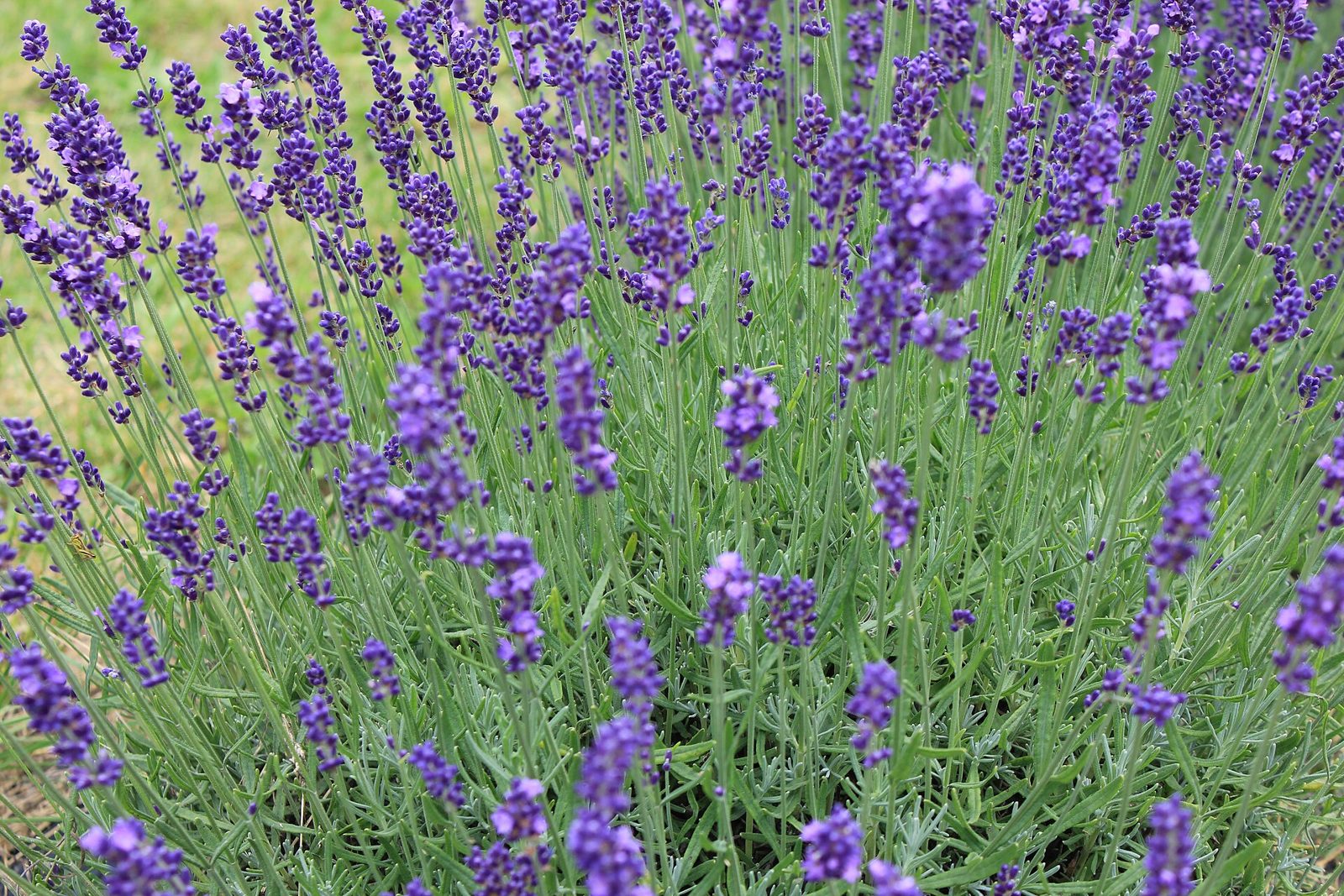
Lavender grows well in pots, and a pot is the easiest fix for the thing lavender hates most: heavy, wet soil. Illinois Extension says lavender can be easily grown in containers and raised beds in a potting mix with no added fertilizer. NC State says English lavender dislikes acid, clay soil, so it may be easier to grow in a container with added grit or perlite. A pot also lets you move the plant indoors for winter. This guide belongs to our lavender care guide.
Which lavender for a pot?
Illinois Extension’s container advice is written for lavender in general. NC State’s pages name English lavender (Lavandula angustifolia, rated zones 5 to 8 by Illinois) and lavandin (Lavandula x intermedia), which NC State says is somewhat less hardy and tends to bloom later, from July to September. In a pot that you will carry indoors for winter, hardiness matters less, so choose on fragrance and flower color: ‘Grosso’ has the strongest fragrance among the lavandin cultivars NC State lists.
Why a container suits lavender
Lavender wants perfectly drained soil, preferably on the dry side (NC State). Garden clay does the opposite, and NC State says English lavender will die out in heavy clays. In a pot you choose the mix, so you control drainage from day one. Illinois Extension adds a second benefit: a container makes it possible to grow lavender in two different ways, either as an annual you discard at the end of the season, or as a perennial you bring indoors during winter.
How to pot lavender
- Choose a container with drainage. A pot with drainage holes is our practical requirement, following NC State’s point that lavender dislikes wet feet. Our sources do not give a pot size or material.
- Use a potting mix with no added fertilizer. Illinois Extension says to use a potting soil mix that does not contain added fertilizer.
- Add grit or perlite. NC State suggests grit or perlite to help drainage when you grow lavender in a container instead of in clay soil.
- Put it where it gets full sun. Illinois says full sun, at least 8 hours daily, and Penn State says 6 to 8 hours of direct sun.
- Water when the soil dries out. Illinois says established lavender is drought-tolerant and should be watered only when the soil dries out. Newly planted lavender needs regular water during the first year.
Watering potted lavender
This is where pots can go wrong, because NC State says root rot is caused by overwatering. Illinois Extension’s rule still applies in a pot: water newly planted lavender regularly during the first year, and once the plant is established water only when the soil dries out. Penn State, writing about commercial fields, says to irrigate deeply but infrequently to establish good roots.
Our sources give no number of days between waterings and no pot-specific amounts. Use the soil, not the calendar: if it is still damp below the surface, wait.
Light, soil and feeding
Sun and soil advice is the same as for lavender in the ground, with one exception. The only fertilizer guidance in our sources is Illinois’s: start with a mix that has no added fertilizer. We found no feeding schedule for pots.
| Need | What the sources say |
|---|---|
| Sun | At least 8 hours daily (Illinois); 6 to 8 hours direct sun (Penn State) |
| Soil | Potting mix without added fertilizer (Illinois); grit or perlite added (NC State) |
| Water | Regularly in year one; later only when the soil dries out (Illinois) |
| Winter | Bring indoors as a perennial, or treat as an annual (Illinois) |
Winter care for potted lavender
Illinois Extension says a potted lavender can be a perennial that you bring indoors during the winter months. It does not say what conditions to give it indoors, such as light levels or temperature, and our other sources do not either. NC State says that lavandin, the less hardy type, needs mulch or other protective cover where winter temperatures dip to zero, but that advice is for plants in the ground. Our sources say nothing for pots left outside. Avoid fall trimming of potted plants, because NC State says it encourages growth that may not be cold hardy.
Pruning and harvesting in a pot
The pruning rules are the same as for garden lavender: never cut into leafless wood, and do not prune in fall. See our lavender pruning guide for the spring and after-bloom timings, and our harvesting guide for cutting stalks as the blooms are about to open.
What our sources do not tell you
They do not give a pot size, repotting schedule, feeding schedule, indoor winter conditions or a hardiness limit for a pot left outside. We found nothing on how long container lavender lives.
Frequently asked questions
Can lavender grow in a pot?
Yes. Illinois Extension says lavender can be easily grown in containers and raised beds, using a potting soil mix that does not contain added fertilizer.
What soil should I use for lavender in a pot?
Illinois Extension recommends a potting soil mix without added fertilizer. NC State says English lavender dislikes acid, clay soil, so it suggests a container with added grit or perlite.
Do I bring potted lavender indoors for winter?
Illinois Extension says a container lets you grow lavender as an annual you discard at the end of the season, or as a perennial you bring indoors for winter. Our sources do not say whether lavender survives winter outdoors in a pot.
Sources
- Essential Tips for Growing Lavender in Your Backyard, University of Illinois Extension
- Lavandula (lavender), NC State Extension Plant Toolbox
- Agritourism Diversification: Lavender Production, Penn State Extension